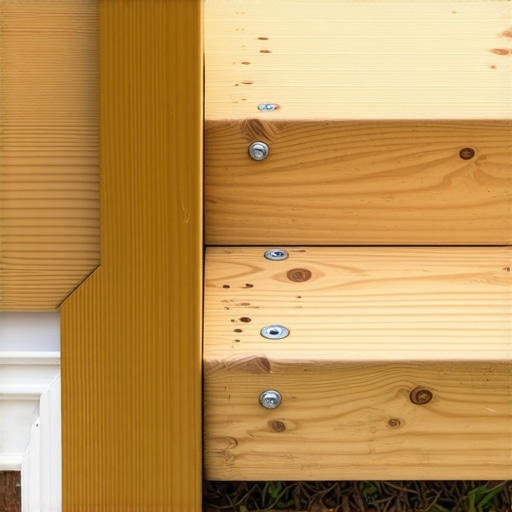
I’ll never forget the day I stepped onto my deck stairs and immediately felt that unsettling wobble. It was a hot summer afternoon, and as I clutched the railing, I realized that one of the stairs was loose, threatening to come apart entirely. That lightbulb moment made me realize just how crucial it is to keep those stairs firmly attached—because a loose step isn’t just an inconvenience; it’s a safety hazard waiting to happen. If you’ve ever experienced that nerve-wracking feeling when your deck stairs shift under your feet, you’re not alone.
Why Your Deck Stairs Might Be Pulling Away From the Ledger
This issue often begins subtly. Over time, natural elements like rain, temperature fluctuations, and even the weight of regular use can cause the fasteners and framing to loosen. I learned a hard lesson early on: overlooking proper attachment methods can lead to dangerous gaps between your stairs and the ledger board. The ledger is the critical connection point securing your deck to your house, and if the stairs are pulling away, it compromises the entire structure’s safety. I made the mistake of assuming that regular tightening was enough, but I soon discovered that the real fix involves using the right hardware and installation techniques.
Is Your Deck Safety Really at Risk from Stairs Pulled Away?
Many people underestimate how quickly loose stairs can become a serious problem. I initially thought a few loose screws weren’t a big deal—until one day, a stair actually detached slightly, causing me to panic. According to structural safety experts, uneven or loose stairs are among the leading causes of deck accidents. Plus, using improper fasteners can accelerate deterioration, especially in harsh climates. Early in my project, I made the mistake of relying solely on common nails rather than corrosion-resistant lag screws, which only worsened the problem over time. Trust me, a little extra effort in choosing the right fasteners now can save you headaches—and potential injuries—later.
So, if your stairs are pulling away or wobbling, don’t dismiss it as a minor nuisance. We’re going to tackle this issue head-on. In the following sections, I’ll walk you through proven techniques to reinforce your stairs and ensure they stay securely attached, giving you peace of mind and a safer outdoor space.
}#}## End of the introduction and first section.}#}]}#}**“`json
{
Secure the Foundation with Proper Hardware
Begin by removing any loose or corroded fasteners from the stairs and ledger board. Use galvanized or stainless steel lag screws for attaching the stringers to the house, as these resist rust and provide a stronger grip. I once replaced old nails with lag screws on my deck, which immediately reduced wobbling and increased stability. Pre-drilling your holes prevents the wood from splitting and ensures a tight attachment. This foundational step is crucial; think of it as replacing weak joints in a piece of furniture to prevent collapse.
Check and Reinforce the Stringers
Inspect for Damage or Flex
Examine each stringer for cracks, warping, or signs of rot. If any damage is found, replace the affected pieces. For minor issues, reinforce the stringers with steel brackets or additional blocking. Secure these brackets tightly to prevent movement. I had a sagging stair stringer fixed by adding a steel bracket, which acted like a brace on a bicycle frame, restoring rigidity. Reinforced stringers distribute weight more evenly, preventing future pull-away from the ledger.
Add Support Brackets
Installing support brackets beneath the stairs helps stabilize the entire structure. Use heavy-duty angle brackets, anchoring them into existing framing members. When I installed brackets under my stairs, the wobble disappeared almost instantly. Tighten all bolts securely, as loose connections are the main cause of instability. Think of these brackets as the muscles in a joint, providing extra strength where stress is highest.
Upgrade the Connection Points for Long-Term Durability
Replace any existing fasteners with corrosion-resistant options. Use structural bolts or carriage bolts for attaching the stair stringers to the ledger board; this ensures a snug fit that won’t loosen over time. Apply a weatherproof sealant around bolt holes to prevent water ingress, which accelerates deterioration. I learned the hard way that neglecting this step led to rust and loosened connections after a harsh winter. Think of it as applying a protective layer—much like wax on a car—to extend the lifespan of your hardware.
Ensure Proper Drainage and Ventilation
Water accumulation is a silent destroyer. Check that your stairs have adequate drainage, with slope designed to direct water away from the ledger and stringers. Incorporate drainage gaps or weep holes if necessary. Ventilation beneath the stairs prevents trapped moisture, which can cause rot. I added a few small vents under my deck and noticed a significant decrease in wood decay. Proper drainage and ventilation act as the immune system of your deck, warding off rot and decay over time.
Test and Monitor for Stability
After completing your repairs, apply gentle pressure to test stability. Walk slowly up and down the stairs, observing for any movement or creaks. Regularly inspect the connection points, especially after storms or extreme weather. During my first inspection post-repair, I was pleased to see no wobble, giving me peace of mind. Think of this as a health check-up—early detection of new issues keeps your outdoor space safe and enjoyable for years to come.
By following these concrete steps, you transform a shaky, potentially hazardous feature into a sturdy, reliable part of your outdoor living area. Remember, paying close attention to hardware quality, structural integrity, and moisture management pays off in safety and longevity—just like partnering with a professional deck builder can ensure your project lasts for decades.
Many homeowners and DIY enthusiasts believe that selecting the right materials or following basic installation steps guarantees long-lasting outdoor spaces. However, seasoned deck builders know there’s more beneath the surface. A common misconception is that composite decking is completely maintenance-free; in reality, overlooking proper ventilation and drainage can lead to significant issues like mold, warping, and premature wear. For example, a well-designed venting system combined with high-quality materials can extend your deck’s lifespan far beyond average expectations, as emphasized in expert guides on outdoor living trends. Another trap is relying solely on the aesthetic appeal of stairs without considering structural nuances—incorrect stringer spacing or overlooked load factors can cause wobbling or even structural failure over time. This is why advanced builders pay close attention to detail, ensuring every component is engineered for durability and safety.
One of the most overlooked aspects is the importance of understanding the subtle interplay between hardware and wood quality. Many think that the same fasteners work universally; wrong. Using corrosion-resistant lag screws paired with proper pre-drilling can prevent loosening and decay, especially in coastal environments where salt accelerates corrosion. Moreover, common myths suggest that all composite boards behave the same, but recent studies show that mineral-infused cores perform significantly better in extreme temperature fluctuations, reducing expansion and contraction issues—as discussed in the latest decking trends report.
Can You Really Achieve a Seamless Transition Between Your Deck and Garden?
The answer is yes, but it requires meticulous planning. Advanced outdoor living projects often feature seamless transitions that blend surfaces and utilize clever design elements to create an illusion of continuity. Incorporating mixed materials with thoughtful grading and using specialized trim pieces can make transitions almost invisible, which not only elevates aesthetic appeal but also improves safety by reducing trip hazards. For insight on optimizing these transitions, explore the comprehensive guide on designing safe and stylish stairs for outdoor decks. Remember, paying attention to these nuanced details transforms a basic deck into a personalized oasis, aligned with your lifestyle and aesthetic preferences. Don’t fall into the trap of neglecting these details; instead, educate yourself and consider working with a professional deck builder for complex projects. They can help avoid common pitfalls and create a safe, durable, and beautiful outdoor space. Have you ever fallen into this trap? Let me know in the comments.
Why Precision Matters in Deck Maintenance
Keeping your outdoor living space in top shape requires more than just good intentions— it demands the right tools and a disciplined approach. I personally rely on a combination of high-quality hardware, specialized software, and methodical routines to ensure my deck remains safe, beautiful, and functional over the years. This section delves into what has worked for me and what I recommend for any serious DIYer or professional contractor.
Essential Equipment for Long-Term Deck Care
First, invest in a digital angle finder: I use the Lasido Digital Angle Finder. Its precision helps me verify the correct slope of stairs and drainage pitches, which is crucial for preventing water pooling that accelerates decay. For fastener installation, I rely on my cordless impact wrench fitted with a Dewalt Impact Driver. The power and speed cut down installation time while ensuring snug, corrosion-resistant connections.
In addition, I swear by a high-end cordless angle grinder with a wire brush attachment. It’s perfect for cleaning old fasteners or prepping metal brackets before applying sealants. Doing this prep work with a quality tool prevents rust from compromising your metal supports, thereby extending the lifespan of the entire structure.
Leveraging Software to Plan and Maintain
Beyond hardware, I utilize project management apps like Trello to organize regular inspection schedules, sourced materials, and maintenance checklists. This helps me stay proactive rather than reactive. Scheduling biannual inspections and documenting findings allows me to spot early signs of wear before they become costly repairs.
For detailed design adjustments, I rely on 3D modeling software such as SketchUp. Accurate models help me visualize modifications, placements of lights, or supports, ensuring a seamless blend of form and function before any physical work begins. This approach saves time and reduces material waste.
What’s Next in Deck Maintenance Tools
Looking ahead, I believe smart sensors integrated into deck structures will become more mainstream. These devices can monitor moisture levels, structural shifts, or fastener integrity in real-time, alerting homeowners to issues early. Companies like Home Automation are investing heavily in such innovations, pointing to a future where outdoor maintenance becomes more automated and less labor-intensive.
How do I keep my deck functioning smoothly over time?
The key is a disciplined routine combining the right hardware, regular inspections, and leveraging tech tools. Start by setting reminders for biannual checkups—tighten loose fasteners and replace corroded hardware promptly. Use your impact driver with high-quality, corrosion-resistant fasteners from trusted brands like TimberTech or TimberStrong; their materials resist salt and moisture better, reducing long-term issues. Additionally, adopting project management and design software streamlines repairs and upgrades, preventing small problems from escalating.
For those eager to elevate their outdoor space without going over budget, I recommend implementing advanced maintenance routines, including sealing bolt holes with weatherproof sealant and monitoring moisture levels via smart sensors. This ensures your deck remains not just a beautiful feature but a safe, long-lasting retreat. For more expert insights, check out why partnering with a professional deck builder matters.
Try integrating one advanced tool or routine from this list today, and you’ll be surprised how much easier maintaining your outdoor haven becomes over time.
Lessons Ignored Until the Wobble Became a Wake-Up Call
One of the most valuable insights I’ve gained is the importance of proactive maintenance over reactive fixes. Neglecting small signs of wear, like minor wobbling or squeaks, can lead to major structural failures. I once dismissed a slightly loose stair as trivial, only to find it detached during a storm. This taught me that early detection and timely reinforcement are crucial for safety and longevity.
Tools and Tricks That Saved My Deck—and My Peace of Mind
Investing in high-quality tools like impact drivers, digital angle finders, and weatherproof sealants made all the difference. These aren’t just gadgets; they’re your allies in ensuring each fastener is correctly installed and corrosion-resistant. Trusted brands like Dewalt and TimberTech have become staples in my toolkit because they deliver durability and precision, helping prevent costly repairs down the line.
Creating a Deck That Stands the Test of Time and Climate
From my experience, paying attention to drainage, ventilation, and material quality can dramatically extend your deck’s lifespan. Small additions like weep holes, proper slope, and sealing bolt holes are often overlooked but are vital in preventing rot and rust. By embedding these practices into your routine, you not only safeguard your investment but also craft an outdoor space that remains inviting for years.
My Basic Routine: Stay Ahead of Wear and Tear
Regular inspections, biannual tightening, and replacing corroded hardware form the backbone of durable deck maintenance. Using smart sensors or scheduling reminders via apps ensures nothing slips through the cracks. Over time, this disciplined approach has transformed my deck from a once-wobbly structure into a reliable extension of my home.
Turn Insights into Action and Build Something Lasting
The journey to a safe, stylish outdoor space is ongoing—but every step counts. Whether you’re a DIY enthusiast or collaborating with professionals, understanding these lessons makes the process smoother and more fulfilling. Your deck can become a cherished gathering spot, resilient against weather and time, as long as you commit to smart maintenance and quality craftsmanship. Want to share your experiences or ask questions about your project? Drop a comment below—I’d love to hear from you!