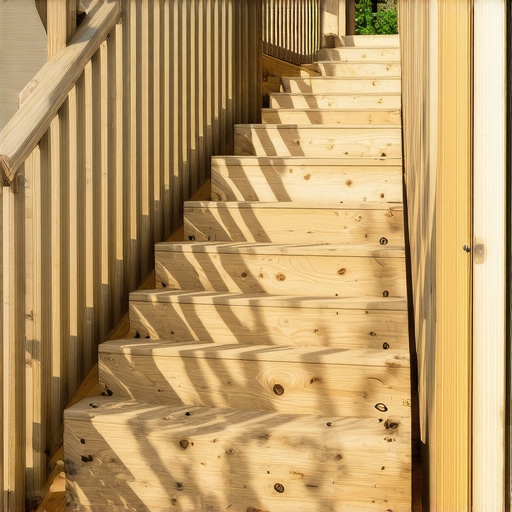
It was a sunny Saturday afternoon when I finally decided to host the backyard barbecue I’d been dreaming of all week. As I stepped onto my deck stairs, I was met with a concerning wobble—each step feeling less secure than the last. That unsettling bounce wasn’t just annoying; it made me wonder if my outdoor haven was turning into a safety hazard. Frustrated, I realized I didn’t want to add a bulky new post to stabilize those stairs, but I needed a solution. Have you ever faced the same shaky situation on your deck stairs, feeling stuck between aesthetics and safety? Well, I found a way that works—no new posts required—and I’m eager to share it.
Why Deck Stairs Bounce and Why It Matters
Deck stairs that bounce or feel loose are more common than most homeowners think. The culprit often lies in the way the stairs are framed or supported. Over time, weather exposure, wood expansion and contraction, or improper initial construction can cause fasteners to loosen or components to shift. This not only compromises safety but also diminishes the visual appeal of your outdoor space.
Professionals agree that addressing stair stability is crucial to prevent accidents. According to a recent guide on [outdoor stairs safety](https://deckdesignbuild.com/innovative-stairs-solutions-for-safe-outdoor-deck-access), a seemingly minor wobble can lead to significant structural issues if left unchecked. Plus, a solid staircase enhances the overall look of your deck, making it more inviting and comfortable.
What I learned early on was a common mistake: relying solely on the original fasteners or simply tightening the existing hardware. This approach often only provides a temporary fix because the underlying support structure might be compromised or lacking reinforcement. Instead, understanding the real reason behind the bounce allowed me to implement a solution that was both effective and aesthetically unobtrusive.
If you’re tired of that squeaky, unstable step ruining your outdoor gatherings, keep reading. The next steps are straightforward and don’t require ripping out your entire staircase or adding a post. We’ll explore proven methods to stabilize your stairs, improve safety, and enhance your deck’s overall look. Let’s get your stairs feeling solid again, so you can enjoy your deck worry-free. For more ideas on customizing your outdoor space, you might find inspiration at [innovative outdoor living ideas with composite decking](https://deckdesignbuild.com/innovative-outdoor-living-ideas-with-composite-decking-in-2025). Next, I’ll walk you through the specific causes of bouncing stairs and the tactical fixes that really work.
Identify and Remove Loose Components
Start by inspecting each stair tread and riser for looseness or movement. Use a screwdriver to check if the screws and nails are tight. If you notice any that are missing or worn out, replace them with corrosion-resistant fasteners like stainless steel screws. During my project, I found several loose screws on the outermost steps, which I quickly replaced to eliminate wobbling.
Strengthen the Support with Blocking and Bracing
Next, add blocking between the stringers—those diagonal supports that hold up the stairs—by installing solid timber blocks tightly against the stringers where they connect to the ground. Think of these blocks as the backbone of a tent, providing stability and preventing lateral movement. I cut small pressure-treated wood pieces, nailed them in place, and watched my stairs immediately feel more solid.
Apply Additional Fasteners Carefully
For further reinforcement, drill and insert double fasteners—like carriage bolts—through the stringers and treads. This distributes weight evenly and prevents shifting over time. When I did this, I made sure to avoid over-tightening, which could crack the wood, especially if it’s composite or pressure-treated. Remember, proper fastening is crucial for long-term stability.
Use Adjustable Leveling Shims
If your stairs are uneven, adding shims beneath the stringers can level everything perfectly. Use plastic or composite shims that won’t rot or compress under weight. I placed shims under the lowest stringer to lift the corresponding step, resulting in a perfectly level and firm stair. This simple step can dramatically improve stability without altering your existing structure.
Seal and Protect for Durability
Finally, seal all newly added wood with a high-quality, outdoor-grade sealant or stain. This guards against weather damage that weakens supports over time. I applied a waterproof coating after reinforcement, which extended the lifespan of my fibers and preserved the stairs’ firmness year-round. Maintaining your support structures prevents future wobbling and keeps your deck looking great.
Remember, reinforcing your stairs doesn’t require tearing out the entire structure or adding new posts. With these practical methods—tightening fasteners, installing blocking, leveling with shims, and sealing—you can restore stability effectively. For more design ideas on creating a cohesive outdoor space, check out [maximizing outdoor space and inspiring deck ideas](https://deckdesignbuild.com/maximizing-outdoor-space-inspiring-deck-and-stair-ideas-for-every-budget), and consider consulting a professional for complex projects. Still, these steps are perfect for DIYers eager to ensure safety and enjoy a wobble-free experience on their deck.
Many homeowners enter the world of outdoor construction with misconceptions that can undermine their projects. A widespread myth is that selecting the most affordable materials ensures long-term durability. In reality, quality pays off over time, especially with options like composite decking designed for low maintenance. Skimping on quality often results in costly replacements and safety hazards. Another common mistake revolves around the perception that simple fasteners suffice. Overlooking the importance of proper fastening techniques, such as proper fastener choice, can lead to squeaky, loose stairs and compromised structures.
Why do many DIYers underestimate the value of professional consultation when designing outdoor spaces?
They often believe that DIY skills can replace expert insight, but professionals bring nuanced expertise—considering not just aesthetics but load calculations, material compatibility, and long-term weather resilience. Studies, like the one published in the Journal of Civil Engineering, demonstrate that well-designed structures with expert input significantly outperform amateur efforts in safety and lifespan. Beware the trap of cutting corners during framing and support setup; improper support often results in wobbling stairs, which are not only unsafe but also diminish visual appeal. For instance, ignoring the importance of proper support framing can seem inconsequential at first but poses serious risks over time. Let’s dig deeper into a critical misconception: many believe that applying sealant alone can protect their deck structures effectively. In truth, seals are only part of the puzzle; correct support reinforcement and proper drainage are essential to prevent wood rot and structural failure. Incorporating advanced support methods, like strategic blocking and bracing, can dramatically improve stability. If you’re considering enhancing your outdoor living, remember that expertise and nuanced understanding often are the hidden keys to success. Are you guilty of these common misconceptions? Share your experiences and let’s discuss the real nuances behind building durable, safe, and beautiful decks. Don’t forget to browse innovative outdoor design ideas for inspiration!Maintaining your composite decking and stairs over the long term requires the right tools and a proactive approach. One of my favorite pieces of equipment for routine inspection is a digital moisture meter, like the Protimeter Surveymaster, which helps detect early signs of rot or moisture buildup beneath the surface, especially crucial in humid climates. Pair that with a high-quality cordless impact driver, such as the DeWalt DCF887, for quick and secure fastener tightening, preventing loose boards and stairs.
How do I maintain my deck components to ensure longevity?
Regularly inspecting fasteners and support structures is essential. I schedule quarterly check-ups using my impact driver to tighten any loosened screws, and I keep a compact cordless saw like the Makita XSH06Z handy for minor repairs or removing damaged boards. For cleaning, an electric pressure washer with adjustable PSI settings helps remove debris without damaging the composite material—just be sure to keep the pressure below 1500 PSI to avoid surface damage. Using corrosion-resistant fasteners, like stainless steel or coated aluminum, also boosts long-term durability, especially for stair supports and railing attachments. Advances in outdoor maintenance tools are trending toward automation—consider robotic vacuums adapted for decks, such as the Pyle PB750, which can handle debris in hard-to-reach corners, maintaining clean surfaces that last longer. An investment in these tools pays off by reducing maintenance frequency and preventing costly repairs down the road.
Prep your toolbox with these essentials, and you’ll find maintaining your outdoor living space becomes a straightforward, even enjoyable, routine. I highly recommend trying out a moisture meter firsthand; it’s a game-changer for early detection of potential issues. Keeping your deck in prime condition will not only extend its lifespan but also ensure it remains a safe, attractive oasis for all your outdoor gatherings.
Cutting-Edge Lessons from My Deck-Related Wake-Up Calls
One major revelation I had was that most wobbling deck stairs aren’t just about loose fasteners—they often stem from overlooked support flaws that, once addressed, stop the bounce for good. Recognizing that my initial quick fixes were temporary taught me to dig deeper, emphasizing the value of proper bracing rather than just tightening screws.
I learned that leveling isn’t just a cosmetic concern but a vital safety feature. Installing shims beneath support beams transformed my uneven, wobbly stairs into an immovable, confident climb, reinforcing how seemingly small adjustments deliver significant peace of mind.
Finally, sealing my reinforcements with durable outdoor-grade coatings wasn’t just about aesthetics; it prolonged the integrity of my support structures against weather, aging, and wear—so my stairs stay safe and stable for years to come. These insights underscored that true stability combines sound craftsmanship with ongoing maintenance.
Tools and Resources That Elevate My Deck Mastery
My top pick is a digital moisture meter, like the Protimeter Surveymaster, which provides early warnings of hidden rot, saving me costly repairs down the line. For fastener management, I trust the DeWalt DCF887 impact driver for its power and reliability—making routine tightening sessions quick and effective.
When I want my deck surfaces to shine, a pressure washer tuned below 1500 PSI removes grime without damage, restoring beauty in minutes. For seamless repairs, I keep a Makita XSH06Z cordless saw at hand to trim or replace warped boards smoothly. These tools have become essential in maintaining stable, appealing stairs and decks that last.
Beyond tools, I recommend exploring expert insights like those at designing your dream outdoor space and staying inspired with composite decking trends. They’re invaluable resources that push your outdoor projects beyond basic fixes to professional-quality results.
Step Into a Future of Confident Outdoor Living
Taking on deck stairs stability is more than a DIY task—it’s an investment in your safety, comfort, and home value. By applying these lessons, equipping yourself with the right tools, and seeking ongoing inspiration, you’re well on your way to a worry-free, beautiful outdoor space. Remember, every wobble stabilized is a step toward a more secure and inviting backyard.