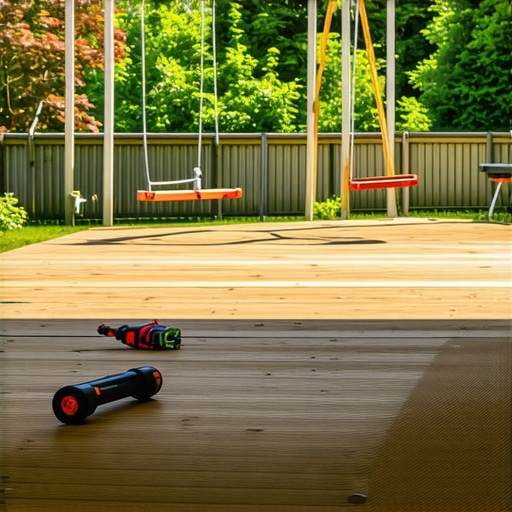
I remember the day I decided to add a swing set to my existing deck. The excitement was palpable, but that feeling quickly faded when I noticed a wobbly, squeaky support beam during setup. It was a lightbulb moment—my deck, sturdy as it seemed, wasn’t necessarily prepared for the extra load and movement of energetic kids swinging and playing. That realization made me wonder: is my deck truly ready for a swing set support? If you’ve ever faced a similar worry—questioning whether your current deck frame can handle the added weight and stress—you’re not alone. Many homeowners jump into installing a swing without considering the necessary reinforcement, risking safety and costly damage later on. Today, I’ll share my journey and proven methods to securely support a swing set on your existing deck, so you can keep your loved ones safe while enjoying outdoor fun.
Why Reinforcing Your Deck for a Swing Set Matters More Than You Think
Before diving into the how-to, let’s talk about why this step is crucial. Your deck isn’t just a platform for furniture; it’s a structure that bears the weight of everything on top—people, planters, and in this case, a swing set. If the frame isn’t adequately supported and reinforced, it can lead to dangerous sagging, shifting, or even a full-blown collapse—a nightmare no one wants to face. According to structural engineers, improper assessments of load capacity are a leading cause of deck failures, especially when adding heavy outdoor equipment like swings (source: Deck Design & Build). Reinforcing your deck isn’t just about strength; it’s about peace of mind, ensuring every bounce and sway remains safe for everyone.
If you’ve ever installed a swing on an unreinforced deck, you might have noticed subtle signs—flexing joists or squeaky boards—that hint at underlying weaknesses. Addressing these early prevents costly repairs later and extends the life of your outdoor oasis. Plus, a well-reinforced frame provides a sturdier, more confidence-inspiring experience for your kids and visitors alike.
Are you worried your current deck might not sustain a swing set? Think about the size, weight, and activity level of your intended users. Making sure your deck can handle the extra load now can save you from headaches down the line. Next, let’s break down how exactly to reinforce existing decks properly, so your outdoor space becomes a safe sanctuary for play and relaxation.
Assess Your Deck’s Structural Health
Start by inspecting your existing deck carefully. Look for signs of sagging, cracked joists, or loose boards—these are red flags indicating your deck may need reinforcement. Perform a visual check and, if possible, gently bounce on different areas to detect unusual movement or creaking. Remember, your goal is to identify weak points before adding the swing set, preventing possible accidents.
Determine the Load Capacity and Identify Weak Points
Calculate the total weight your deck will bear, including the swing set, swing, children, and any seasonal accessories. Use a load calculator or consult your deck’s specifications. If in doubt, hire a professional deck inspector or a qualified deck builder to perform a thorough assessment. Pinpoint weak joists or areas with inadequate support that could compromise safety.
Install Additional Support Beams and Posts
Reinforce with Vertical Posts
Place sturdy support posts beneath the main joists where the swing will be attached. These posts should extend to the ground and be anchored with concrete footing to prevent shifting. Think of it as adding extra legs to a table for stability—more contact points mean less wobble.
Augment with Blocking and Bridging
Insert solid blocking between joists where the swing’s load will be concentrated. Secure these with galvanized nails or screws, like adding braces inside a frame. This prevents joists from spreading under stress, similar to how a well-constructed staircase stays firm over years.
Upgrade Joist Hangers and Fasteners
Replace standard hangers with heavy-duty, hurricane-compatible joist hangers for superior support. Use high-quality, corrosion-resistant screws when fastening—these are less likely to loosen over time, especially in outdoor conditions. Think of it as upgrading from Velcro to steel bolts for a more permanent connection.
Add Diagonal Bracing for Stability
Install diagonal braces from the support posts to the main joists. This triangulation technique dramatically improves lateral stability, preventing sway and shifting during vigorous swinging. Visualize it as adding stringers to a boat mast for reinforcement—less wobble, more safety.
Distribute Weight Evenly
Ensure the swing’s support arms are properly anchored to distribute weight across multiple joists or beams. Avoid overloading a single joist or support point, which can cause bending or failure. A well-balanced setup prolongs your deck’s lifespan and provides peace of mind—a simple yet effective step.
Test Before Full Use
Once reinforcement is complete, gently test the swing with increasing weight. Observe for any movement, creaking, or instability. If everything holds steady, gradually increase usage. Remember, safety comes first, so avoid high-impact swinging until you’re confident in the structure’s strength.
Reinforcing an existing deck is a hands-on task that demands precision. When in doubt, consulting a professional can help ensure your modifications meet safety standards. For expert assistance, consider reaching out through this contact form. Proper reinforcement transforms your deck into a secure playground, making outdoor family fun a worry-free experience.
When it comes to choosing composite decking for outdoor spaces, many homeowners fall prey to misconceptions that can lead to costly mistakes. While the surface seems straightforward—low maintenance, durability, and aesthetic appeal—there’s a hidden depth of nuance that often gets overlooked. One common myth is that all composite decking boards are created equal, but in reality, the quality varies greatly. Oversimplifying this choice might save money upfront, but it can compromise your deck’s longevity and safety, especially if you don’t consider factors like mineral core technology or slip resistance, as highlighted by extensive research in outdoor material engineering.
Another widespread mistake involves underestimating the importance of professional installation. Many believe that deck builders are interchangeable, but a skilled craftsman ensures proper support, fastening, and drainage, which significantly extend the lifespan of your outdoor living realm. For example, expertly installed stairs with correctly calculated risers and treads not only look better but also prevent accidents, a topic I touch on in . Skimping here often results in uneven steps and safety hazards, underscoring why investing in a true professional makes all the difference.
People also frequently overlook the complexities involved in integrating stairs into your landscape seamlessly. A well-designed stair transition can enhance usability and visual appeal, but improper sizing or anchoring can cause shifting or creaking over time. Reading about reveals how advanced techniques in framing and support are essential for a durable outcome. This isn’t just about aesthetics; it’s a crucial safety factor that demands attention to detail and understanding of load distribution, especially for multi-tiered or large decks.
Are there any advanced tricks to prevent composite decking from warping or fading faster?
Absolutely. One lesser-known nuance involves using mineral-core composite boards, which resist expansion and contraction better than traditional PVC or wood composites. This technology is backed by studies indicating mineral-filled cores provide superior dimensional stability, especially in regions with significant temperature fluctuations. Additionally, strategic sealing and choosing the right color palette can mitigate heat buildup and surface wear. For more insights on how to select the best materials, check out .
Finally, a trap often encountered is neglecting proper ventilation and drainage planning around your deck and stairs. Without adequate airflow and water runoff systems, even the most robust composite materials can suffer from mold growth and premature deterioration. Incorporating concealed drainage solutions and breathable underdeck systems ensures longevity—topics that become evident when consulting with a seasoned .
Have you ever fallen into this trap? Let me know in the comments. Remember, the devil is in the details when it comes to creating safe, beautiful, and durable outdoor living spaces that last for decades.
Maintaining your composite deck and outdoor structures is essential for long-term performance and aesthetic appeal. As someone who has installed countless decks and stairs, I rely on specific tools and methods that ensure every part of the project stands the test of time. First and foremost, a high-quality cordless impact driver is invaluable. I personally use a Milwaukee M18 Fuel Impact Driver because it provides ample torque and precision, making fastener installation quick and secure, especially when dealing with tight spaces or heavier joist hangers. Pairing this with a set of stainless-steel bits prevents stripping and corrosion, extending the life of your tools and ensuring your fasteners stay secure over the years.
How do I keep my outdoor living space functioning smoothly over time?
Regular inspections are key. I schedule a seasonal check to look for loose fasteners, signs of warping, or material degradation. To track these issues effectively, I use a moisture meter like the Wagner Meters Meters, which allows me to assess wood and composite moisture content accurately—critical for preventing hidden rot or mold in concealed spaces. For cleaning, I prefer a power washer with adjustable pressure settings and a wide fan nozzle attachment. Gentle use prevents surface damage while removing dirt, algae, and debris that can accelerate wear and fading of decking surfaces.< > Joint integrity is another focus area. Using a torque wrench calibrated to manufacturer specifications ensures that fasteners are tightened just enough—over-tightening can cause cracking or warping. For expansive repairs or reinforcement, I opt for structural braces and heavy-duty joist hangers, like those recommended by industry experts. These not only secure the structure but also distribute loads evenly, preventing long-term sagging or failure. Looking ahead, the trend is moving towards smart outdoor systems—integrating sensors that monitor moisture, temperature, and structural stress in real-time, which could soon revolutionize deck maintenance. I recommend trying out one of these advanced techniques: install structural braces with corrosion-resistant hardware to reinforce your deck, especially if you’re planning to add a stairway or heavy outdoor furniture. This proactive step can save you thousands in future repairs and keeps your outdoor space safe and beautiful for years to come. For personalized guidance or more complex reinforcement strategies, don’t hesitate to reach out through my contact page. Staying vigilant and using the right tools today will ensure your outdoor living space remains a reliable retreat for your family.Over my years working with decks and outdoor spaces, a pattern has emerged: the true key to long-lasting, beautiful decks isn’t just choosing the right materials but understanding the subtle lessons learned through hands-on experience. One of the hardest lessons I internalized was recognizing that no matter how sturdy your existing deck appears, assumptions about support can be misleading. For example, after reinforcing a deck for a client with a heavy stone fire pit, I realized that adding extra blocking and support not only prevented future sagging but also dramatically improved overall stability. This taught me that proactive reinforcement based on real-world use often trumps mere visual inspection. Additionally, investing in quality tools has made all the difference—my impact driver and moisture meter are irreplaceable when it comes to precise fastenings and assessing unseen issues. Lastly, I learned that patience and detailed testing before extensively using your deck can save you from costly fixes down the line; a gentle bounce test is a simple yet powerful step that ensures safety and peace of mind. To deepen your expertise, I recommend exploring advanced support hardware and staying manual with inspections, because those small, often overlooked details ensure your outdoor space remains a safe retreat for years to come.
Comments are closed.