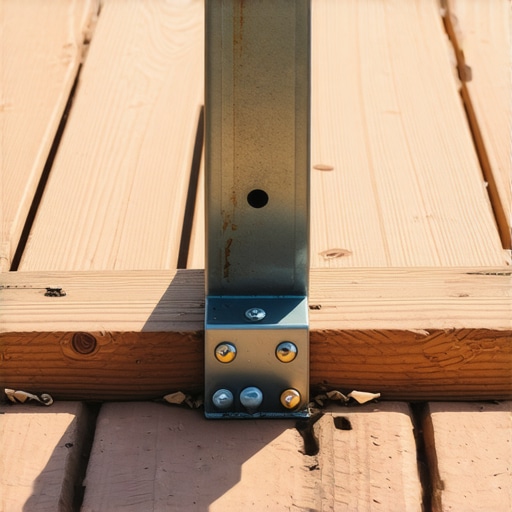
I’ll never forget the sound of that first ominous creak. I was carrying a heavy cooler full of ice and brisket down to the patio when I felt it—that sickening, half-inch shift under my boots. It wasn’t the wood snapping; it was the entire stair carriage pulling just a fraction of an inch away from the rim joist. My heart skipped. I’d spent thousands on beautiful composite decking, but I’d cut corners on the one thing that actually keeps my family off the ground. That day, I realized that ‘good enough’ is a recipe for a structural nightmare. If you’ve ever walked up a set of stairs and felt like you were boarding a small boat in a choppy harbor, you know exactly what I’m talking about. Most people think it’s just ‘old wood being old wood,’ but usually, it’s a failure of connection. Today, I’m going to show you the specific tension bracket that turned my bouncy, terrifying steps into a foundation that feels like it’s carved out of granite. We are going to stop those stairs from pulling away once and for all.
That Sinking Feeling When the Steps Start to Move
Years ago, when I first started as a DIYer turned obsessed deck builder, I made a classic rookie mistake. I thought a few extra-long structural screws driven at an angle through the stringer would be plenty. I was wrong. Over time, the constant ‘push-pull’ of people walking up and down acts like a crowbar. According to the North American Deck and Railing Association (NADRA), nearly half of the 40 million decks in the U.S. are past their useful life, and stair failures are a leading cause of deck-related injuries. I’ve seen beautiful stair designs ruined because the builder ignored the physics of gravity and leverage. You need a mechanical connection that ties the stringer directly to the frame. Without it, you’re just waiting for a rainy season to rot out those screw holes and let gravity take over. [image placeholder] This is especially true if you are designing safe stairs for 2025 where heavier materials are the norm. When I finally installed these brackets on my own back porch, the change was instantaneous. It wasn’t just better—it felt like the stairs were part of the house’s foundation itself. No more rhythmic thud-thud-thud that vibrated through the whole deck. No more worrying if three grown adults standing on the landing at once would be the tipping point.
Is This Specialized Bracket Really Worth the Extra Ten Bucks?
I get it. You’re already at the hardware store, your cart is full, and you see these galvanized steel tension ties and think, ‘Do I really need a piece of metal for every single stringer?’ The answer is a resounding yes. When you compare the cost of a few brackets to the cost of fixing a deck that’s pulling away, it’s the cheapest insurance policy you’ll ever buy. Have you ever noticed your stairs feeling a little ‘spongy’ after a big gathering? Tell me about your wobbliest deck moment in the comments—I promise I won’t judge, because I’ve been there too. Let’s get into the nitty-gritty of how these brackets actually work and why they outperform every other method I’ve tried in twenty years. If you are currently working with a skilled deck builder, ask them specifically about tension ties. If they roll their eyes, you might want to show them this guide.
Stop the Separation with a Through-Bolt Connection
The biggest mistake I see is relying on ‘withdrawal strength’—the ability of a screw to stay put while something pulls directly against it. Even the best composite decking boards won’t save you if the framing fails. To truly fix a deck that has started to pull away from the siding, you need a mechanical tie that uses the shear strength of a bolt. Think of it like a seatbelt; a seatbelt doesn’t just sit there; it is bolted into the chassis of the car. We are doing the same thing by tying the stair stringers into the primary framing of the deck through a structural tension bracket.
Align Your Stringers Before Reaching for the Drill
Before you even touch a bracket, you have to address the structural reason your stairs feel like they are leaning. If the stringers have already shifted, you can’t just bolt them where they are. I usually use a heavy-duty ratcheting cargo strap to pull the stair unit tight against the rim joist. On one particularly stubborn project, I had to use a 4×4 post as a lever to nudge the stairs back into alignment because the wood had slightly warped from moisture. Once everything is flush, you’re ready for the hardware installation.
The Tension Tie is Your Staircase’s Seatbelt
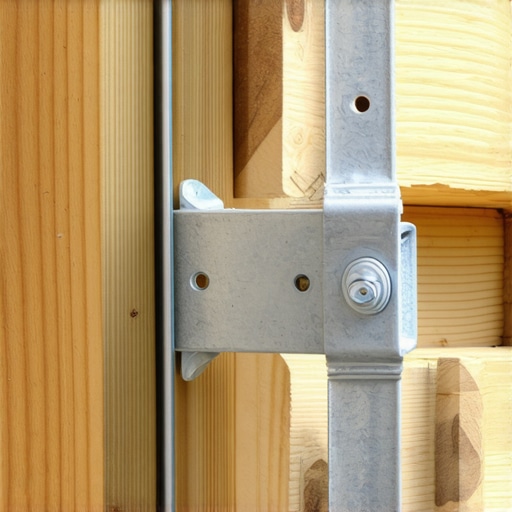
You want to use a DTT2Z or similar galvanized tension tie. This bracket sits on the inside of the stringer. You’ll drill a hole through the stringer and the rim joist, then pass a heavy-duty bolt through. This is the reason we use structural screws instead of old fashioned lag bolts for the secondary connections, but for this main tie, that through-bolt is king. It physically prevents the stairs from moving outward, even if a dozen people decide to stand on the steps at the same time. I remember a job in mid-July where the homeowner’s stairs had pulled away so far I could slide my entire hand into the gap. They’d tried ‘fixing’ it by hammering in more 3-inch nails every spring, which just turned the wood into Swiss cheese. The moment we tightened that bolt, the stairs stopped groaning instantly.
Drive Your Fasteners into Meat Not Just Air
When you are designing safe and stylish stairs for outdoor decks in 2025, you have to ensure your brackets are hitting solid wood. If your rim joist is old and soft, you need to add ‘sister’ blocks behind it to give the bolts something to bite into. I also highly recommend checking your stringer count; why your deck stairs need a middle stringer for stability isn’t just about supporting the tread—it’s about having more points of connection to the house. More stringers mean more brackets, which results in a staircase that feels like it’s part of the mountain rather than a rickety ladder.
The Hidden Enemy of Stair Safety
Don’t forget the bottom connection. While the tension tie holds the top, the bottom needs to be secured to a solid landing. I once saw a set of stairs that was perfectly bolted at the top but sat on loose gravel at the bottom. Over two years, the gravel shifted, the bottom of the stairs kicked out, and the leverage actually bent the steel brackets at the top. To keep the whole system rigid, ensure your landing is as stable as your deck. This is a core part of expert deck builder tips for stunning outdoor living—you cannot ignore what happens at the ground level if you want the upper levels to stay safe.
The Myth of the Zero-Maintenance Deck
Everyone tells you that switching to synthetic materials means you can throw away your sandpaper and stain brushes forever. While it is true that the truth about maintenance-free decking claims is mostly positive for the surface, it’s a dangerous lie for the structure underneath. In my two decades as a builder, I’ve found that composite decks actually require more structural Diligence than wood ones. Why? Because composite boards are essentially ‘floppy.’ They don’t provide the same lateral stiffness as a Douglas Fir 2×6. If your framing isn’t rock-solid, that expensive composite will telegraph every dip, crown, and wiggle in your joists. You aren’t just building a platform; you’re building a precision chassis for a high-end body.
Why Does Your Composite Decking Move More Than Traditional Wood?
This is the question that separates the pros from the weekend warriors. Wood expands and contracts mostly in its width, but composite decking expands in its length. On a hot July afternoon, a 20-foot board can grow by a significant fraction of an inch. If you haven’t accounted for why your composite boards are expanding more than expected, they will literally push against your railing posts or buckle upward. According to the American Wood Council’s Design for Code Acceptance (DCA 6), the cumulative force of thermal expansion in restricted synthetic materials can put immense pressure on your fasteners. This is why I always tell people: the ‘oops’ factor usually happens because you treated plastic-capped wood like it was just another piece of lumber.
Stop Building a Giant Sponge Under Your Boards
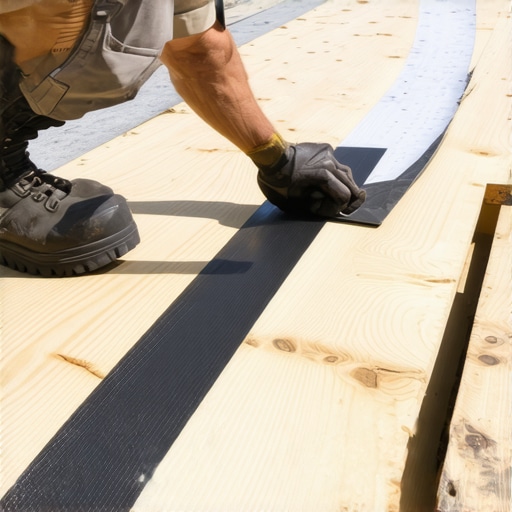
The biggest trap I see homeowners fall into is ignoring the ‘micro-climate’ created between the board and the joist. When you install composite decking for durable areas, the boards are non-breathable. Water gets trapped in the thin gap between the board and the joist, staying wet for days after a rain. This is why your deck stairs are the first thing to rot—the moisture has nowhere to go. I refuse to build a deck without joist tape anymore. It’s a simple butyl layer that acts as a gasket. If you’re skipping this step, you’re essentially building a giant sponge that will rot your frame in ten years, even while your boards look brand new. I’ve seen $30,000 decks that had to be torn down because the frame turned to mush while the ‘lifetime’ boards were still perfect. This is why I always use joist tape on every single deck frame without exception.
The Critical Stair Mistake Most Builders Ignore
When it comes to the steps, people often obsess over the aesthetics and forget the physics. A common ‘pro’ mistake is failing to realize that composite treads need more support than wood. If you use the standard 16-inch stringer spacing, your composite stairs will feel like walking on a trampoline. I always move to 12-inch or even 9-inch centers for stairs to ensure that ‘granite’ feel I mentioned earlier. If you don’t, you’ll end up with the mistake that makes your deck stairs trip hazards: uneven deflection. Have you ever found a surprise soft spot on a deck that looked perfect from the top? Let me know in the comments—I’ve seen some doozies. Whether you are doing it yourself or hiring a professional deck builder, demand that they over-engineer the skeleton. The pretty boards are just the outfit; the framing is the athlete.
Why I Dumped My Standard Drill for a High-Torque Impact Driver
If you are still using a standard clutch-based drill for structural work, your wrists are going to pay the price. When I am driving those massive fasteners into the frame, I exclusively use a high-torque impact driver. The rapid-fire internal hammers prevent the bit from camming out and stripping the head of the screw. This is especially vital because the reason we use structural screws instead of old fashioned lag bolts is for their precision and shear strength; you can’t achieve that if you’re stripping heads half-way through the rim joist. I’ve found that using a 1/4-inch hex drive impact allows me to feel the resistance of the wood, which tells me exactly when I’ve reached the perfect tension without over-compressing the lumber fibers.
How do I keep my composite staircase looking brand new for decades?
The secret isn’t a magic chemical; it’s actually restraint. Many homeowners make the mistake of reaching for the pressure washer the moment they see a bit of pollen or dirt. I’ve seen countless boards ruined by high-pressure water that etches the plastic cap. This is why you should never power wash your composite deck if you want to maintain that factory finish. Instead, I recommend a soft-bristle brush and a specialized pH-neutral cleaner. If you have moved beyond the surface and are worried about the skeleton, the best maintenance you can perform is a yearly inspection of the flashing. According to the Simpson Strong-Tie Deck Connection and Fastening Guide (F-DECK-22), moisture trapped behind the ledger is the number one cause of total deck collapse. Checking your drainage annually is how to protect your deck frame from rot for thirty years or more.
Digital Blueprints Prevent Thousand-Dollar Field Errors
We are moving into an era where ‘eyeballing it’ is a liability. In 2025, I expect to see Augmented Reality (AR) become the standard on-site tool, allowing us to overlay the digital frame onto the actual backyard before the first hole is even dug. This is why a digital designer is the best move for planning a complex backyard deck today. It eliminates the ‘wait, the stairs hit the AC unit’ realization that happens far too often mid-build. When you can see the 3D model, you can optimize your material cuts to reduce waste, which is essential given the real reason your trex decking quote is higher than the board prices often comes down to poor layout and excessive scrap.
The Pro-Level Fastener Choice for Wet Climates
If you live in a high-humidity area, standard galvanized screws just won’t cut it for the long haul. I’ve transitioned almost entirely to 304 or 316-grade stainless steel for anything visible. While it adds about 15% to the hardware budget, it prevents the ‘black streaks’ that happen when tannins in the wood react with cheap zinc coatings. This is why I use structural screws instead of carriage bolts in critical junctions—they offer better grip and cleaner aesthetics. Whether you are designing safe and stylish stairs for outdoor decks in 2025 or a simple flat platform, the hardware is where you should never, ever pinch pennies. I challenge you to go buy a single roll of joist tape and apply it to just one section of your frame; once you see how it seals around the screw, you’ll never build a deck without it again.
Hard Truths I Learned While Crawling Under Wobbly Decks
After two decades in the mud and sawdust, I’ve realized that most homeowners worry about the wrong things. They obsess over the grain pattern of their composite decking but ignore the bolts holding the stairs to the house. One major lightbulb moment for me was discovering the structural reason your deck feels bouncy when you walk isn’t always the joists—it’s often the lack of lateral tension at the stair-to-deck transition. If you are not comfortable making these structural fixes yourself, seeing how a skilled deck builder secures these connections can be an education in itself. I’ve also learned that why we stopped using 4×4 posts for deck stairs comes down to the simple fact that larger 6×6 timbers resist the twisting forces of seasonal changes much better. Don’t let a pretty surface hide a skeleton that’s ready to give up.
The Toolbag Essentials I Never Build Without
If you’re serious about a permanent fix, you need more than a hammer. I always recommend the Simpson Strong-Tie Deck Connection Guide as the ‘bible’ for any project. It’s where I first learned about the necessity of tension ties. Beyond the manual, I swear by high-quality butyl tape to prevent why your deck stairs are the first thing to rot. Specifically, why I always use joist tape on every single deck frame is because it adds decades of life for a negligible cost. Finally, invest in a set of structural screws; they offer the shear strength of a bolt with the ease of a screw, which is vital for the bolt pattern that finally stops railing post wobble for good.
Walk Your Steps with Absolute Confidence Again
Building a deck that lasts isn’t about being a master carpenter; it’s about respecting the physics of the outdoors. When you take the time to install that extra bracket or apply that layer of tape, you aren’t just following a code—you’re ensuring that your next summer barbecue is remembered for the food, not a trip to the emergency room. As we look toward innovative outdoor living ideas with composite decking in 2025, the focus is shifting back to longevity and safety. Your home deserves a staircase that feels as solid as the foundation it’s attached to. Go out there, grab your impact driver, and make those stairs immovable. Your future self will thank you every time you carry a heavy tray out to the patio. Have you ever felt your stairs shift while you were walking on them? Let me know your ‘wobbly deck’ story in the comments below!