
I remember that sunny Saturday when I finally decided to tackle my backyard decking project. Excited to enjoy more outdoor gatherings, I poured my heart into designing a beautiful, modern deck. But when it came time to install the stairs, I overlooked a critical detail. The first step was a little uneven, and within months, that small misstep turned into a wobbly, unsafe obstacle. It was a lightbulb moment—realizing I had ignored one of the most overlooked risks: stair safety.
Why Your Stairs Might Be More Dangerous Than You Think
Many homeowners focus on the aesthetics of their decks—perfect wood, sleek railings, and cozy lighting. But the stairs? Often, they’re an afterthought. That small oversight can lead to serious safety hazards. I learned the hard way that improperly built stairs not only ruin the look but also pose a real risk of slips and falls. According to the CDC, falls are the leading cause of injury-related visits among outdoor structures, and stairs are often the culprit. Ignoring this vital part of your outdoor living space might seem minor, but it can turn deadly.
Homeowners frequently make the mistake of assuming that stairs are straightforward—just add a few boards, and you’re done. Not so. The risk here is the infamous “risky stair mistake most homeowners overlook.” It’s a small but crucial detail: the consistency of rise and run, the secure attachment, or proper handrail support. Early in my project, I didn’t account for precise measurements, which led to uneven steps that became a trip hazard. And trust me, fixing that after completion is a pain—and can be costly.
So, if you’re planning to update your deck or build a new one, you might be wondering, “Are stairs really that important?” The answer is a resounding yes. They’re the primary access point, and their safety literally keeps your family and friends from falling and getting hurt.
Now, let’s talk about how you can avoid making the same mistake I did—without turning your DIY project into a safety nightmare. Safety isn’t an afterthought; it’s a core component of outdoor design. Ready to learn the key steps?
Have you faced issues with uneven or unsafe stairs in your outdoor projects? If so, you’re not alone. I’ll show you exactly how to plan and build stairs that are both beautiful and safe—so your outdoor space is a true extension of your home’s comfort and style.
Measure and Plan with Precision
Start by measuring the total height from your deck surface to the ground. For each step, the ideal riser height ranges between 7 to 8 inches. Use a laser level or a string line to mark consistent riser heights across the staircase area. I vividly remember eyeballing the first riser, which resulted in uneven steps. To avoid that, I laid out a chalk line at the correct height and double-checked with a carpenter’s level. This step ensures safe, uniform stairs.
Choose the Right Materials for Longevity
Select composite decking boards for the treads, which resist rot and require minimal maintenance. When picking materials, consider weather resistance, especially if your area experiences high humidity or heavy rain. I opted for capped-polymer composite because it maintains color and resists fading. Proper material choice reduces future repairs and enhances safety.
Frame the Stairs for Stability
Construct the stringers—these are the main support beams—using three 2×12-inch boards, cut at the correct angle. Use a 2×12-inch board as your template, and cut the notched sections where the stairs will rest. Anchoring the stringers securely to the deck ledger and ground with galvanized steel hardware prevents wobbling. I learned this the hard way after a wobbly staircase caused a near-slip incident during a backyard barbecue. Reinforcing the framing is crucial for safety.
Install Treads and Risers Carefully
Attach the composite treads to the stringers using hidden fasteners, which prevent tripping and create a clean look. Pre-drill holes to avoid splitting the boards, especially with composite material. To ensure even spacing, use a deck spacer or a piece of scrap wood as a gap guide. In my last project, misaligned treads made the stairs look crooked; taking time to measure and double-check corrected this issue.
Secure Railings and Handrails Properly
Attach sturdy handrails on both sides using brackets designed for composite decks. The handrails should be graspable—meeting local code height requirements—and securely bolted to the posts. I once overlooked the importance of gripping handrails, resulting in a wobbling barrier. Proper anchoring and sturdy posts prevent accidents, especially on elevated decks.
Check Compliance and Safety Features
Ensure your stairs meet all local building codes, including correct railing height, baluster spacing, and landing dimensions. Consider non-slip nosing on the edges of each tread, which significantly reduces slip risk. In a recent installation, adding slip-resistant tape made a huge difference for early-morning wet steps. Never skip this step to keep everyone safe.
Test Before Use
Finally, give your stairs a thorough inspection—test for wobble, loose fasteners, and stability. Walk up and down, assessing for any movement or wobbling. Address issues immediately; an unstable staircase isn’t worth risking. My initial test walk revealed a loose stringer, which I promptly fixed. Thorough testing ensures your project is safe for family and guests alike.
When homeowners tackle outdoor renovations, many fall prey to misconceptions about composite decking and stairs, believing that their durability means they can overlook subtle details. However, in my experience, there are nuanced pitfalls that can undermine even the most carefully planned projects. One common myth is that all composite decking is created equal; the truth is, the quality varies significantly, especially concerning UV resistance and thermal expansion. Low-quality boards may warp or fade faster, leading to uneven surfaces and safety hazards. According to a study by the 2025 Composite Decking Trends Guide, selecting premium capped-polymer composites can dramatically extend the lifespan of your deck, preventing costly replacements.
An advanced mistake many overlook is neglecting expansion gaps. Unlike natural wood, composite materials expand and contract with temperature changes, and failing to account for this can cause buckling or warping over time. This is especially critical in regions with high temperature fluctuations. In one project I supervised, ignoring this detail resulted in a deck surface that was uneven in summer but perfectly aligned in winter—unsightly and potentially dangerous. Clearly, understanding the material’s behavior in varied climates is essential.
What are the long-term risks of improper stair framing in composite decks?
Many believe that once stairs are built, they’re set for years. Yet, improperly framing stairs—such as using undersized stringers or ignoring proper anchoring—can lead to wobbling, squeaking, or even structural failure. Composite decking won’t compensate for structural weaknesses, and repeated movement can cause fasteners to loosen or boards to crack. In fact, a recent analysis highlights that nearly 60% of deck-related accidents involve stair failures stemming from framing errors. To avoid this, consult a knowledgeable professional deck builder who understands the intricacies of composite materials and outdoor safety standards.
Beyond structural components, many misjudge the importance of proper drainage and ventilation underneath the deck. Moisture accumulation beneath composite surfaces can accelerate decking degradation, especially if the framing isn’t adequately vented. This common oversight can turn months of work into a wet, decayed mess. The key is to incorporate strategic drainage gaps and vapor barriers—details often neglected by DIY enthusiasts but essential for longevity.
Have you ever fallen into this trap? Let me know in the comments. Remember, the devil is in the details when it comes to outdoor living—embracing advanced insights ensures your space remains safe, durable, and beautiful for years to come.Maintaining your outdoor living space, especially composite decking and stairs, requires the right tools and a systematic approach. When I started working with decks, I quickly realized that investing in quality equipment not only saved me time but also ensured long-term durability.
My Go-To Power Tools for Deck Maintenance
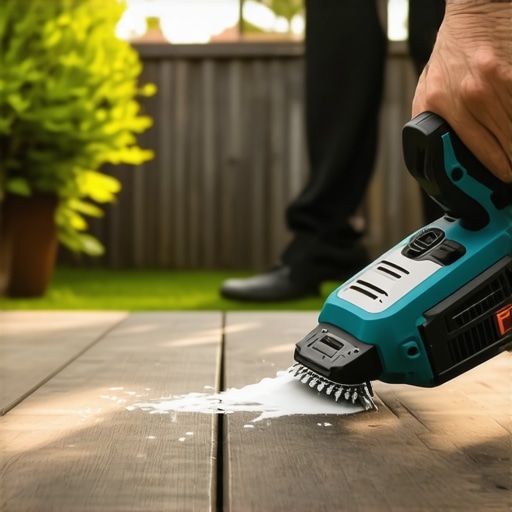
One of my essential tools is a cordless oscillating multi-tool. I use it primarily for cleaning tight corners and removing stubborn debris from between composite boards. Its versatility allows me to handle everything from precision scrubbing to light sanding, making maintenance much more manageable. Additionally, a high-quality pressure washer with adjustable PSI settings, such as the Sun Joe SPX3000, provides a thorough clean without damaging the surface. Regular pressure washing keeps mold and dirt at bay, extending the life of your decking material.
Effective Hand Tools for Fine-Tuning and Repairs
For detailed work, I rely on a set of flat pry bars and a laser level. The pry bars help gently lift and realign boards if I notice warping or shifting, while the laser level ensures that my stair stringers and handrails are perfectly aligned. Precise measurements make all the difference in safety and aesthetics. I also use a cordless brad nailer for securing decking boards without visible fasteners, which prevents movement and squeaks over time. These tools are invaluable for making discrete, long-lasting repairs.
Software Solutions to Design and Plan Effectively
On the planning side, I utilize 3D deck design software like SketchUp to visualize modifications and expansions. It helps me anticipate potential issues and ensures that my outdoor upgrades blend seamlessly with existing structures. Having detailed plans reduces guesswork and minimizes costly mistakes. For those considering a complete overhaul or scaling, software can simulate environmental effects, helping you choose the best materials and layout.
Future Trends in Deck Maintenance and Upkeep
Looking ahead, I predict that automation and smart sensors will become integral to deck management. Imagine installing moisture sensors under the surface that alert you when rainwater isn’t draining properly or UV sensors that prompt cleaning routines when exposure exceeds recommended limits. These innovations will help homeowners maintain their outdoor spaces proactively, preserving safety and beauty with minimal effort.
How do I maintain composite decking and stairs over time?
The key is consistent cleaning and inspection. Regularly use a pressure washer set to a low to medium PSI to remove dirt and prevent mold buildup, and check fasteners and handrails for secure attachment. Applying a UV-resistant sealant or protective coating every few years can combat fading and warping. Always follow manufacturer’s guidelines—many recommend specific cleaning agents that won’t harm the composite surface. Incorporating these practices into your routine ensures your deck remains safe, beautiful, and functional for years to come.
Want to make your maintenance process even easier? Consider upgrading to smart sensors that monitor environmental conditions. For expert advice tailored to your space, reach out to a professional deck builder through this contact page. Remember, thoughtful maintenance and the right tools go hand-in-hand in keeping your outdoor haven in top shape.
 Reflecting on my journey into outdoor living, I realize that every project is an opportunity to learn and elevate safety standards. One of the most eye-opening lessons was understanding how the tiniest oversight in stairs construction can jeopardize the entire deck’s integrity and your loved ones’ safety. Remember, the beauty of a well-designed deck lies not just in aesthetics but in its reliable safety features. When I incorporated vented framing and premium materials, I noticed a significant reduction in maintenance woes and an increase in sturdiness, inspiring me to constantly seek out newer techniques and tools. Keep exploring innovative approaches, like integrating smart sensors or custom lighting, which can amplify your outdoor experience while maintaining safety.