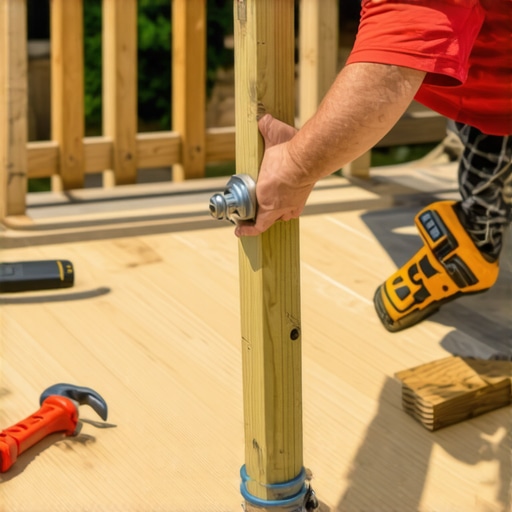
It was a sunny weekend when I leaned against my deck railing and felt that unsettling wiggle. Suddenly, that little jiggle I’d ignored earlier turned into an irritating wobble. That moment, I realized my favorite outdoor space was losing its stability—and honestly, I felt a pang of frustration. A wobbly railing isn’t just an annoyance; it’s a safety concern, especially when kids or guests are around. I knew I had to fix it, but I didn’t want to overhaul the entire post or bring in a professional for a minor issue.
Over the years, I’ve learned that small problems in outdoor projects can snowball if not addressed promptly. A deck railing is a critical safety feature, and ignoring looseness can lead to more significant damage and costly repairs down the line. That’s when I discovered the simple yet effective ‘2-Bolt Fix’—a method that’s become my go-to for stabilizing wobbly posts without the fuss of complete replacement.
Today, I’ll walk you through exactly how I fixed my railing post using this technique. Whether you’re dealing with an annoying wobble or just want to ensure your deck’s safety, this straightforward solution is a game-changer, saving you time and money while giving peace of mind.
Why Wobbly Deck Posts Are More Than Just Annoying
Having a sturdy deck railing isn’t just about aesthetics; it’s a vital component for safety, especially if your deck gets a lot of use. Loose posts can compromise the entire structure, increasing the risk of collapse or injury. Plus, a wobbly railing diminishes your outdoor space’s appeal, making it look neglected.
In my experience, the common mistake many homeowners make early on is neglecting minor wobbles, dismissing them as superficial. But those tiny movements often hint at underlying issues—like loose bolts or deteriorating connections—that need immediate attention. The good news? Fixing wobbly posts doesn’t require a complete overhaul. Simple methods like the 2-Bolt Fix can restore stability quickly.
If you’re curious about maintaining your deck’s longevity or want to upgrade safety features, I recommend exploring [how a skilled deck builder can turn your garden into a private oasis](https://deckdesignbuild.com/how-a-skilled-deck-builder-can-turn-your-garden-into-a-private-oasis). It’s amazing what just a few adjustments can do for your outdoor living space.
Now, let’s get into the practical steps I took to stabilize my railing post. Trust me, once you see how easy it is, you’ll wonder why you didn’t do it sooner. Ready to fix that wobble once and for all? Let’s dive into the details.
Secure the Post Base
Start by inspecting the bottom of the wobbling post for any loose or damaged brackets. Use a level to check if the post is plumb. I once found my post tilted slightly because the mounting bracket had shifted. To fix this, I removed the post cap and used a hammer and chisel to clean out debris from the base, ensuring a solid surface for the new bolts.
Remove Old Fasteners and Clean Area
Carefully unscrew any existing bolts or nails from the post base. In my case, some rusted bolts circled the base, making removal tricky. I used a rust remover and a wire brush to clear out corrosion, which helped in the installation of new hardware. Clearing debris and rust ensures a firm hold when installing the new bolts.
Position the Stabilizing Plate
Place a sturdy metal bracket or plate on the base of the post, aligning it with the deck’s framing. Think of this as putting a sturdy foundation under a leaning bookshelf—without it, everything wobbles. I used a plate that matched the post’s footprint and secured it temporarily with clamps.
Insert the First Bolt
Drill a hole through the plate and into the deck’s framing, ensuring it lines up correctly. You might need to adjust the post slightly for perfect alignment. In my DIY project, I used a cordless drill with a ¼-inch bit and a level to keep everything straight. Insert a lag bolt and tighten it securely. This bolt acts as an anchor, holding the post firmly to the deck structure.
Insert the Second Bolt for Stability
Repeat the process for an adjacent side to prevent any wobble in multiple directions. In my case, adding a second bolt made the railing feel rock solid. Tighten both bolts until snug, but avoid overtightening, which could crack the base or damage the wood.
Check Your Work
Gently shake the post to confirm it no longer wobbles. Use your level to verify if the post stays straight. I did this and found that the wobble was gone, transforming my deck’s safety and appearance instantly. Small adjustments might be necessary if some movement remains.
Final Touches and Long-Term Care
Apply a weatherproofing sealant or stain around the bolts to prevent rust. Regularly inspect and tighten these bolts over time, especially after harsh weather. I found that checking my railing every season preserved its stability and kept my outdoor space safe for family gatherings.
By following these straightforward steps, you can effectively stabilize a wobbly deck post without costly repairs. For larger renovation ideas or upgrading your entire deck, consider exploring modern transition-friendly stairs or composite decking options that combine safety with style.Many homeowners and even some professional deck builders make the mistake of assuming that choosing the latest composite decking or trendy stairs is enough to guarantee a durable, stylish outdoor space. However, there’s a subtle but critical nuance often overlooked: understanding the underlying structural details and the real-world application of these materials. While everyone gets excited about smart design features, few pay attention to the details that determine long-term success.
Are All Composite Decking Materials Created Equal
It’s common to believe that all composite decking options are essentially the same, but expert advice reveals significant differences in composition, durability, and maintenance requirements. For instance, mineral-core composites are gaining popularity because they offer superior resistance to warping, fading, and staining, especially in harsh climates. Comparing brands carefully and choosing materials that meet your specific environmental conditions can save you from costly repairs down the line. For more insights, see Choosing the right composite decking.
Why Stairs Can Be a Hidden Pitfall for Safety and Style
Stairs are a focal point of outdoor spaces but often get less attention than decks regarding safety and building code compliance. A frequent oversight is improper riser height or inconsistent tread depths, which can cause trips or fall hazards. Professional-grade stairs incorporate precise calculations—like the 7-inch riser standard—to ensure comfort and safety. Additionally, the aesthetic aspect shouldn’t be neglected; integrating seamless transitions or custom stringer designs can elevate your whole project. For a comprehensive look, check out custom transitions and stair designs.
Common Myths That Drain Your Budget and Time
Many enthusiasts believe that thicker composite boards or more elaborate railing systems automatically mean better durability, but this isn’t necessarily true. Overbuilding in hopes of eliminating future issues can lead to unnecessary expenses. Instead, focus on quality materials and correct installation techniques. For instance, improper fastening methods or overlooking proper joist spacing can cause sagging, warping, or faster degradation. Mastering the nuances of installation protocols—like using heavy-duty joist hangers or correct screw tension—makes a measurable difference in longevity. The experts recommend consulting detailed guides on joist spacing and fastening.
How to Avoid the Costly Pitfalls of DIY Deck Building
While DIY can be appealing, it’s fraught with traps—especially if you lack experience with the complexities of outdoor structures. Common mistakes include underestimating the importance of proper footings on uneven terrain or ignoring drainage and ventilation, leading to moisture damage or mold growth. Partnering with a professional deck builder ensures that these nuances are correctly addressed, extending the life of your deck. Read more on how a professional can transform your outdoor space at turning your garden into an oasis. Don’t let superficial choices undermine your investment—pay attention to the details that matter. Have you ever fallen into this trap? Let me know in the comments.Maintaining your outdoor deck and stairs to stay in top condition over the years requires more than just occasional inspections; it demands the right set of tools coupled with a strategic approach. My personal toolkit has evolved to include specific equipment and software that streamline routine care and long-term preservation, ensuring safety and aesthetic appeal.
First and foremost, I swear by a high-quality cordless power drill equipped with a variety of screwdriver bits. This tool allows me to tighten loose bolts or replace fasteners efficiently, especially critical for fixing wobbly posts or tightening composite deck boards. Its portability helps me reach tight corners without hassle, making periodic inspections faster and more effective.
For cleaning, my go-to is a surface scrub brush with stiff nylon bristles attached to a long telescoping pole. This setup allows me to clean composite decking thoroughly without damaging the material—something that a standard broom can’t achieve. Additionally, I use an oscillating multi-tool fitted with a detail cleaner attachment for removing stubborn stains or mold in tight spaces and between boards. This precision tool saves time and prevents the need for harsher chemical cleaners.
Monitoring the alignment and stability of your stair stringers and deck posts is critical, especially as weather causes gradual shifts. For this, I rely on a laser level. Unlike traditional bubble levels, laser levels project a straight line over long distances, allowing for quick and accurate assessments of whether your stairs and railing posts remain in perfect alignment.
When planning long-term care, I utilize specialized software such as a digital maintenance planner app. It helps track inspection dates, repair schedules, and even prompts me to reseal or stain surfaces before damage occurs. Keeping records with this digital tool has proved invaluable for budgeting and scheduling, especially with complex outdoor structures.
Predicting future trends, I believe that integrated smart sensors embedded into decking materials could revolutionize maintenance routines. These sensors would monitor moisture levels, board movement, and even structural integrity in real-time, alerting homeowners before issues become visible or dangerous. As technology advances, embracing such innovations will be essential for proactive upkeep.
How do I maintain outdoor structures over time?
Regular inspections are vital—checking for loose fasteners, signs of rot, and water intrusion. I schedule these inspections seasonally, using my laser level and inspection camera to uncover hidden issues. Applying weatherproof sealants and stains annually forms a protective barrier against moisture and UV damage. Additionally, keeping drainage paths clear and ensuring gutters are functioning prevents water accumulation that can compromise foundation stability.
Don’t underestimate the value of proper tools—investing in quality equipment like a good drill, laser level, and cleaning attachments significantly prolongs your deck’s lifespan and enhances safety. For instance, mastering the use of a laser level can save hours during assessment routines and prevent costly errors.
For more insights on durable outdoor flooring, consider exploring [Choosing the Right Composite Decking](https://deckdesignbuild.com/choosing-the-right-composite-decking-for-durable-low-maintenance-outdoor-areas). Remember, a well-maintained deck isn’t just about appearance; it’s about safety and longevity. Try incorporating a laser level into your routine, and watch how much easier it becomes to spot issues early. Ready to upgrade your maintenance game? Your outdoor space will thank you for it.
The Hardest Lesson I Learned About outdoor living,deck builder,composite decking,stairs
One of my most valuable realizations is that even small, seemingly insignificant issues like a wobbling railing can escalate into safety hazards if ignored. I once dismissed a tiny wiggle in my deck post, thinking it wasn’t worth fussing over. But over time, that minor wobble revealed underlying problems—corrosion, loose fasteners—that could have compromised the entire structure. This taught me to trust my instincts and address issues early, saving time and money while ensuring loved ones stay safe.
3 Myths About outdoor living,deck builder,composite decking,stairs That Held Me Back
Believing that thicker decking materials always last longer, or that DIY fixes are as reliable as professional craftsmanship, can lead to costly mistakes. I learned that quality depends more on correct installation techniques and choosing materials suited for your climate than on the thickness of boards. Avoid these misconceptions to make smarter decisions and extend your deck’s lifespan.
What Experts Won’t Tell You About outdoor living,deck builder,composite decking,stairs
Many seasoned professionals focus on the big-picture design but overlook essential details like proper fastener choices or ventilation. These small factors significantly impact durability. My eye-opener was discovering that hidden fasteners, when used improperly, can cause warping and require costly repairs. Paying attention to these subtle yet critical elements can make all the difference in your outdoor project’s success.
My Essential Toolkit for outdoor living,deck builder,composite decking,stairs
Investing in high-quality tools like a reliable cordless drill, laser level, and surface cleaning attachments has transformed my maintenance routine. These tools not only save time but enable me to catch potential problems early. I trust brands that deliver durability and precision because, in outdoor projects, shortcuts can cost significantly more long-term. Upgrading your toolkit can empower you to handle most issues confidently, reducing dependency on professionals for minor fixes.
Where to Go from Here
If you’re eager to elevate your outdoor space, consider exploring innovative ideas like seamless stair transitions or composite decking trends for 2025. Doing so can dramatically enhance both safety and aesthetics. Dive into resources such as creating seamless transitions and stay ahead with the latest in outdoor living design. Remember, continuous learning and attention to detail can turn a simple deck into your favorite retreat and a safe gathering spot for years to come.
Your Move Towards Safer, Smarter Decks
Building or maintaining an outdoor deck isn’t just about aesthetics—it’s about creating a secure, enjoyable environment for family and friends. With the right knowledge, tools, and a proactive mindset, you can prevent issues before they develop. Embrace the challenge today, and turn your outdoor space into a safe haven that truly reflects your style and care.
Have you ever encountered an unexpected issue that changed your approach to deck maintenance? Share your experience below—I’d love to hear your story!
,
Comments are closed.