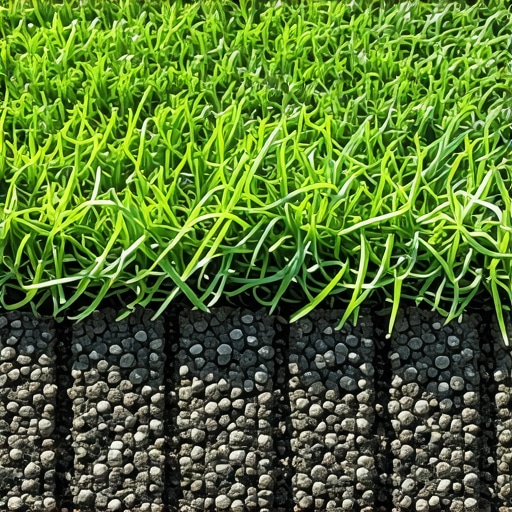
Why Your Artificial Lawn Grass Turf Installation Needs a Decomposed Granite Base Instead of Sand
When homeowners envision their dream landscape, they often start from the surface up. They see the lush, evergreen blades of a premium artificial lawn grass turf, the precision of a backyard putting green, or the clean safety of a dedicated pet area. However, as an expert with years in the industry at Synthetic Turf Solutions, I can tell you that the most critical component of your installation isn’t what you see – it’s what lies beneath. The “invisible hero” of any high-performance synthetic yard is the sub-base.
I’m Ken Poole, and I’ve seen countless installations fail prematurely because of a single, avoidable mistake: using sand as a primary base material. While sand is a common choice for DIY projects and budget contractors, it is a shortcut that inevitably leads to long-term headaches. To achieve a “forever” lawn that remains level, drains perfectly, and withstands the rigors of heavy foot traffic, Decomposed Granite (DG) is the professional standard. In this guide, we will explore why DG is the superior choice for your artificial lawn grass turf and why investing in the ground up is the only way to ensure your landscape remains a private oasis for decades.
The Foundation Myth: Why Sand Often Fails the Long-Term Artificial Lawn Grass Turf Test
It is easy to understand why sand is a popular choice for the uninitiated. It is inexpensive, readily available at any home improvement store, and incredibly easy to move and level with basic hand tools. For a weekend DIYer, sand feels like the logical solution for laying artificial turf. However, the very properties that make sand easy to work with are the same properties that make it a poor foundation for a permanent installation.
The primary issue with sand is its lack of stability. Sand particles are generally rounded and uniform in size. Because they lack jagged edges, they do not “lock” together. When subjected to the weight of garden furniture, the play of large dogs, or even heavy foot traffic, sand shifts. Over time, this shifting creates “dips” and “valleys” in your lawn. What started as a perfectly flat surface becomes a lumpy, uneven mess. For a high-quality artificial lawn grass turf, a shifting base is more than just an aesthetic issue; it creates wrinkles in the turf fabric that can become tripping hazards and lead to premature wear and tear on the backing.
Furthermore, sand is highly susceptible to erosion. During heavy rainstorms, water can easily wash away portions of a sand base, especially if the yard has any degree of slope. This “washout” effect can leave hollow pockets beneath your turf and grass, leading to significant structural failure. To avoid these pitfalls, professionals look toward materials that offer mechanical interlocking and superior load-bearing capacity.
What is Decomposed Granite (DG) and Why is it the Gold Standard for Artificial Lawn Grass Turf?
Decomposed Granite, commonly referred to as DG, is a geological material formed from the natural weathering and erosion of solid granite rock. Unlike sand, which is often uniform, DG is a mixture of small granite particles ranging from fine, dust-like “fines” to larger, pea-sized chunks. This variety in particle size is the secret to its incredible performance as a sub-base for laying artificial turf.
The “compaction factor” of DG is its greatest strength. Because the particles are jagged and varied in size, they interlock when compressed. When properly installed using a vibratory plate compactor, DG creates a surface that is nearly as hard as asphalt but retains the permeability of natural soil. It can be compacted to 95% relative density, providing a rock-hard foundation that does not shift, rut, or indent under pressure. This is essential for maintaining the pristine look of alpha turf or any premium synthetic product.
In regions like Southern California, DG is particularly favored because it handles the natural expansion and contraction of the clay-heavy soil better than sand or solid concrete. It provides a stable “bridge” between the shifting earth below and the delicate turf above. As I often tell my clients, “The best turf in the world will look like a cheap carpet within two years if it’s sitting on a shifting sand base. We build from the bottom up to ensure the aesthetic lasts as long as the warranty.”
The Drainage Advantage: Keeping Your Backyard Dry and Odor-Free
One of the most overlooked aspects of a sub-base is its ability to manage water. A dense, non-porous base will lead to puddling, while a base that traps moisture will eventually lead to mold and unpleasant odors. This is where the choice of DG becomes a matter of hygiene and longevity. DG allows water to seep through at a significantly higher rate than compacted dirt or fine sand, which can often become “clogged” with silt.
This permeability is vital for pet friendly artificial grass. If you have dogs, their urine must be able to pass through the turf and the sub-base into the water table below. Sand has a tendency to hold onto moisture and bacteria. Over time, the uric acid in pet waste can become trapped in a sand base, leading to a persistent ammonia smell that is nearly impossible to eliminate. By contrast, a DG base flushes clean. When you rinse your lawn, the water moves through the interlocked granite particles efficiently, carrying away waste and keeping the area fresh.
Effective drainage isn’t just about odors; it’s about protecting your entire property. Poorly managed runoff can undermine other structures. In fact, understanding the flow of water is just as important for your lawn as it is for your home’s structural elements, much like the drainage move that saves your deck footings from sinking. For those with pets, I highly recommend reading about the drainage layer secret that keeps pet friendly artificial grass from smelling like a kennel to fully understand the science of a clean backyard.
Precision for Performance: Why Oasis Greens Require DG
While a standard lawn needs to be level, a putting green requires absolute perfection. If you are investing in a backyard putting green installation, the sub-base is the single most important factor in the quality of your play. A professional-grade putting green synthetic grass is designed to mimic the true roll of a natural bentgrass green. However, that roll is entirely dependent on the smoothness of the base.
When we install oasis greens, we use DG specifically because it allows for micro-leveling. Because the material packs so tightly, we can shave down high spots and fill in low spots with extreme precision. Even a 1/4 inch shift in the base – something that happens regularly with sand – can ruin a stimpmeter reading and cause your golf ball to veer off-course. DG provides the “table-top” finish required for serious practice.
Furthermore, the stability of DG ensures that the contours and breaks we “build” into the green remain permanent. If you want a slight left-to-right break on your 10-foot putt, you need a base that won’t settle or flatten out over the first three winters. DG ensures that the “oasis” you build today is the same one you’ll be putting on ten years from now.
Step-by-Step: Laying Artificial Turf with a DG Sub-Base
Installing a DG base is more labor-intensive than sand, but the results justify the effort. If you are laying artificial turf correctly, you should follow this professional protocol:
- Excavation: Remove the existing sod and soil to a depth of 3 to 4 inches. This creates the “well” where your new foundation will live.
- Weed Barrier: Lay a high-quality geotextile weed barrier. This prevents native weeds from pushing through your DG and eventually your turf, while still allowing water to pass through.
- DG Application: Spread the decomposed granite in “lifts” of 2 inches at a time. Do not try to dump 4 inches and compact it all at once; it won’t reach the necessary density at the bottom.
- Moistening & Compaction: This is the most critical step. Lightly mist the DG with water. This “activates” the fines and helps the particles slide into an interlocking position. Then, use a heavy vibratory plate compactor. Run the compactor in overlapping rows until the surface feels as solid as a sidewalk.
- Final Smoothing: Use a flat pool trowel or a specialized screening bar to remove any minor imperfections. At this stage, we often build in a slight “crown” or slope (about 1%) to ensure that heavy rainfall moves toward the perimeter drainage system.
Once this rock-solid foundation is set, you are ready to roll out your alpha turf. The difference in the feel underfoot is immediate – it feels firm, secure, and permanent, rather than “spongy” or “shifty” like a sand-based lawn.
Long-Term Artificial Turf Maintenance and Durability
One of the primary selling points of synthetic grass is low maintenance. However, “low maintenance” does not mean “no maintenance.” A solid DG base significantly reduces the amount of work required to keep your yard looking sharp. Because DG does not settle significantly, you won’t have to deal with the common issue of the turf “pulling” away from the edges or creating gaps at the perimeter.
When the ground doesn’t move, the seams of your turf remain tight. In sand-based installations, the constant minor shifting can put stress on the seam tape and glue, eventually causing the grass to separate. With a DG base, your artificial turf maintenance is simplified to basic tasks like brushing the fibers to keep them upright and occasionally blowing off organic debris. You won’t find yourself having to pull up sections of the lawn to “re-level” the ground every few years, which is a common and costly repair for sand-based yards.
Moreover, the stability of the base helps maintain the “edge.” Just as a skilled deck builder can turn your garden into a private oasis by focusing on the transition points, a DG base allows for a clean, sharp edge against pavers, concrete, or garden borders. For more on maintaining these transitions, see our guide on the secret to maintaining a sharp lawn edge.
Conclusion: Investing in the Ground Up
Choosing the right sub-base is the difference between a landscape that looks good for a season and one that looks perfect for a lifetime. While sand might save a few dollars on the initial quote, the long-term costs of repairs, leveling, and odor management far outweigh those savings. Decomposed granite is the only material that provides the necessary compaction, drainage, and precision required for a high-end oasis lawn.
Whether you are looking for synthetic grass for dogs that stays clean or a turf for backyard play that stays level, remember that the foundation is everything. Treat your turf installation like a structural project. By starting with a professional-grade DG base, you are ensuring that your outdoor space remains beautiful, functional, and stress-free for years to come. Ready to transform your yard? Contact a professional who understands that a great lawn starts three inches underground.