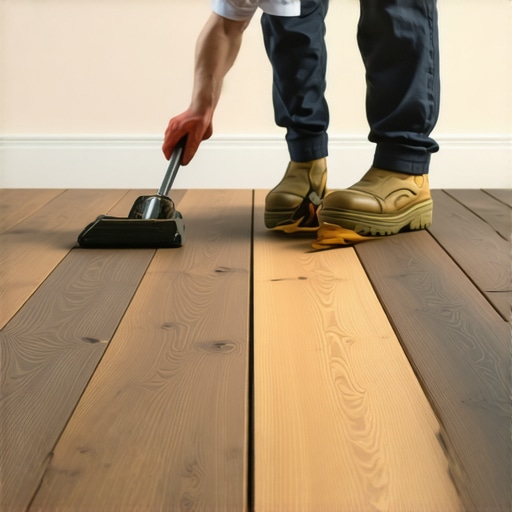
Why Pros Choose Ipe Over Composite Despite the Massive Upfront Cost
In my decades as a Master Builder, I’ve seen trends come and go. I’ve seen the rise of early-generation composites that flaked like puff pastry and the evolution of modern capped-polymers that look remarkably like the real thing. Yet, when a client asks me what I would build on my own home – or what I recommend for a project intended to last a lifetime – the answer is almost always Ipe.
Ipe (pronounced ee-pay), often referred to as Brazilian Walnut or “Ironwood,” is the gold standard of the timber world. To the uninitiated, the choice seems counterintuitive. Why would a homeowner opt for a natural material that requires specific maintenance when “maintenance-free” composite options are marketed so aggressively? Why pay a premium that often dwarfs the Trex decking installation cost of even the highest-tier synthetic lines?
The answer lies in the physics of the material. Ipe is not just wood; it is a biological anomaly. With a Janka hardness rating of 3,680 lbf – nearly three times harder than White Oak or Teak – it possesses mechanical properties that challenge our traditional understanding of timber. As a deck and patio contractor, I look past the marketing brochures and focus on the structural reality: Ipe is a 50-to-75-year material, whereas most composites are 25-year solutions at best. In this deep dive, we’ll explore why the “pros” continue to choose this tropical powerhouse despite the staggering upfront investment.
The Physics of Heat: Why Ipe Stays Cool While Composites Sizzle
One of the most significant, yet often overlooked, factors in material selection is thermal conductivity and specific heat capacity. If you’ve ever stepped onto a dark-colored composite deck in the middle of July, you know the “frying pan” effect. Composites are essentially high-density polyethylene (HDPE) or PVC, often mixed with wood flour. These materials are excellent insulators but terrible at dissipating heat. They act as thermal sinks, absorbing solar radiation and holding onto it for hours.
Ipe, conversely, is a natural organic fiber. Its cellular structure is incredibly dense, but it remains a poor conductor of heat compared to synthetics. This means that even in direct sunlight, Ipe remains walkable for bare feet and paws. When we design a high-end patio renovation, we have to consider the micro-climate of the outdoor space. A deck that is too hot to use is a failed design.
While homeowners often look for how to choose a composite color that stays cool in the sun, the reality is that even the “cool” composites struggle to match the natural thermal dissipation of Ipe. For south-facing projects with heavy sun exposure, the choice of Ipe isn’t just about luxury; it’s about the basic usability of the square footage.
Structural Integrity and the Legendary Class A Fire Rating
When discussing patio construction, safety and longevity are the twin pillars of a professional build. Ipe is one of the few natural materials on earth that carries a Class A fire rating. This is the same rating given to steel and concrete. In regions prone to wildfires, or for commercial projects where fire codes are stringent, this makes Ipe an indispensable asset.
The density of Ipe is so extreme that it actually sinks in water. This density is the result of extremely tight grain patterns and a high concentration of natural oils and tannic acids. These “built-in” preservatives make the wood virtually impervious to rot, decay, and wood-boring insects. While a deck and patio builder might use pressure-treated lumber for the substructure, the Ipe decking itself acts as a shield.
However, the longevity of the surface material is only half the battle. To ensure the entire structure lasts as long as the Ipe boards, pros always utilize the joist tape secret for doubling the life of your frame. Without protecting the underlying pressure-treated joists, you risk a “50-year board on a 15-year frame” scenario, which is a catastrophic waste of resources.
The Installation Reality: Why Ipe Demands a Master Craftsman
The primary reason homeowners see a massive price jump in Ipe quotes isn’t just the board-foot cost; it’s the labor. You cannot simply “nail down” an Ipe deck. If you try to drive a standard framing nail into an Ipe board, the nail will either bend or the board will shatter the nail’s head. Every single hole must be pre-drilled. Every end-cut must be sealed with a wax-based emulsion like Anchorseal to prevent end-checking (cracking as the wood dries).
As patio contractors, we approach Ipe with specialized tools. We use carbide-tipped saw blades because Ipe will dull a standard steel blade in a matter of hours. For fastening, we often employ the the 3-screw pattern that stops deck boards from cupping, using high-grade stainless steel screws. Because Ipe is so strong, it exerts tremendous force as it expands and contracts. Lesser fasteners will literally shear off under the pressure of the wood’s movement.
Compare this to the Trex decking installation cost. Composite systems are designed for speed. They often use “plug-and-play” hidden fastener clips that slide into pre-grooved slots. While this is efficient, it lacks the structural “lock” that a face-screwed and plugged Ipe board provides. For a pro, the extra labor involved in Ipe is a badge of quality – it’s the difference between a mass-produced product and a hand-crafted heirloom.
The Fastener Debate: Stainless Steel is Non-Negotiable
In my experience, I’ve seen many amateur builds fail because they tried to save money on galvanized fasteners. Ipe’s natural tannins are highly acidic. They will eat through galvanized coatings in a few years, leading to “bleeding” (black stains on the wood) and eventual fastener failure. I always specify 305 or 316-grade stainless steel. This is especially critical in coastal environments or high-moisture areas where salt air accelerates corrosion. This is one of the many reasons why PVC decking beats wood-plastic composites for high-moisture areas, but even the best PVC cannot match the sheer mechanical strength of a properly fastened Ipe plank.
Aesthetics and the “Silver Fox” Evolution
The visual appeal of Ipe is unmatched. It features a range of colors from deep chocolate brown to reddish-amber, with a fine, interlocking grain that looks more like interior flooring than outdoor decking. However, many homeowners are intimidated by the maintenance.
There are two professional paths for Ipe aesthetics:
- The Oiled Look: Applying a UV-protectant oil (like Ipe Oil or Penofin) once a year or every two years. This maintains the rich, dark tones. Because Ipe is so dense, the oil doesn’t “soak in” like it does on Cedar; it sits just below the surface.
- The Silver Patina: Many pros actually prefer to let Ipe weather naturally. Over 12 to 18 months, the sun will bleach the surface to a beautiful, uniform “silver fox” gray. Unlike composite, which can fade unevenly or look “chalky” over time, Ipe maintains its structural integrity and develops a sophisticated, weathered look that many high-end architects crave.
Composites, meanwhile, are static. What you buy on day one is the best it will ever look. If you scratch a composite board, you’re stuck with it. If you scratch Ipe, you can sand it out. If you decide 10 years later that you want the “new” look back, you can power-sand Ipe and re-oil it, and it will look exactly as it did the day it was installed. This “renewability” is a core reason why Ipe is the preferred choice for a patio renovation that needs to stand the test of time.
Beyond the Deck: Integrating Ipe with Patio Covers and Structures
A great outdoor space is rarely just a flat surface. We are often looking at the entire “envelope” of the backyard, which includes a patio cover, a patio and pergola system, or even an enclosed patio. Ipe’s strength makes it an incredible material for more than just floorboards; it can be used for heavy-timber posts, custom privacy screens, and even outdoor cabinetry.
When we pair an Ipe deck with an Alumawood structure or a custom patio roof, we create a contrast between the organic warmth of the wood and the clean, industrial lines of the aluminum. Ipe’s ability to span longer distances than most domestic woods or composites allows for cleaner designs with fewer visible supports.
Furthermore, if you are building an enclosed patio, using Ipe for the flooring provides a seamless transition from the interior of the home to the exterior. It doesn’t feel like “plastic wood” underfoot; it feels like a continuation of a luxury hardwood floor. This consistency is vital for maintaining the property value and the “flow” of high-end architectural designs.
The Long-Term ROI: A 50-Year Math Problem
Let’s talk about the elephant in the room: the cost. Ipe can easily cost $15 to $25 per square foot for the material alone, whereas a mid-range composite might be $6 to $10. When you factor in the specialized labor, the total project cost can be double or triple that of a standard build.
However, a professional deck and patio contractor looks at the “Lifecycle Cost.”
Most composite warranties are 25 years, and many homeowners find that by year 15, the boards have faded, the hidden fasteners have loosened, or the “look” has simply gone out of style. Ipe is a lifetime material. It is not uncommon to see Ipe boardwalks (like the famous one in Atlantic City) last for decades under extreme foot traffic and salt spray.
If you plan to stay in your home for 20+ years, Ipe is actually the cheaper option. You won’t have to replace it. You won’t have to worry about the structural degradation that occurs when moisture gets trapped in the wood-flour core of cheaper composites. For a deeper look at this philosophy, I recommend reading The Secret to Building a Deck That Lasts Fifty Years. It’s about more than just the boards; it’s about the synergy of the material, the fasteners, and the flashing.
Avoiding the “House Rot” Trap
Regardless of whether you choose Ipe or composite, the most critical point of failure is where the deck meets the house. I’ve seen $100,000 Ipe decks destroyed because of a simple flashing error. To protect your investment, always ensure your builder understands the flashing error that causes house rot and how to avoid it. When you are spending a premium on Ipe, you cannot afford to cut corners on the “invisible” parts of the build.
Conclusion: The Legacy Material
Ipe is not for every project. If you are flipping a house or looking for a quick, budget-friendly “refresh,” the Trex decking installation cost might be more aligned with your goals. But for the homeowner who views their outdoor space as a legacy – a place for family gatherings that will look as good in 2050 as it does today – Ipe is the only logical choice.
It is a material that demands respect. It demands a builder who knows how to drill it, saw it, and fasten it. It demands a homeowner who appreciates the subtle beauty of natural grain and the cooling touch of organic fiber under a summer sun. As a deck and patio contractor, my goal is to build structures that outlast my career. Ipe is the only material that gives me the confidence to make that promise.
If you’re ready to move beyond the big-box store “plastic” look and invest in a truly world-class outdoor space, contact a professional deck and patio builder today. Seeing a sample of genuine Ipe in person – feeling its weight and seeing its depth of color – is usually all it takes to understand why the pros never settle for anything less.