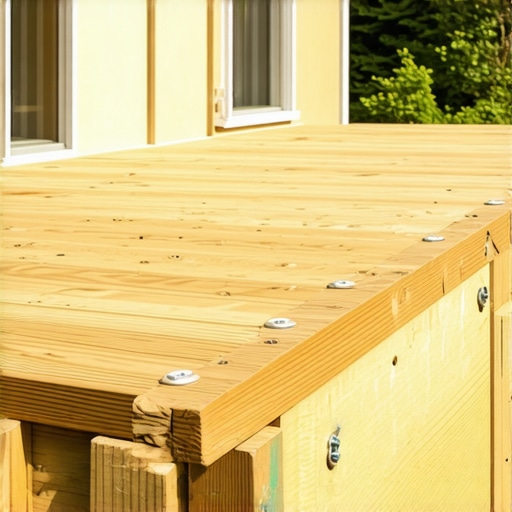
It was one of those days. I was in the middle of finishing my outdoor deck project when I stepped back and saw it—the dreaded wobbly connection where my new deck met the house. That sinking, insecure feeling hit me hard. I’d spent weeks designing and building what I thought was a perfect deck, only to realize I overlooked the critical connection—something that can make or break the entire outdoor space. I knew I wasn’t alone in this. Many amateur and even seasoned DIY enthusiasts face this exact issue, often with disappointing results.
Why a Strong Deck-to-House Connection Matters More Than You Think
A solid connection between your deck and your house isn’t just about durability; it’s about safety, functionality, and long-term enjoyment of your outdoor oasis. If that connection isn’t rock-solid, everything else can fall apart—literally. Loose or weak attachments can lead to sagging, shifting, or worse, dangerous collapses.
During my early attempts, I made the mistake of assuming that simply screwing the ledger board to the house would suffice. Big mistake. Properly securing that connection requires more than just DIY enthusiasm; it demands knowledge, precision, and the right materials. According to experts, overlooking proper flashing and using the right fasteners can result in leaks and rot, undermining your entire structure over time. For a comprehensive understanding, I recommend checking out [this guide](https://deckdesignbuild.com/creating-seamless-transitions-stairs-as-key-elements-in-outdoor-living) which dives into integrating stairs seamlessly for outdoor living.
Have you ever faced a deck that felt shaky or disconnected? If so, you’re not alone. And trust me, there’s a better way—an approach that ensures your deck feels sturdy and secure for years to come. Ready to learn the secrets that can keep your outdoor space safe and beautiful? Let’s dive into the key principles of building a truly rock-solid deck-to-house connection that lasts.
Anchor the Ledger Board Properly for a Stable Foundation
Start by selecting the right ledger board material, ideally pressure-treated or composite for durability. Ensure it is correctly aligned with your house, and mark the positions for the attach points. Use a level to keep the board perfectly horizontal, avoiding future sagging or unevenness. During my own project, I once forgot to check the level diligently and ended up with a crooked deck that required major adjustments. Now, I always double-check before drilling.
Use Quality Fasteners and Flashing to Prevent Leaks and Rot
Replace nails with galvanized or stainless steel screws tailored for outdoor use—they resist rust and provide a tighter grip. Install a continuous flashing beneath the ledger to prevent water infiltration. Think of flashing as the roof’s raincoat, shielding the wood from moisture that causes rot. In one early attempt, I skipped flashing, which resulted in a rotten ledger after a rainy season. Since then, I never overlook this step, knowing it extends the deck’s lifespan.
Ensure Proper Framing and Support Structures
Build a robust support system with double beams and solid joists. Use metal post anchors to attach risers securely to the foundation. Imagine your deck as a suspension bridge; the support beams are the cables that hold everything steady. I learned this the hard way by installing inadequate supports, leading to noticeable bounce underfoot. Now, I always double-check the framing and consult expert quide’s tips on securing posts for long-term stability.
Implement Seamless Transitions Between Deck and House
Connect your deck smoothly to the house with custom flashing and precise framing. It’s like fitting puzzle pieces—each must align perfectly. Incorporate a small gap or air space between the ledger and the house wall to allow ventilation, preventing moisture buildup. For stairs, consider integrating custom designs that match your home’s architecture, elevating both function and style. This technique turned my tired, wobbly stairs into a modern, stable feature that revamped my entire outdoor space. For inspiration, explore top stair design ideas.
Secure Stairs and Railings with Precision
Stairs and railing systems need meticulous fastening. Use metal brackets and lag bolts rather than nails for stronger attachment. Pre-drill holes to prevent splitting, especially on composite materials. Think of the stairs as the backbone of your deck—if loose, everything suffers. My previous stairs squeaked terribly until I replaced weak fasteners with heavy-duty bolts, dramatically improving stability. For tailored solutions, check outstanding stair support ideas.
Maintain Consistent Gaps for Long-Term Durability
Leave appropriate gaps between decking boards and around joists to accommodate expansion and contraction. Use spacers during installation to keep distances uniform, which reduces warping and water pooling. Picture it like a breathing room for your deck, helping it age gracefully. In my experience, neglecting gaps led to buckling in the heat, but attentive spacing keeps boards flat and looking good. For comprehensive gap tips, visit this guide.
Apply Finishing Touches for Safety and Style
Finish with non-slip coatings or textured paints on stairs and walkways. Ensure all fasteners are flush with the surface to prevent tripping hazards. Lighting can enhance safety and ambiance—consider weatherproof fixtures. The key is combining safety with aesthetics, turning a functional outdoor feature into your favorite retreat. My last project involved adding LED stair lights, which made nighttime strolls safer and created a cozy atmosphere, proving that details matter immensely in outdoor design.
When it comes to composite decking and outdoor living design, many enthusiasts fall prey to misconceptions that can compromise both safety and durability. One pervasive myth is that synthetic materials require no maintenance—nothing could be farther from the truth. While composite boards are more resistant to rot and insects than wood, they still need regular cleaning and inspection to prevent issues like mold or warping. In fact, overlooking proper cleaning routines is a common advanced mistake that can shorten your deck’s lifespan.
Are All Composite Decking Products Equal in Safety and Performance?
Not at all. A widespread mistake is assuming that all composite decking meets the same standards. Some cheaper options may have inferior formulations that lead to faster fading, surface scratching, or even structural failure under heavy loads. Experts recommend choosing products with high mineral core content or those adhering to updated trends, like the 2025 composite decking innovations, which offer enhanced UV resistance and heat management. Skipping this detailed research could result in costly repairs down the line, especially in coastal or exposed environments.
Many DIYers are unaware of the importance of precise installation procedures. For instance, many oversimplify stair framing, neglecting the subtle nuances that ensure stability and safety. Using the right fasteners, spacing, and framing techniques is critical. A mistake here is assuming that standard fasteners are sufficient; in reality, galvanized or stainless steel screws are essential to prevent corrosion, especially in salty air. Proper seam transitions between stairs and deck surfaces are vital, and custom flashing can prevent leaks—something many overlook because they think they’re unnecessary or too complicated. To avoid these pitfalls, consider consulting detailed guides, like this one on seamless stair integration techniques.
Advanced outdoor projects also often stumble over ventilation issues. Decks built too tightly against the house without adequate air gaps can foster moisture buildup, leading to rot and mold. It’s a delicate balance—allowing ventilation while maintaining aesthetics. Also, the misconception that bigger gaps between decking boards are purely decorative overlooks their role in accommodating thermal expansion, which is especially significant for composite materials in hot climates. Regular inspection and mindful spacing, paired with proper flashing, are the real secrets to longevity—the kind that turn your outdoor space into an enduring oasis. Want to see how expert builders approach this? Take a look at the art of seamless transitions and stair design.Building and maintaining a durable composite deck requires more than just good planning; it hinges on having the right tools and techniques to keep your outdoor space in top shape over time. One staple in my toolbox is the **corded cordless impact driver**. Its torque power is essential for driving long stainless steel screws into composite boards and pressure-treated framing without stripping or damaging material. I personally prefer models with a brushless motor, like the Milwaukee M18 Fuel, because they offer longer battery life and less maintenance, allowing me to work longer sessions with confidence.
How do I maintain my deck tools to ensure longevity?
Regular cleaning after each project is vital. Wipe down the impact driver, especially after exposure to moisture or dust, and store it in a climate-controlled environment to prevent corrosion. Using a lubricant spray on the drill chuck and fastener bits keeps them moving smoothly, reducing wear. For power tools, I recommend investing in a **quality battery pack and charger**, which prolongs performance and reduces the risk of unexpected breakdowns. For precise measurement and leveling, I rely on a **digital laser level**. Unlike traditional bubble levels, a laser level provides quick, accurate, and long-range alignment, especially useful when dealing with expansive decks or multiple stair stringers. I find that using a laser level helps me avoid uneven gaps and ensures consistent height across the entire deck—a small detail that significantly impacts long-term durability.
Predicting future trends, I foresee that smart tool integrations will become standard, enabling deck builders to monitor structural integrity through IoT sensors embedded in support beams. For now, combining traditional hand tools with advanced power equipment is the best way to achieve professional-quality results.
When it comes to long-lasting outdoor living spaces, mastering maintenance tools is just the beginning. Incorporate smart tips like regularly inspecting fasteners and flashing, and utilizing tools designed for corrosion resistance, such as stainless steel screwdrivers and drill bits, to extend your deck’s lifespan. Also, consider applying **anti-corrosion sprays** periodically, especially if you live near saltwater or in humid climates, to ward off rust and degradation. For ongoing care, a **high-pressure washer with a soft wash** attachment can be invaluable in removing dirt and mold without damaging the surface. Remember, the better you equip yourself and stay proactive, the longer your outdoor investment will serve you well. If you’re interested in modernizing your approach, exploring unique composite decking trends for 2025 can provide fresh inspiration—check out the ultimate guide on these upcoming innovations to integrate cutting-edge materials and ideas into your next project.
The Hardest Lessons I Learned About Building Resilient Decks
One of my biggest surprises was how small details, like proper flashing and fastener choice, can dramatically impact a deck’s longevity. I once skipped a sealing step, thinking it unnecessary, only to face rot and costly repairs later. Now, I know that patience and attention to detail are the backbone of durable outdoor spaces.
Quiet Myths That Led Me Astray in Deck Building
I used to believe that composite decking required zero maintenance—until I realized regular cleaning prevents mold and warping. Also, I assumed all composite products were created equal; in reality, some materials resist UV fade better and last longer in harsh environments. These misconceptions cost me time and money, teaching me to research thoroughly before choosing materials.
Insights That Transformed My Approach to Outdoor Living
From integrating seamless stair transitions to leaving ventilation gaps, each lesson reshaped my strategy. I now prioritize perfect framing and support structures to prevent bounce and wobble, and I incorporate smart tools like laser levels to ensure precision. These enhancements turned my initial shaky DIY project into a stunning, safe outdoor retreat, proving the value of continuous learning in outdoor design.
My Essential Toolbox for Building Better Decks
Over the years, I’ve found that high-quality stainless steel screws and impact drivers are game-changers. A Milwaukee M18 Fuel impact driver combined with stainless fasteners prevents corrosion and ensures tight connections. I also rely on a digital laser level for accurate measurements. For cleaning, I trust a soft wash attachment on my pressure washer—preserving the surface while maintaining cleanliness. These tools have consistently helped me deliver professional results in my projects.
Embrace Your Deck Dreams: Take Action Today
Every deck is an opportunity to enhance your outdoor space and create lasting memories. Remember, the most important step is starting with a solid foundation—both physically and in your knowledge. With careful planning, quality materials, and a willingness to learn from past mistakes, you can build a deck that stands the test of time. Don’t wait to turn your outdoor vision into reality—your perfect backyard oasis is within reach. Have you encountered a sneaky mistake during your deck projects? Share your story below, and let’s learn together.