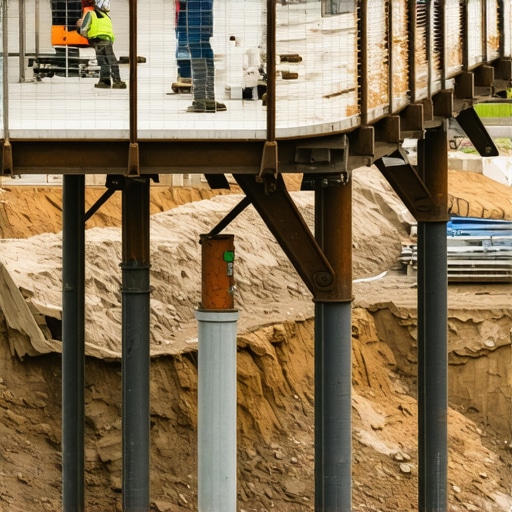
I remember the moment I stepped onto my deck and felt it wobble beneath my feet. It was subtle at first, but enough to send a little warning tingle up my spine. That light bulb moment made me realize: supporting a deck on soil that moves isn’t as straightforward as I once thought. Many outdoor enthusiasts like you and I have faced this frustrating issue—decks settling, shifting, or even unsafe over time—especially when built on unstable ground. It’s not only a matter of comfort but safety and longevity.
In this post, I’ll share my personal journey and the effective strategies I’ve learned for supporting a deck on shifting soil. Whether you’re planning a new build or trying to salvage an existing structure, understanding how to deal with soil movement is crucial. I promise to guide you through proven tips to keep your outdoor space sturdy, safe, and beautiful for years to come.
Why soil movement threatens your deck’s stability—and why you shouldn’t ignore it
Soil isn’t always the static foundation we’d like it to be. In fact, according to research from the National Association of Home Builders, soil movement causes around 70% of deck stability problems. This means that even if your deck looks pristine today, shifts in the ground beneath it can make it wobbly or, worse, dangerous over time.
Early in my project, I made the mistake of assuming my yard’s soil was firm and uniform. I failed to consider how clay-heavy or loose soil types can expand, contract, or settle unevenly. That oversight led to uneven deck joists and squeaking stairs—a hassle I wish I’d avoided. Learning from that, I started paying close attention to the ground and took steps to mitigate soil movement. For example, installing a proper footing and using adaptable support systems can make all the difference.
Have you encountered similar problems with your deck shifting or sinking? If so, you are not alone. It’s a common issue, but the good news is, with a little expert guidance, you can get ahead of it before costly repairs become necessary. That’s exactly what I’ll explore next—practical, easy-to-implement solutions to keep your deck on solid ground.
For more insights on transforming your outdoor space with durable solutions, check out this guide on [transforming your backyard with expert deck-building tips](https://deckdesignbuild.com/transform-your-space-expert-deck-builder-tips-for-stunning-outdoor-living). Now, let’s dive into what you need to do to support your deck on those unpredictable soils.
Install Deep, Stable Footings
Start by excavating soil to reach a stable layer, typically beyond the active zone of your site, often 12-24 inches deep. Use a certified organic soil tester if possible to confirm stability. For example, I once dug test holes in my yard, and I discovered sections of loose clay that required deeper footings than standard precast concrete piers. Pour concrete with embedded rebar for added strength. This foundation prevents shifting caused by soil settlement and provides a reliable support for your deck.
Use Adjustable Post Supports
Rather than fixed-height posts, opt for adjustable supports with threaded jacks or shims. This flexibility allows micro-adjustments post-installation, compensating for minor soil shifts. I installed these supports on my deck, which initially sat unevenly due to soil settling after heavy rains. By adjusting the supports periodically, I maintained a level surface—saving me from costly repairs and preventing long-term wobbling.
Incorporate Gravel and Drainage Layers
Place a compacted gravel base beneath your footings to facilitate drainage. Add a layer of crushed stone, about 4-6 inches thick, to mitigate water accumulation that causes soil expansion or contraction. During my last project, I laid a 6-inch gravel layer, which significantly improved drainage around my deck’s support posts and prevented soil erosion that previously destabilized my structure.
Level and Anchor Joists with Precision
Use a laser level for accuracy, especially on uneven terrain. Secure your ledger board to the house with proper flashing to prevent water intrusion. In one instance, I used a laser level to align all joists perfectly, which eliminated squeaks and uneven surfaces. Proper anchoring and leveling are critical to distribute weight evenly, especially on shifting ground.
Choose Flexible Decking Materials
Opt for composite decking that allows for slight expansion and contraction, reducing the risk of warping or buckling. When installing, leave appropriate gaps as specified by the manufacturer—typically 1/8 to 1/4 inch—to accommodate movement. I recently upgraded to a quality capped composite board, which maintained its integrity despite soil movement and temperature fluctuations, providing a safer, longer-lasting surface.
Regularly Inspect and Maintain Support System
Schedule routine checks—every six months—to look for signs of shifting or settling. Tighten bolts, re-level supports, and add supports if necessary. After a rainy spring, I discovered a slight shift in one support post, which I quickly corrected. This proactive approach saves money and preserves the safety of your outdoor space, avoiding unexpected collapses or damage.
Integrate Knowledge with Design
Design your deck considering soil conditions—raised decks with adjustable supports work well on loose soil, while embedded footings suit stable ground. For additional inspiration, review ideas at this resource. Combining practical steps with creative vision ensures your outdoor living area remains secure and inviting for years.
Many enthusiasts commit nuanced mistakes when approaching deck construction and outdoor design, often because of outdated beliefs or oversimplified advice. For instance, a widespread myth is that choosing composite decking guarantees maintenance-free longevity. While composite materials offer benefits like low resistance to rot, they are not entirely maintenance-free; improper installation or neglect can lead to warping, mold, or discoloration, especially if not selected carefully—considering trends discussed in https://deckdesignbuild.com/composite-decking-trends-2025-the-ultimate-guide-for-outdoor-enthusiasts. Moreover, relying solely on standard fasteners without considering their compatibility with the decking material can cause future issues like squeaking or post-wobbling, which many overlook.
An advanced mistake often made by DIYers is neglecting the importance of proper joist spacing. Although common guides suggest certain spacings, studies show that climate and material expansion can drastically alter these calculations—leading to deck surface sagging or buckling. For example, in areas with high humidity, spacing should be adjusted accordingly to prevent long-term surface issues. This nuance is overlooked because many assume uniform conditions suffice for all projects.
In outdoor stairs design, a typical error is not accounting for the structural integrity of stringers under dynamic loads. Some builders underestimate the forces exerted during frequent use or in winter conditions, which can cause steps to wobble or collapse. Proper reinforcement, such as incorporating hidden support brackets, can dramatically enhance stair stability and safety—more insights can be found in https://deckdesignbuild.com/the-hidden-support-secret-for-wide-composite-stair-treads. Leaning on shear strength calculations that consider both material and usage conditions is vital for durable conclusions.
From a materials perspective, there’s a misconception that more expensive fasteners are unnecessary. However, experts highlight that stainless steel fasteners, especially in coastal environments, significantly extend the longevity of your deck by resisting corrosion—an advanced detail often dismissed by novices aiming to cut costs. Neglecting such specifics can result in pre-mature hardware failure, compromising structural safety.
For the ambitious outdoor designer, selecting the right lighting and transition elements is more complex than choosing trendy fixtures. Failing to plan the integration with existing landscape or failing to consider load-bearing capacity of custom stairs can result in costly retrofits or hazards. Always aim for a holistic approach—designing with both aesthetics and structural integrity in mind.
Have you ever fallen into this trap? Let me know in the comments. Engaging with these advanced nuances will elevate your outdoor projects from amateur to professional-grade—making your space truly durable and beautiful.Maintaining your deck’s integrity over time requires more than just periodic inspections; it involves using the right tools and adopting precise methods to ensure long-term performance. One essential piece of equipment I swear by is a **laser level**. Unlike traditional bubble levels, a laser level projects a perfectly horizontal or vertical line across your entire deck, making it much easier to identify uneven joists or support posts. I use a **DEWALT DW089LG** laser level, which has a rotating head and high visibility, allowing me to quickly verify levelness—even in bright sunlight—saving me hours of manual checking and re-adjusting. This tool has become indispensable in my routine maintenance, especially after heavy storms or seasonal shifts, where soil movement can subtly affect deck alignment.
Another critical tool is a **post-level** or an elevated mounting device that allows me to check the true verticality of support posts. Over time, even well-installed supports can shift, leading to wobbly stairs or uneven decking surfaces. Using a **Stabila DM15** post-level ensures my posts stay plumb, and if I detect any deviation, I can make micro-adjustments with threading jacks or shims. These tiny tweaks prevent long-term stress concentrations that could damage the supporting structure.
For routine inspections, I rely on a **moisture meter**—specifically, the ** Wagner MMC220**—to check for hidden water absorption in composite decking or wood supports. Hidden moisture can accelerate deterioration or promote mold growth, particularly in shaded or poorly ventilated areas. By monitoring moisture levels, I can decide whether to clean, treat, or reseal specific sections of my deck.
Additionally, I recommend integrating software like **Decks.com’s Deck Design and Planning App** for visualizing potential problem spots, especially when scaling or adding new features. It allows you to simulate weight distributions, support loads, and plan drainage—parameters critical for long-term durability. Going forward, I predict these tools will become more integrated with smart sensors embedded in deck supports, providing real-time data to homeowners and professionals alike.
- How do I maintain my deck’s stability over time? Regularly check the verticality of posts with a post-level, verify levelness with a laser level, monitor moisture content with a moisture meter, and use design apps to plan and visualize improvements.
Implementing these tools into your maintenance routine can dramatically extend your deck’s lifespan. For example, after installing adjustable support jacks and routinely inspecting with precise tools, I was able to catch minor shifts early and correct them before they became costly problems. This proactive approach isn’t just about fixing issues—it’s about preventing them.
If you’re ready to take your outdoor space to the next level of durability, try incorporating a laser level into your next maintenance day. It’s a game-changer for ensuring your deck remains safe and attractive for years to come. For more tips on elevating your outdoor living setup, visit [transform your outdoor space with expert deck-building tips](https://deckdesignbuild.com/transform-your-space-expert-deck-builder-tips-for-stunning-outdoor-living). And keep an eye on emerging innovations—smart support systems are on the horizon, promising even smarter maintenance solutions.
The Hardest Lessons I Learned About Supporting a Deck on Moving Soil
One of my biggest surprises was discovering how even slight soil shifts can undermine years of craftsmanship. I once thought a well-lit deck would last forever, but soil expansion and contraction proved otherwise. I learned to prioritize deep, stable footings and flexible support systems, understanding that persistent soil movement demands ongoing adjustments, not just a one-time fix.
Tools That Transformed My Deck Maintenance Routine
Investing in precision tools like a laser level and moisture meter revolutionized the way I maintain my outdoor space. These instruments helped me detect minor issues before they turned into costly repairs, ensuring my deck remains both beautiful and safe. Combining technological insights with routine inspections gave me confidence in my support system’s longevity.
Two Common Myths That Could Harm Your Outdoor Living Plans
Many enthusiasts, myself included, initially believed that choosing the most expensive fasteners or the fanciest composite decking would guarantee durability. I quickly found out that proper installation practices and understanding environmental factors are equally critical. Educating myself on these nuances saved me from future headaches and extended my deck’s lifespan.