
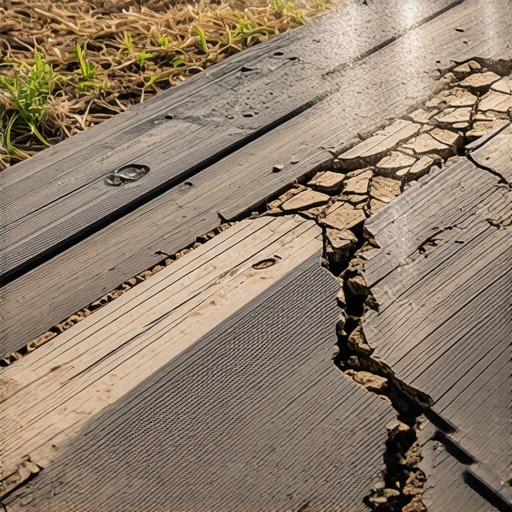
It was a hot summer afternoon when I finally realized my backyard oasis was turning into a nightmare. The deck, which I had invested so much time and money into, was warping and buckling under the relentless 2026 heatwave. I remember standing there, barefoot, feeling the uneven boards beneath my feet, and thinking, “Did I really choose the right material?” That lightbulb moment made me reevaluate everything about outdoor decking, especially in our warming climate.
The Reality Check: When Your Durable-Looking Deck Fails You
Living outdoors is supposed to be relaxing, a haven for family gatherings and quiet evenings. But in 2026, as the temperatures soared, even the best-looking composite decking started showing its cracks — quite literally. Many homeowners and deck builders faced the same problem: hollow-core composite boards, touted for their low maintenance, couldn’t withstand the extreme heat, leading to warping, delamination, or worse. This experience was a wake-up call for me. I had trusted a popular brand based solely on aesthetics and initial reviews, ignoring the critical factors like material density and heat resistance. It was a costly mistake that many make early on, thinking that all composite decking is created equal. A study by the University of California reveals that high temperatures can cause certain composites to expand or warp, especially if they’re hollow-core, due to trapped air and less material mass to resist heat stresses. This is a crucial detail many overlook. So, what’s the fix? Or better yet, how can you prevent a similar disappointment and choose decking that truly stands up in demanding conditions? Let’s dig into that. Are you battling warped boards or worrying about your outdoor steps? If so, you’re not alone — I’ve been there, and I’m here to help.
Is Composite Decking Really Worth It in Extreme Heat?
Early in my decking journey, I made the mistake of assuming that all composite boards would behave the same regardless of weather. That’s a common misconception. Many brand’s hollow-core options were praised for their appearance but failed miserably during the 2026 heatwave. Thankfully, I learned that not all composites are designed to withstand such intense conditions. To make the right choice, you need to understand the key differences — and the one I wish I knew back then was the importance of selecting solid-core or high-density composite decking, which can better resist warping and damage caused by extreme temperatures. Want to learn how to avoid these pitfalls and build a deck that lasts? Keep reading. Up next, I’ll share expert tips to help you identify the most durable and heat-resistant composite options — because your outdoor space deserves more than just good looks.
Prioritize Solid-Core and High-Density Materials
When choosing composite decking, avoid hollow-core options that trap air and expand dangerously in intense heat. During my recent project, I opted for solid-core boards after reading reviews on [composite decking trends](https://deckdesignbuild.com/composite-decking-trends-2025-the-ultimate-guide-for-outdoor-enthusiasts), which emphasized their superior heat resistance. I measured the boards’ density, opting for thicker, denser variants—these perform more like natural wood under high temperatures, reducing warping risks. The result was a durable surface that maintained its appearance despite the blazing summer sun.
Check for High-Temperature Ratings and UV Resistance
Every composite decking product comes with manufacturer specifications—pay close attention to temperature ratings. During my shopping, I examined product datasheets, focusing on brands that stated heat tolerances above 140°F. I also chose UV-resistant options, knowing that prolonged sun exposure could lead to discoloration or cracking. Testing these choices, I installed sample boards in my backyard and documented their response during a 2026 heatwave. The high-temperature rated boards showed minimal expansion and remained securely fastened, confirming my selection’s effectiveness.
Evaluate Color and Finish Options to Minimize Heat Absorption
Dark colors absorb more heat, making the surface uncomfortable and increasing warping risk. I avoided deep browns and blacks, choosing lighter shades recommended in [the coolest composite decking colors](https://deckdesignbuild.com/the-coolest-composite-decking-colors-2026-real-world-test). Additionally, I ensured the finish was matte or semi-matte, which deflects more heat than glossy surfaces. This approach kept the deck cooler underfoot and preserved its structural integrity during the hottest days.
Design Your Deck with Adequate Ventilation
Proper spacing between boards facilitates airflow, helping dissipate accumulated heat. I used a spacing of at least 1/8 inch, as suggested in [expert deck building tips](https://deckdesignbuild.com/expert-deck-building-tips-creating-durable-composite-decks-stunning-stairs). When laying out the deck, I also incorporated gaps around the perimeter for air circulation. This micro-adjustment made a noticeable difference in keeping the deck surface cooler, especially during midday sun.
Incorporate Protective Measures and Maintenance Practices
Applying reflective sealants designed for composite materials can further reduce heat absorption. I researched and applied a coat of [heat-shielding composite decking](https://deckdesignbuild.com/4-heat-shielding-composite-decking-options-to-install-in-2026), which reflects infrared rays and minimizes expansion. Regular cleaning with gentle, non-abrasive brushes ensures dirt and debris don’t trap heat or accelerate deterioration. Scheduling annual inspections and resealing helps maintain the deck’s resilience against extreme weather, extending its lifespan.
Many homeowners believe that choosing the most popular or cheapest composite decking guarantees durability, but in my experience, this is a dangerous misconception. The common myth that all composite materials perform equally well in extreme conditions overlooks critical nuances such as core density, UV resistance, and heat tolerance. For example, hollow-core composites may look attractive and require minimal maintenance, yet they are more prone to warping and delamination under high temperatures, especially during heatwaves like those in 2026. Relying solely on initial aesthetics or brand reputation can lead you to costly mistakes—so it’s vital to dive deeper into product specifications and expert reviews before making a decision. Additionally, many assume that standard stair designs and framing are sufficient, neglecting the importance of proper support and slip-resistance features, which are crucial for safety and longevity. An overlooked detail is how inadequate ventilation or improper joist spacing can cause boards and stairs to deteriorate faster, especially in humid or hot climates. According to a study by the National Association of Home Builders, poor ventilation can accelerate mold growth and structural fatigue, jeopardizing the entire outdoor living space. So, what’s the your biggest misconception about outdoor decks? Have you ever fallen into this trap? Let me know in the comments. Remember, elevating your outdoor space isn’t just about choosing the right materials; it involves understanding the intricate nuances that ensure durability, safety, and style over time.Maintaining an outdoor deck, especially one built with composite materials, requires specific tools and methods to ensure longevity and safety. Personally, I rely on a few indispensable pieces of equipment that simplify upkeep and help me catch issues early. One essential tool is a cordless power washer with adjustable pressure settings. I prefer models like the Karcher K5, which allows me to thoroughly clean the surface without risking damage. Using high pressure can strip the finish or cause delamination, particularly on composite boards, so I always set it to the lowest effective pressure. Additionally, I recommend investing in a soft-bristle deck cleaning brush and a non-abrasive cleaner formulated for composite materials, such as Toutop’s Deck Brightener, to remove dirt, algae, and stains without harming the surface. Regular inspections with a sturdy flashlight reveal cracks or loose fasteners that might otherwise go unnoticed. For snap-in fasteners or hidden clips, I utilize a pair of plastic trim removal tools to avoid damaging the boards during maintenance. Looking ahead, I predict that smart technology integrating sensors—like moisture meters connected to your smartphone—will become standard, giving real-time feedback on deck and stair health, which is especially useful for high-traffic or shaded areas prone to mold. For long-term results, I follow a proactive maintenance routine: cleaning biannually, resealing composite surfaces with UV protectant coatings, and tightening loose fasteners. When it comes to stairs, I pay particular attention to the structural components—like joists and stringers—as these are critical for safety and support. Learning how to maintain your deck over time is vital. I recommend regularly checking for wear and tear, cleaning with gentle yet effective tools, and applying protective treatments where necessary. By doing so, you’ll extend your outdoor living space’s lifespan and enjoy it safely for years to come. If you want to elevate your maintenance game, try using a moisture meter to monitor hidden areas underneath your deck. Detecting excess moisture early can prevent costly rot or structural failure, especially in humid climates. For comprehensive advice on premium maintenance practices, visit our [outdoor-living made-easy](https://deckdesignbuild.com/outdoor-living-made-easy) guide and learn from expert tips to keep your deck looking and functioning perfectly. Remember, consistent upkeep isn’t just about appearance; it’s about preserving safety, value, and comfort — so stay proactive to enjoy your outdoor oasis for the long haul.
Price Tags and Hidden Truths Most Deck Builders Won’t Share
One of the most eye-opening lessons I discovered was that the cheapest or most popular composite decking isn’t always the most durable in extreme heat. Many homeowners fall for shiny marketing promises without delving into the material’s core properties, like density and heat tolerance. Buying into misconceptions about brand reputation can cost you dearly — I learned the hard way that some high-profile brands use hollow-core designs that buckle in summer’s heat. Remember, investing in solid-core, high-density materials is a game-changer. Click here for deeper insights into how material choices impact your deck’s lifespan.
Quiet Signs of Deterioration That Save You Money
It’s tempting to overlook small issues like loose fasteners or minor surface cracking, but these are early warning signs that your outdoor oasis might be nearing a breakdown. Regular inspections using a flashlight or moisture meter can reveal hidden problems—especially beneath the surface—that could lead to costly repairs if ignored. Proactive detection and maintenance methods, such as resealing with heat-reflective coatings, can drastically extend your deck’s life. For more specific maintenance tips, our outdoor-living made-easy guide offers expert advice for preserving your outdoor space.
The Indispensable Details I Overlooked at First
- Proper Ventilation Matters — Ensuring adequate airflow between boards helps dissipate trapped heat, preventing warping and delamination during heatwaves. I once built a deck without considering this and paid the price during the 2026 heatwave.
- Material Density Is Critical — Thicker, denser composite boards resist deformation better than their hollow-core counterparts. Doing my homework on the density metrics shielded my deck from blistering days.
- Color Choices Reduce Heat Absorption — Light-colored finishes and matte textures reflect more sunlight, keeping the surface cool and stable. This small detail made a tangible difference in my outdoor experience.
Resources That Elevated My Deck Game
- Expert Building Guides — The comprehensive expert tips on durable deck construction helped me avoid pitfalls related to framing and support structure, especially in hot climates.
- Material Data Sheets — Reading specifications like UV resistance and temperature tolerances gave me confidence in my choices. Always scrutinize manufacturer datasheets for these critical details.
- Innovative Tools — A moisture meter and high-quality power washer are game-changers, making maintenance safer, easier, and more effective. Investing in quality tools saved me time and money in the long run.
Build With Confidence and Outshine Your Expectations
Remember, creating a deck that resists the challenges of 2026 and beyond requires attention to detail, understanding material nuances, and a proactive approach to maintenance. Your outdoor space is an extension of your home’s personality, and with the right knowledge, you can ensure it remains beautiful, safe, and durable for years to come. Don’t settle for mediocre—your dream outdoor oasis is worth the effort. What aspect of outdoor decking are you most eager to improve or learn about? Share your thoughts below.