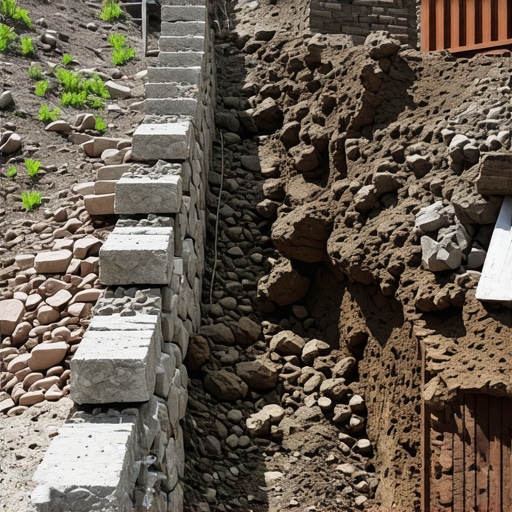
Why Most Branson West Hardscaping Projects Fail on Sloped Ozark Yards
The allure of the Ozark Mountains is undeniable. For homeowners in Branson West, Reeds Spring, and Lampe, the reward of a custom-built home is often a breathtaking, panoramic view of Table Rock Lake or the rolling, forested ridges of Stone County. However, that beauty comes with a geological price. Many residents invest tens of thousands of dollars into hardscaping and landscaping, only to watch their dream patios shift, their walkways crack, and their retaining walls bow within just a few seasons. It is a frustrating and expensive cycle that stems from a fundamental misunderstanding of the local terrain. Achieving a sharper edge landscaping result in this region requires more than just a shovel and a few bags of leveling sand; it requires an engineering-first approach to the unique “Ozark Trap.”
In this guide, we will explore why standard landscaping services often fail in our specific geography. From the hidden dangers of hydrostatic pressure to the critical importance of material selection, understanding these technical hurdles is the first step toward creating a lasting outdoor sanctuary. Whether you are looking for high end landscaping or simple professional lawn care services, the stability of your yard depends on respecting the ancient geology beneath your feet.
The “Ozark Trap”: Why Standard Hardscaping Fails Here
The primary reason most hardscaping and landscaping projects fail in Branson West is that contractors and DIYers alike treat the soil as if it were the flat, loamy plains of the Midwest. The Ozark Plateau is a different beast entirely. Our region is defined by “karst” topography – a landscape formed from the dissolution of soluble rocks such as limestone and dolomite. This creates a subterranean world of fissures, sinkholes, and underground springs that directly impact surface stability.
When you hire landscaping services that don’t account for this, they often apply “standard” installation methods that work in Springfield or Kansas City but fail miserably on a 30-degree Ozark slope. The soil here is often a thin layer of clay-heavy “red dirt” sitting atop a jagged foundation of chert and limestone. This makes traditional excavation difficult. Standard base depths for patios often prove insufficient when the underlying rock expands and contracts at different rates than the fill dirt above it. To avoid the Ozark Trap, one must look at The grading trick that saves Branson landscaping from Ozark runoff to ensure that water is moved away from the foundation of the hardscape before it can undermine the sub-base. Without this specialized knowledge, even a sharper edge landscaping project will eventually succumb to the shifting earth.
Furthermore, the rocky nature of Reeds Spring and Lampe means that “soil” is rarely just soil. It is a mix of aggregate that varies in density every few inches. When a contractor attempts to level a site without a deep understanding of these geological variations, they create “soft spots.” Over time, the weight of a stone patio or a heavy outdoor kitchen will cause these spots to compress, leading to the uneven, “wavy” look seen in so many failed projects.
The Fatal Flaw: Ignoring Hydrostatic Pressure and Drainage
If you ask any forensic engineer why a retaining wall in Branson West collapsed, the answer is almost always the same: hydrostatic pressure. This is the #1 killer of Ozark hardscaping. Hydrostatic pressure refers to the pressure exerted by a fluid (water) due to the force of gravity. In the Ozarks, our clay-heavy soil acts like a sponge, holding onto moisture long after a storm has passed.
When it rains heavily – as it often does in the spring – water saturates the soil behind a retaining wall. Because the soil cannot drain quickly, the water weight adds massive physical pressure against the back of the structure. A single cubic foot of water weighs 62.4 pounds. On a long wall, this can equate to thousands of pounds of extra force that the wall was never designed to hold. Many landscape design services fail because they treat a wall as a decorative fence rather than a structural dam. If you don’t provide a way for that water to escape, the wall will eventually “blow out” or lean forward until it becomes a safety hazard.
A common mistake is the “cut and dump” method. This happens when a contractor cuts into a slope to create a flat area for a patio but fails to reinforce the “angle of repose” – the steepest angle at which a sloping surface formed of loose material is stable. Simply cutting into the soil without a comprehensive drainage plan is a recipe for a landslide. This is why it is vital to implement The drainage move that saves your deck footings from sinking. By using perforated pipes, clean gravel backfill, and weep holes, you allow the water to flow through the landscape rather than pushing against it. Professional landscaping services in the Ozarks must prioritize what is behind the wall just as much as what is on the face of it.
Material Matters: Why Natural Stone Beats Concrete Blocks in the Ozarks
When planning high end landscaping in Reeds Spring or Branson West, the choice of material is often a debate between manufactured concrete blocks and natural stone. While concrete blocks are uniform and easier to install, they often lack the longevity required for the Ozark climate. The freeze-thaw cycle in Southwest Missouri is particularly brutal. We experience frequent shifts where the ground freezes at night and thaws during the day, causing materials to expand and contract rapidly.
Manufactured concrete blocks are porous. Water can seep into the aggregate, freeze, and cause “spalling” or cracking over time. Natural stone, particularly the limestone and sandstone native to our region, is far better suited for this environment. It has been sitting in the Ozark earth for millions of years; it is already “acclimated” to the climate. Expert stone masons, such as Samuel Saunders, have long advocated for the use of natural stone because of its ability to “breathe” and shift slightly without losing structural integrity.
There is also an aesthetic consideration. A sharp lawn looks best when it transitions into a landscape that feels like it belongs there. Natural stone provides a timeless elegance that manufactured products cannot replicate. If you are investing in your property, you should consider Why Natural Stone Beats Concrete Blocks for High End Branson West Hardscaping. Not only does it increase property value, but it also ensures that your hardscaping and landscaping project won’t look dated or weathered in a decade. Natural stone walls, when built correctly with dry-stack techniques or proper mortar, can last a lifetime, whereas many “big box” block systems begin to fail within 10 to 15 years.
The Engineering Gap: When a Wall Becomes a Liability
In the world of landscape design services, there is a concept known as “Critical Height.” For most residential projects, any wall over four feet tall is considered a structural entity that may require an engineer’s seal. In the steep terrain of Branson West, it is very common to need a wall that is 8, 10, or even 12 feet tall to create a level backyard. This is where many sharp lawn enthusiasts run into trouble. They try to build one massive wall to solve the problem, creating a monolithic structure that is under immense stress.
The solution is almost always “tiering.” Instead of one 10-foot wall, a professional designer will create two or three smaller walls with flat “benches” of landscaping in between. This distributes the weight of the slope across multiple structures and significantly reduces the risk of a catastrophic failure. Tiering also allows for better integration of professional lawn care services, as it creates manageable planting beds rather than a sheer cliff of stone.
Furthermore, the engineering must extend to the foundation. In the Ozarks, you cannot simply set a wall on top of the grass. You must excavate down to a solid “trench” and fill it with compacted aggregate. This creates a “floating” foundation that can withstand the frost heave of a Missouri winter. For those with particularly steep yards, understanding Why tiered decks are the superior choice for steeply sloped backyards can provide a safer and more functional alternative to massive retaining walls. A tiered approach ensures that your outdoor living space remains a retreat rather than a liability.
Beyond the Wall: Integrating Ecosystems with Kathy Robert
As a landscape architect, my philosophy is that hardscaping should never be “dead” stone. “My mission is to bring our landscapes to life by cultivating a diverse ecosystem that feeds and shelters local fauna, as well as nourish our souls,” says Kathy Robert. When we design a sharp edge landscaping project, we aren’t just looking at the stones; we are looking at how those stones interact with the living world around them.
A common reason hardscaping fails is the lack of “softscaping” to support it. Plants are the natural anchors of the Ozarks. The root systems of native Missouri plants – like the Purple Coneflower, Little Bluestem, or Oakleaf Hydrangea – act as biological rebar, holding the soil in place and absorbing excess groundwater. When you integrate these plantings into your hardscape design, you create a symbiotic relationship. The stone provides the structure, and the plants provide the stability.
This holistic approach is what separates high end landscaping from basic construction. By choosing native species, you also support the local pollinators and birds that make the Ozarks so special. It’s about more than just a sharp lawn; it’s about a vibrant, breathing backyard. If you are planning a major renovation, it is essential to learn How to Seamlessly Connect Your Custom Deck to a High-End Reeds Spring Landscape. This integration ensures that your man-made structures and the natural world work together, rather than fighting against each other.
Maintenance: The Secret to a Sharp Lawns and Lasting Hardscape
Even the best-engineered hardscape requires ongoing care. Many homeowners believe that once the stone is laid, the work is done. However, lawncare and snow removal play a massive role in the longevity of your investment. In Branson West and Reeds Spring, winter maintenance is a frequent culprit in stone degradation. The use of harsh rock salts (sodium chloride) can eat away at both concrete and natural stone, causing pitting and weakening the structure.
To maintain sharp lawns and pristine stonework, homeowners should opt for calcium magnesium acetate (CMA) or simple sand for traction during ice storms. These are much gentler on the environment and your masonry. Additionally, professional lawn care services should be mindful of the “edge.” Mechanical edgers and string trimmers can chip away at the base of stone walls or wooden deck posts if not handled with precision.
Regular inspections are also vital. After a heavy Ozark downpour, check your weep holes. Are they clogged with silt? Is water pooling in areas it shouldn’t? Catching a drainage issue early can save you from a five-figure repair bill later. Understanding The secret to maintaining a sharp lawn edge in the rocky Reeds Spring terrain will help you keep your property looking manicured while protecting the structural integrity of your hardscaping. A “set it and forget it” mentality is the fastest way to watch an Ozark landscape revert to its wild, chaotic state.
Conclusion: Investing in Ozark-Proof Outdoor Living
Building a lasting landscape in Branson West is a challenge of man versus mountain. The combination of karst topography, extreme hydrostatic pressure, and the unforgiving freeze-thaw cycle means that there is no room for error. Most hardscaping projects fail because they ignore these geological realities in favor of “quick fixes” or standard methods that simply don’t apply to the Ozark Plateau.
By prioritizing professional landscape design services, selecting superior natural materials, and insisting on rigorous engineering and drainage, you can ensure that your outdoor space stands the test of time. A sharper edge landscaping project is an investment in your home’s legacy and your family’s quality of life. Don’t settle for a wall that will lean or a patio that will sink. Whether you need hardscaping and landscaping or reliable lawncare and snow removal, professional expertise is the difference between a 5-year wall and a 50-year masterpiece.
Are you ready to transform your sloped Ozark yard into a stable, stunning sanctuary? Contact Deck Design Build today for a consultation on your next high-end landscaping project. Let us help you build something that lasts.