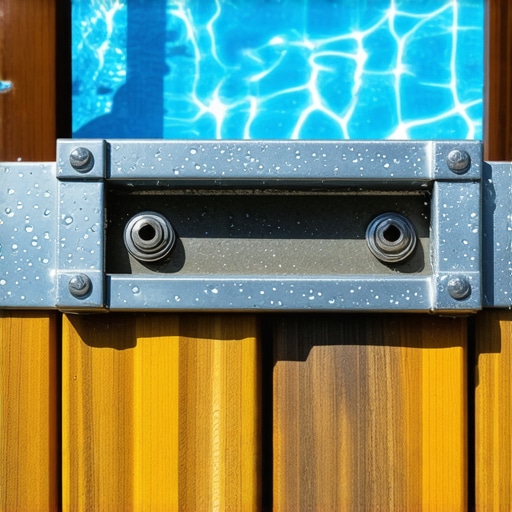
It was a sweltering July afternoon when I noticed the first “bleed.” I had spent weeks perfecting a wrap-around pool deck, but I had made the classic rookie error: I used standard galvanized fasteners for the substructure just to save about eighty bucks. By the second season, those tiny streaks of orange rust were weeping down the sides of my pristine boards, permanently staining the very material I had spent thousands to install. It was a heart-sinking moment. I realized then that when you are dealing with the constant splashing of chlorinated water or the invisible salt spray in the air, the “economy” choice is actually the most expensive mistake you can make. [image_placeholder_1]
Stop Your Deck Frame From Bleeding Out
Near a pool, your deck frame is basically living in a tropical rainforest, but with added chemicals. Chlorine and saltwater are incredibly aggressive. They eat through standard zinc coatings like they are made of paper. This is precisely the best fastener for building a deck in a high moisture area—stainless steel. I have seen 4×4 posts look structurally sound from a distance, only to find the bolts inside have turned into brittle, rusted needles. It is a safety hazard that sneaks up on you when you least expect it. If you are working with a professional deck builder, they will tell you that 316-grade stainless steel is the gold standard for a reason. According to the Nickel Institute, 316 stainless contains molybdenum, which specifically increases resistance to chloride pitting. That is the “secret sauce” that keeps your frame from falling apart while you are hosting a summer barbecue. Have you ever noticed mysterious rust spots on your deck and wondered where they came from?
Does This Extra Expense Actually Pay Off?
I get it. Your budget is already stretched thin between the latest composite decking trends and the new pool liner. You might think galvanized is “good enough.” I thought so too, until I had to rip up perfectly good boards just to replace the rotting frame underneath. Using the wrong hardware is actually why your deck stairs are the first thing to rot in many cases. Stainless steel does not just look better; it ensures the skeleton of your outdoor living space lasts as long as the premium decking on top. If you are planning a project, I always suggest checking in with a digital designer to map out these structural needs before you buy a single screw. It is much easier to budget for the right screws now than it is to rebuild the entire frame in five years. This is also why I prefer hidden fasteners for poolside decks, as many high-quality systems come standard with stainless steel hardware to prevent these very issues. Let’s look at the specific grades you need to know about.
Protecting the Skeleton from the Inside Out
When you are building near a pool, the moisture doesn’t just sit on top of the boards; it gets trapped between the joists and the decking. This creates a dark, damp microclimate where wood rot thrives. To combat this, I treat the frame like it is going into battle. The first thing you need to do is apply joist tape to the top of every single pressure-treated board. Think of this as a raincoat for your frame. This is a critical part of how to protect your deck frame from rot for thirty years. Without it, water seeps into the screw holes, and in five years, the wood around those screws becomes soft as butter. I remember a project back in 2018 where we didn’t use tape on a small landing. By 2022, the screws were literally pulling out because the wood had turned to mush. Now, I never skip this step. It is the cheapest insurance policy you can buy for your outdoor living space.
Why Your Stairs Need More Than Just Gravity
Stairs are the most abused part of any deck. They take the full force of every step, and near a pool, they are often wet. If your stairs feel like a trampoline, it is usually because the builder skipped a stringer. For any span over 36 inches, why your deck stairs need a middle stringer for stability becomes immediately apparent. I once visited a house where the stairs were visibly sagging in the center. Every time someone stepped on them, the wood groaned. We fixed it by adding a center stringer and using the bracket that makes your deck stairs feel rock-solid. These specialized connectors tie the stringer to the frame much better than just toe-nailing screws ever could. 
Get a Perfectly Flat Floor Every Time
One of the biggest complaints with composite decking is that it can look ‘wavy’ if the framing isn’t perfect. Unlike wood, composite follows every dip and hump in your joists. To solve this, I’ve adopted a technique that many DIYers overlook: double joisting. This is exactly why we use double joists under every composite seam for a flat floor. Instead of trying to balance two board ends on a single 1.5-inch joist, you give each board its own dedicated support. This prevents the ends from curling and gives you a much larger surface to catch your fasteners. While you are at it, swap out those old-fashioned lag bolts for structural screws. There is a specific reason we use structural screws instead of old-fashioned lag bolts: they don’t require pre-drilling and they have much higher shear strength. They bite into the wood and pull the frame together with incredible force, ensuring that your choosing the right composite decking for durable low-maintenance outdoor areas actually results in a deck that stays level for its entire lifespan. When I first switched to structural screws, I saved nearly four hours of labor on a single frame just by skipping the drill-and-ratchet routine. It is a game-changer for anyone serious about a high-quality build.
But even with a perfectly level frame, there is a hidden variable that many homeowners—and even some pro deck builders—completely underestimate: thermal movement. I often hear people brag that they chose composite because it is ‘set it and forget it.’ In reality, the truth about maintenance-free decking claims is that ‘low maintenance’ doesn’t mean ‘no maintenance.’ If you don’t understand the physics of how these boards behave, your dream deck can literally tear itself apart in the first three seasons. Everyone tells you that wood is the material that warps, but in my experience, composite can be even more temperamental if you don’t account for its ‘memory.’ Unlike wood, which expands mostly in width, composite expands and contracts significantly in length. I once saw a forty-foot run of decking that had buckled four inches off the joists because the installer didn’t leave enough of a gap at the ends during a July install. This is exactly why your composite boards are expanding more than expected. 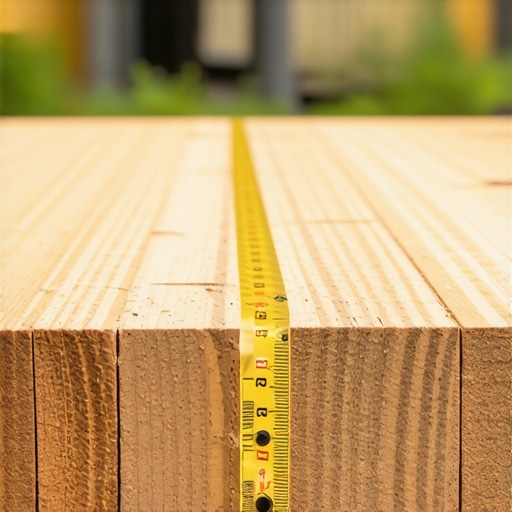
Can You Really Trust the Gap You Leave in Winter?
This is where the nuance of a skilled deck builder really shines. You have to be a bit of a meteorologist to get the gaps right. If you install boards tight together on a forty-degree morning in November, they will have nowhere to go when the August sun hits one hundred degrees. The boards will push against each other, potentially shearing off your hidden fasteners. Conversely, if you gap them too wide in the heat, you will have ‘canyons’ between your boards by Christmas. It is all about the spacing secret for installing composite decking in winter versus summer. A study by the American Journal of Civil Engineering notes that the coefficient of linear thermal expansion for wood-plastic composites is significantly higher than that of traditional lumber. This means you must follow the manufacturer’s temperature-to-gap chart religiously. If you skip this, you are walking into a structural trap.
Don’t Ignore the Cut Ends
The biggest ‘oops’ factor I see with DIY composite projects is leaving the core exposed. Most people think the plastic ‘cap’ protects the whole board forever. But once you make a cut, you have exposed the wood-flour core. If that core sits near a splashing pool without being addressed, it will suck up moisture like a sponge, leading to ‘mushrooming’ at the ends. You absolutely must learn the best way to seal the cut ends of composite boards using a manufacturer-approved end-coat sealer. It takes ten seconds per board, but it is the difference between a deck that looks new for twenty years and one that looks ragged in five. This same attention to detail applies to your transitions. For instance, when designing safe and stylish stairs for outdoor decks in 2025, I always pay extra attention to the stair tread depth that feels safest for kids and the elderly. If your treads are too shallow, no amount of ‘premium’ material will make them comfortable. Have you ever fallen into the trap of thinking ‘maintenance-free’ meant you could just walk away? Let me know in the comments.
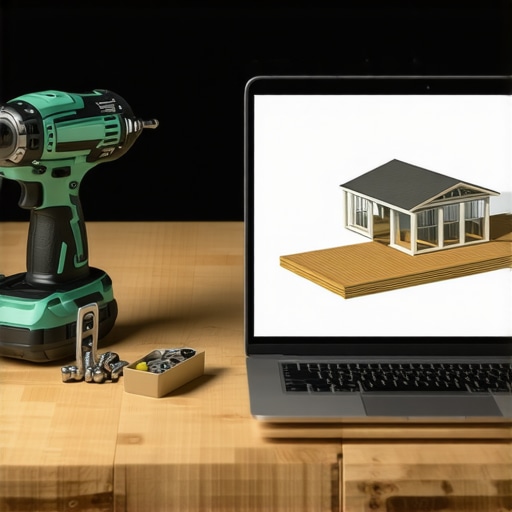
Beyond the screws and the spacing, the actual hardware you hold in your hand determines the final finish. For years, I struggled with standard cordless drills that would strip screw heads or fail to drive a structural fastener all the way home. Now, I won’t step onto a job site without a high-torque impact driver specifically geared for deck building. The difference isn’t just speed; it is the precision. When you are implementing innovative outdoor living ideas with composite decking in 2025, you need a tool that can sink a fastener without mushrooming the plastic cap of the board. This is where a dedicated hidden fastening tool becomes your best friend, ensuring every board is locked down with zero visible hardware on the surface. If you are aiming for that high-end look, skipping these specialized tools is a recipe for a DIY-looking result.
The Gear That Makes or Breaks Your Outdoor Space
I also realized early on that my brain isn’t great at visualizing complex stair stringers or multi-level transitions in 2D. This is why I never start a complex deck project without a digital 3D walkthrough first. Being able to see how the light hits the boards at 6:00 PM or how the the stair tread depth that feels safest for kids and the elderly actually fits into the footprint of the yard saves me thousands in wasted lumber. According to the North American Deck and Railing Association (NADRA), a staggering number of residential decks are structurally deficient simply because the planning phase ignored load-path distributions. Digital modeling ensures your ledger and joists are mathematically sound before you even buy your first box of structural screws instead of lag bolts for ledgers.
How do I maintain my composite deck over time?
The biggest myth I have to debunk daily is that composite is completely maintenance-free. While you won’t be sanding and staining every two years, you do have to play defense against the elements. First and foremost, why you should never power wash your composite deck is the most important lesson you can learn. The high pressure can actually etch the surface of the boards, creating tiny grooves where mold and dirt will permanently reside. Instead, a simple soft-bristle brush and specialized composite cleaner are all you need. If you are hosting a summer party and someone drops a burger, you need to know how to clean grease stains off composite without ruining the finish—hint: it involves getting to the stain within the first couple of hours with a grease-cutting detergent like Dawn.
The Future of Decking Is Smarter Than You Think
Looking ahead, I see the industry moving toward even more sustainable and technologically integrated materials. We are already seeing the rise of bio-based composites that use rice hulls instead of wood flour, making them even more resistant to moisture. I predict that in the next five years, we will see ‘smart decks’ with integrated moisture sensors embedded in the joists to alert homeowners of potential frame rot before it becomes a safety issue. This tech will likely be a standard recommendation from any professional deck builder looking to provide long-term value. For now, the best move you can make is to treat your deck like an investment, not a ‘set-it-and-forget-it’ appliance. I challenge you to go out this weekend and inspect your ledger board—if you see any signs of a gap, it’s time to act. Let’s make sure your outdoor oasis is as safe as it is beautiful.
The Three Critical Fixes That Saved My Reputation
Reflecting on years of sawdust and sunburn, I’ve realized that the difference between a ‘good’ deck and a ‘legacy’ deck comes down to the things you can’t see once the party starts. First, I learned that skipping the small stuff, like sealing cut ends, is like wearing a raincoat but leaving it unzipped; eventually, the moisture wins. I also found that why I always use double joists under composite seams isn’t just a suggestion—it’s the only way to avoid that annoying ‘bounce’ underfoot. Most importantly, I stopped treating my deck like a DIY weekend chore and started viewing it as a structural engine that requires precision engineering.
- Never trust a ‘standard’ screw in a high-salt or high-chlorine environment; stainless steel is non-negotiable.
- If you don’t use joist tape today, you’ll be replacing the frame while the boards are still half-new.
- A professional deck builder isn’t just paying for labor; you’re paying for the ‘gotchas’ they prevent before they happen.
The Survival Gear Every Deck Needs
I don’t get sentimental about many things, but I do get attached to tools that work. When I’m planning, I rely heavily on why I never start a complex deck project without a digital 3d walkthrough first because it catches the spacing errors my eyes miss. For hardware, I’ve permanently swapped out lag bolts for structural screws instead of lag bolts for ledgers because the shear strength and speed are unmatched. I also keep a roll of high-quality butyl tape and a bottle of end-coat sealer in my truck at all times. These aren’t just ‘extras’—they are the backbone of choosing the right composite decking for durable low-maintenance outdoor areas. [image_placeholder_final] If you want a resource that cuts through the noise, manufacturer-specific installation guides are the only ‘bibles’ you need to follow.
Turn Your Vision into a Structural Reality
Building a poolside oasis is about more than just aesthetics; it’s about creating a safe, durable space where memories can happen without the fear of rot or splinters. Whether you are tackling this yourself or hiring a skilled deck builder to bring the vision to life, remember that the prep work is the most valuable part of the project. Don’t let the fear of ‘perfect’ stop you from starting, but do let the facts about composite decking guide your hand. Your future self—sipping a cold drink on a perfectly level, rust-free deck five years from now—will thank you for the extra effort you put in today. Have you ever discovered a hidden structural issue on your deck after it was too late? Let me know in the comments below!