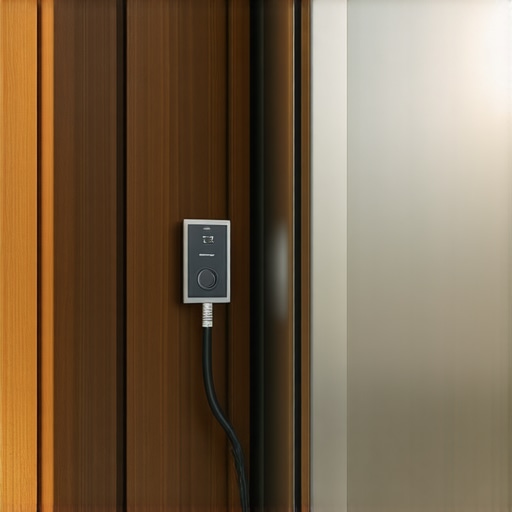
I remember the first time I pulled a lukewarm steak out of my shiny new outdoor cooler because the breaker had tripped three hours earlier while I was inside. I was so proud of my new setup—I’d spent weeks picking out the perfect spot on my custom composite decking—but I’d completely overlooked the power requirements. I thought I could just plug it into the same outlet I used for my phone charger and string lights. I was wrong, and my dinner guests ended up eating pizza delivery instead of grilled ribeye. That little fridge needs more juice than you think.
Stop Your Breaker from Ruining the Party
Today, I’m going to walk you through exactly why skipping a dedicated circuit is the fastest way to kill your expensive appliance and potentially create a fire hazard right under your feet. When I was first starting out, I made the mistake of using indoor furniture on an outdoor deck, but my biggest electrical blunder was assuming “power is power.” I didn’t realize that an outdoor fridge pulls a significant “surge” every time the compressor kicks on. If your lights are on that same line, they’ll flicker, and eventually, the breaker will give up the ghost. It’s a headache you don’t need when you’re trying to relax. Have you ever had your power cut out right in the middle of a backyard party? It’s embarrassing and entirely preventable.
Is a dedicated circuit really worth the extra electrical bill?
You might be tempted to just run a heavy-duty extension cord from the garage, but that’s a shortcut to a disaster. According to the Electrical Safety Foundation International (ESFI), nearly 3,300 home fires are caused by extension cords every year. Beyond the safety risk, an outdoor refrigerator can actually consume up to 50% more energy during a heatwave than a standard indoor unit because it’s fighting the elements. Without a dedicated line, you’re asking for a brownout. When you talk to a professional deck builder, they’ll tell you that while your outdoor kitchen needs its own structural support, the electrical backbone is what actually makes the space livable. We’re going to look at how to set this up the right way so your drinks stay frosty and your house stays safe.
Get the Amperage Right Before You Buy
The first thing I do now, before even unboxing the appliance, is look at the surge rating on the technical sticker. Most outdoor refrigerators pull between 5 to 7 amps while running, but that compressor kick-start can easily double or even triple that draw for a split second. If you have already installed the best low-voltage transformer for large backyard lighting sets and hooked it up to that same 15-amp line, you are playing a dangerous game of “will it trip?” I think of electricity like water pressure in an old house—if someone flushes the toilet (the fridge compressor kicks in), you are going to get scalded in the shower (your lights flicker or the breaker pops). For a stress-free setup that won’t leave you in the dark, you absolutely need a dedicated 20-amp breaker and 12-gauge wire.
Plan the Route Under Your Composite Boards
When I was retrofitting my own outdoor kitchen, I was terrified of having to rip up my expensive boards just to add power. I eventually used a trick similar to how to run wire for deck lights without drilling huge holes by utilizing the natural gaps between the joists to tuck my PVC conduit. If you are working on a new build, this is the time to be meticulous. I make sure to apply joist tape on every single deck frame even where the conduit runs, because trapping moisture against the wood is a silent killer for your sub-structure. I once tried to just “loose-wire” a small cooler under my deck stairs, and I realized within a month that the vibration from the fridge was actually rubbing the insulation off the wire against the wood. It was a messy, expensive fix that taught me to always secure my conduit every three feet. 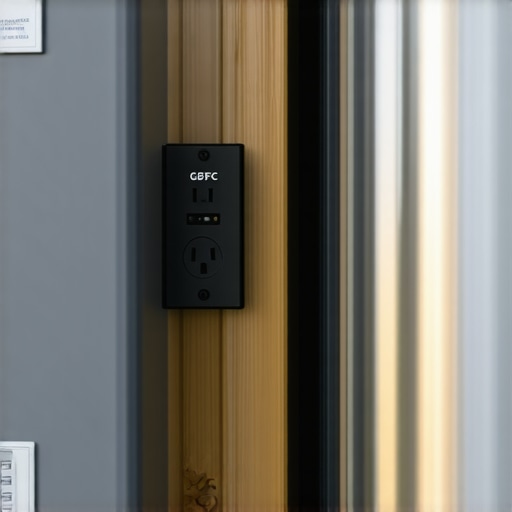
Protect the Circuit from the Elements
Since we are dealing with a high-moisture environment, a GFCI (Ground Fault Circuit Interrupter) is non-negotiable for safety and local building codes. However, here is a pro-tip: I prefer to install the GFCI at the breaker box rather than at the outlet itself. Outdoor outlets, even those with expensive “while-in-use” weather covers, are prone to humidity. If a standard outdoor outlet trips, you often have to crawl behind the fridge or move heavy furniture to reset it. If it trips at the panel, it is a ten-second fix in your garage. When mounting the outlet box to your frame, avoid using standard nails that can pull out over time. Using the same logic of why I use structural screws instead of carriage bolts, I use stainless steel screws to mount the electrical boxes. This ensures that even with the constant hum and vibration of a running motor, the box stays rock solid. Finally, if you are also figuring out the best way to mount a tv on your outdoor deck, keep those circuits completely separate. Refrigerators are “dirty” power users—the motor creates electrical noise that can cause lines or static on your TV screen if they share a circuit. Keep your drinks cold on one line and your entertainment crystal clear on another.I’ve seen plenty of DIYers and even some contractors focus entirely on the aesthetics of choosing the right composite decking for durable low-maintenance outdoor areas while completely neglecting what’s happening underneath the stairs. People often assume that if the deck is solid, the stairs will be too. In my experience, stairs are the first place where a ‘pro’ build separates itself from a weekend project.
Why Wood Stringers Are a Ticking Time Bomb
Most builders will tell you that pressure-treated 2x12s are the industry standard for stair stringers. I’m going to go against the grain here: I hate them. In many high-moisture climates, those wood stringers are the first things to rot because they trap water in the ‘valleys’ where the tread sits. This is exactly why I stopped using wood for deck stair stringers and moved toward steel or LVL alternatives. If you stick with wood, you are inviting a structural failure within a decade. It’s a massive ‘oops’ factor that most people don’t notice until the stairs start to feel spongy underfoot. 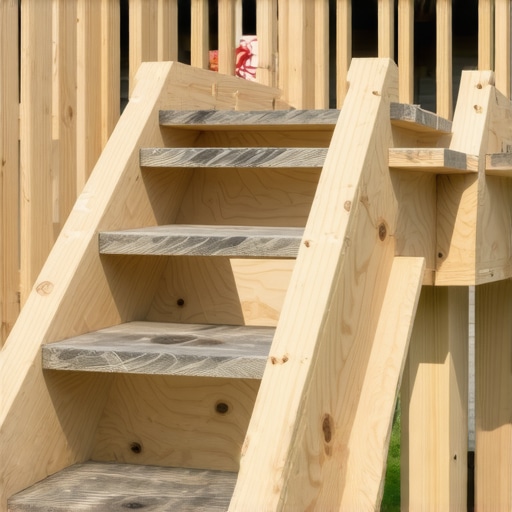
Should You Ever Trust a Standard 3-Stringer Setup?
For a standard 36-inch wide staircase, many codes allow for just three stringers. However, if you are using composite boards, three is simply not enough. Composite material is much more flexible than wood. Without more support, you’ll experience a bouncy, ‘trampoline’ effect every time you step. According to the International Residential Code (IRC) R311.7, stairs must handle significant live loads, but code is the minimum requirement, not the gold standard for comfort. This is why your deck stairs need a middle stringer for stability—actually, I usually install five stringers for a three-foot wide composite span to ensure it feels like a concrete sidewalk.
The Hidden Danger in Your Rise and Run
Another trap is ignoring the 11-inch tread rule for stairs that actually feel natural. I see so many decks where the builder tried to save space by making the steps too steep. Not only is this the mistake that makes your deck stairs trip hazards, but it also creates an uncomfortable ‘climb’ rather than a walk. If your guests feel like they are mountain climbing just to get to the yard, the design has failed. If you feel like your steps are off, it might be the structural reason your stairs feel like they are leaning. Always check your measurements twice before the first cut. Have you ever fallen into this trap where your ‘finished’ project felt less stable than you expected? Let me know in the comments below.
Stop Your Deck from Falling Apart with These Pro Tips
I’ve spent years debunking the truth about maintenance-free decking claims because, let’s be honest, nothing is truly maintenance-free if it sits outside 24/7. Even high-end boards need a little love. One of the biggest mistakes I see homeowners make is reaching for the high-pressure nozzle. I cannot emphasize this enough: why you should never power wash your composite deck is because that intense stream can actually etch the surface of the boards, creating microscopic pits that trap dirt and mold forever. Instead, I use a simple soft-bristle brush and a specific pH-neutral cleaner. If you had a backyard BBQ mishap, you’ll need to know how to clean grease stains off composite without ruining the finish, and the secret is acting fast with Dawn dish soap before the oil sets into the polymer cap.
How do I maintain my outdoor space over the long haul?
I recommend a deep scrub twice a year—once in the spring to get rid of winter grime and once in late fall. During these sessions, I’m not just looking for dirt; I’m looking for structural movement. I check the connection between the deck and the house because why your deck ledger needs a tension tie to stay secure isn’t just a code requirement; it’s a life-saving measure. According to the American Wood Council’s DCA 6 (Design for Code Acceptance), a deck must be able to withstand a lateral load of 1,500 pounds, and those ties are what make it happen. If you see even a 1/8th inch gap forming, it’s time to call someone. 
The Essential Gear I Never Leave at the Shop
When it comes to tools, I’ve moved away from standard drills for framing. I now exclusively use high-torque impact drivers paired with structural screws. I’ve found that the benefits of working with a professional deck builder often come down to the fact that we have the gear to drive five-inch fasteners without stripping the heads or splitting the wood. Looking ahead, I predict the next big shift in our industry won’t be in the lumber, but in the planning. This is why a digital designer is the best move for planning a complex backyard deck in 2025. Being able to see the structural skeleton in a 3D model before a single board is cut prevents the kind of ‘wait, the stairs don’t fit’ moments that kill budgets. If you want to level up your DIY game today, my top advanced tip is to install a tension tie on your ledger board this weekend—it’s a $30 part that provides ultimate peace of mind.
Hard-Earned Lessons from My Biggest Deck Disasters
Looking back at my first few years of building, I realized that the biggest mistakes weren’t made with a saw, but with a pencil during the planning stage. I used to think I could treat an outdoor kitchen like an indoor one, but the elements are unforgiving. One of the most important lightbulb moments for me was realizing that choosing the right composite decking is only half the battle; the other half is ensuring the electrical bones underneath can handle the load. I also learned that if you don’t over-build your stair support, no matter how pretty the boards are, the walk down to the yard will always feel unstable. Don’t let your ‘finished’ project be a source of stress. Taking the time to double-check your circuit amperage and stringer spacing is what separates a backyard that looks good in photos from one that actually works for a family BBQ.
The Only Tools I Trust for a Lifetime Build
If you want to move beyond the beginner phase, you need to stop relying on standard wood screws for critical connections. I have completely switched to structural fasteners and high-torque drivers because they won’t snap when the frame naturally shifts over time. I also strongly believe that why a digital designer is the best move for anyone tackling a complex layout is because it removes the guesswork from your material list. For keeping things clean, skip the chemicals and stick to a simple soft-bristle brush and Dawn soap. These tools and techniques are the foundation of my professional kit because they prioritize durability over speed every single time. #IMAGE_PLACEHOLDER_E#
Your Path to a Worry-Free Backyard Oasis
Your deck should be a sanctuary, not a weekend chore list. By focusing on the structural integrity of your stairs and the dedicated power needs of your appliances, you are building a space that will remain safe and functional for decades. Whether you are handling the labor yourself or looking into the benefits of working with a professional deck builder, the goal is the same: peace of mind under your feet and a cold drink in your hand. Use these deck builder insights to guide your final decisions and enjoy the process of creating your own custom composite decking masterpiece. Have you ever had a DIY project throw you a major structural or electrical curveball? Let me know in the comments below.