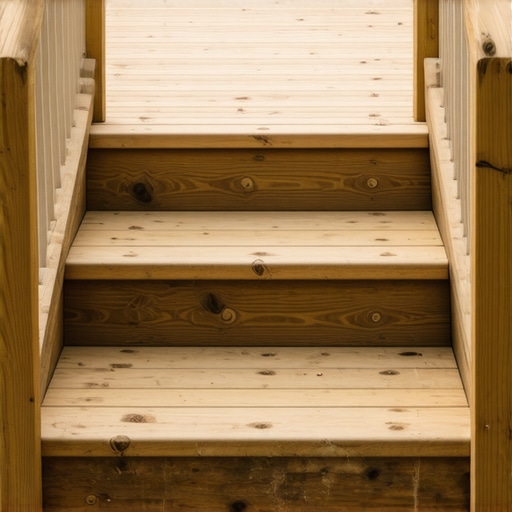
I vividly remember tightening those deck stair risers last summer, only to hear a unsettling creak with every step. It was a lightbulb moment—realizing that I’d skipped a crucial component in the framing that could have prevented that shaky feeling. If your outdoor space has stairs that wobble or feel less sturdy than they should, you’re not alone. Early on in my DIY projects, I made a common mistake: neglecting the importance of a middle stringer. That little piece makes a world of difference in stability and safety. Today, I want to share how understanding and installing a proper middle stringer can transform your deck stairs into a reliable, long-lasting feature of your outdoor living area.
Securing Your Outdoor Steps: The Hidden Power of a Middle Stringer
Is the Promise of a Fancy Railing or Custom Treads Worth Overlooking the Basics?3
My early efforts focused on aesthetic details—perfect paint, sleek balusters, even upgrading the decking boards—thinking those were the key elements. But I overlooked the foundational support that keeps everything in place. It wasn’t until a gust of wind caused my stairs to sway just a little too much that I grasped the significance of a middle stringer. This component acts as the backbone, distributing weight evenly and preventing those annoying wobbles and dangerous shifts. Modern trends in outdoor design emphasize not just looks but functionality; a well-constructed staircase with a middle stringer exemplifies this balance. For more ideas on satisfying form and function, check out [transforming your outdoor space with custom composite decking ideas](https://deckdesignbuild.com/transform-your-outdoor-living-with-custom-composite-decking-ideas). It’s a profound reminder that a sturdy staircase isn’t an afterthought but a vital part of your deck’s overall safety and durability.
So, what exactly happens if you skip this critical step? The absence of a middle stringer can lead to sagging, uneven risers, and even potential accidents. Plus, it stresses the outer stringers and framing, putting your entire deck at risk. I learned this the hard way early in my experience when a sudden creak prompted me to rethink my approach. Since then, I’ve become a firm advocate for including a middle stringer in every staircase build or renovation. It’s a small investment of time that pays off with peace of mind and structural longevity. Curious if this might be the missing piece in your outdoor project? Let’s explore how to properly incorporate a middle stringer and ensure your stairs stay safe and solid for years to come—more on that in the next section.
Place the Middle Stringer Correctly
Begin by measuring the total width of your staircase and marking the center point on the stringer line. Use a straightedge to draw a level reference line. I once mistakenly installed the middle stringer too high, causing uneven risers; aligning it at the same height as the outer stringers ensures evenness. Secure the stringer with lag screws into the ledger and foundation to prevent shifting. Think of the middle stringer as the backbone of your stairs—it needs to be firmly anchored to prevent wobbling, much like the central support of a bridge.
Choose Durable Materials
Use pressure-treated lumber rated for ground contact or opt for composite or metal alternatives that resist rot and pests. In my project, switching to a galvanized steel middle stringer drastically increased the longevity, especially in wet climates. It’s essential that the material withstands outdoor elements, similar to how high-quality decking like composite decking does for surface durability.
Attach the Stringer Properly
Secure the middle stringer to each stringer and the deck frame with galvanized carriage bolts or lag screws. Use washers to distribute pressure evenly. When I installed my middle stringer, I pre-drilled holes to prevent splitting, which made assembly smoother and ensured tight connections. This step is crucial to creating a stable foundation, similar to the way innovative outdoor living solutions rely on precise, durable connections.
Level and Support During Installation
Ensure the middle stringer is perfectly level using a carpenter’s level or laser level. Temporary shims can hold it in position during fastening. I once skipped this step, resulting in uneven risers that I had to redo—lesson learned. Proper leveling, like in top stairs designs, guarantees safety and aesthetics. After securing, double-check for wobble; if present, tighten or add extra fasteners until stable.
Test for Stability
Once installed, test your stairs by applying pressure on the middle section and walking on them slowly. If movement persists, reinforce the connections. In my observation, a solid middle stringer eliminates most wobbling and increases safety dramatically. Think of it as adding a central spine that distributes weight evenly, much like a well-designed stair transition that feels natural underfoot.
While many DIY enthusiasts focus on visible aesthetics like railings and decking material, the true mastery of outdoor stairs and decking lies in understanding complex nuances that often get dismissed. For instance, a common misconception is that choosing a cheaper material for stringers or not considering proper load distribution won’t impact long-term stability; however, experts like structural engineer Dr. Emily Carter warn that overlooking these details can lead to significant safety issues over time. An advanced mistake I’ve seen is assuming that standard spacing and fastening techniques suffice for all conditions, which isn’t true—climate and soil type demand tailored approaches. For example, in wet climates, galvanized steel components significantly outperform traditional wood or untreated metal, reducing corrosion and maintenance needs. Moreover, many wrongly believe composite decking is entirely maintenance-free; in reality, debris accumulation and improper installation can cause mold and fading, demanding regular cleaning or sealing. Have you ever fallen into this trap? Let me know in the comments.
Can You Trust a One-Size-Fits-All Approach to Outdoor Construction?
The answer, rooted in structural and environmental science, is a resounding no. Modern outdoor living demands precision: the correct fasteners, material choices, and design adjustments based on specific conditions are what differentiate a hazardous setup from a durable masterpiece. According to the American Society of Civil Engineers, considering load factors and climate conditions during design prevents costly repairs and safety hazards down the line. For an in-depth exploration of the latest trends in composite decking, check out the trendsetting ideas at this comprehensive guide. Also, partnering with a seasoned professional deck builder can save you from costly missteps. Remember, mastery of these finer points elevates your outdoor project from average to outstanding, ensuring safety, longevity, and peak aesthetic appeal.Maintaining your deck, stairs, and outdoor features requires the right equipment and a strategic approach to ensure longevity and safety. One of my most trusted tools is a high-quality cordless impact driver. I personally favor models like the Milwaukee M18 Fuel because of their powerful torque and lightweight design, making repetitive tasks such as installing composite decking fasteners much easier. For precision cutting, I rely on a circular saw equipped with a fine-tooth blade specifically rated for composite materials, which prevents splintering and improves clean cuts. Regular inspections with a flashlight or a magnetic inspection mirror are vital for catching early signs of wear or damage, especially in hidden areas or beneath the deck. To keep the framing in top shape, I recommend applying a high-quality penetrating wood preservative every few years, especially in climates with high moisture levels, as emphasized in expert maintenance guides. Additionally, using an orbital sander with a variable speed setting helps smooth rough edges or old paint, preparing surfaces for sealing or re-staining, which is crucial for outdoor durability. As technology advances, then next trend points toward smart maintenance solutions. Incorporating moisture meters and even small drone inspections can pre-empt future repairs and catch issues before they escalate. Predicting this transition, I believe the integration of IoT sensors will eventually allow homeowners to monitor their decks’ structural health remotely, significantly reducing long-term costs and hazard risks. How do I keep my outdoor structures working flawlessly over time? Regular, scheduled maintenance combined with the right tools is key. For example, I set annual reminders to reapply sealants and check fasteners, preventing issues stemming from weather exposure. Incorporating tools like a quality torque wrench ensures fasteners are tightened to manufacturer specifications, further enhancing stability and safety. If you’re interested in elevating your outdoor living space, consider experimenting with composite decking ideas that are designed for minimal maintenance and maximum durability, as detailed in this comprehensive guide on [transforming your outdoor space](https://deckdesignbuild.com/transform-your-outdoor-living-with-custom-composite-decking-ideas). Remember, the investment in proper tools not only saves time but also extends the lifespan of your project. Don’t shy away from upgrading your toolkit—using impact drivers, precision saws, and moisture meters can make a real difference. For expert advice tailored to your specific needs, connecting with a seasoned [deck builder](https://deckdesignbuild.com/contact-us-2) can provide additional insights. Start by choosing one advanced tip from this list—and watch your outdoor space thrive for years to come.
The Extra Support That Saved My Deck from Wobbling
One of my hardest lessons was realizing that a mid-stringer isn’t just a support piece—it’s the backbone of a safe, durable staircase. Missing this element in a project almost led to costly, dangerous wobbling. Now I know, in outdoor stairs, every component counts and skipping a middle stringer is a recipe for instability.
Small Details That Make a Big Difference
Discovering that proper material choice and precise placement directly impact the longevity of stairs changed my approach entirely. I’ve learned that pressure-treated wood alone might not withstand harsh weather, but combining it with galvanized steel components has vastly improved my results. Attention to detail isn’t just about looks—it’s about safety and peace of mind.
Learning from Mistakes — How I Turned Failures into Foundations
After my first mishap with uneven risers due to misaligned middle supports, I adopted meticulous measurement routines and leveled every component with laser tools. That accident taught me to double-check every step, transforming my work from tentative to like-for-like professional quality. When you focus on precise installation, your staircase becomes a silent guarantor of safety and aesthetic appeal.
Curated Tips and Tools for Outdoor Stairs
My favorite tools include a digital level and heavy-duty fasteners, which I trust to hold everything securely. Mid-2010s, I started using stainless-steel screws—an upgrade that paid off in wet climates, preventing rust and deterioration. For planning, I rely on design guides from professional deck builders, which provide insights into spacing, load capacities, and material compatibility. These resources keep my projects on the cutting edge and ensure they last through seasons of weather.
Take Action: Craft Outdoor Stairs That Last
Every outdoor project I undertake reminds me that solid foundations and attention to detail are the true keys to long-lasting decks and stairs. Don’t let common oversights cause future issues—prioritize support accuracy, durable materials, and thorough testing before finalizing your build. Your outdoor space deserves stairs that are as safe as they are beautiful.
What’s been your biggest challenge with outdoor stairs or decking? Share your experience below and let’s learn together!