
I remember the day I looked out at my pristine composite decking and saw that stubborn patch of moss creeping over the surface. My first instinct was to grab some harsh chemical cleaner—after all, why struggle with stubborn moss? But then I paused, recalling a recent article I read about the dangers of toxic cleaners for our environment and health ([EPA, 2022](https://www.epa.gov/environmental-effects)). That lightbulb moment made me rethink my approach.
If you’re like me, you’ve probably wrestled with the dilemma of how to restore your deck’s beauty without compromising your family’s safety or the planet. Today, I’m going to share proven, non-toxic methods to effectively remove moss from composite decking. This isn’t just about cleaning; it’s about doing so responsibly and sustainably, ensuring your outdoor space remains safe and inviting for years to come.
Why Go Non-Toxic? Protecting Your Family and the Environment
Is Regular Cleansing Worth It or a Hazard in Disguise?
Many of us have fallen into the trap of using cheap, chemical-laden cleaners because they promise quick results. But early in my journey, I made a critical mistake—assuming that all cleaners are safe when labeled as “powerful.” It wasn’t until I read about the harmful effects of some traditional moss killers that I realized what I was doing might be more harmful than helpful. Harsh chemicals can seep into our soil, leach into nearby plantings, and even pose health risks to pets and children.
Switching to non-toxic, natural solutions has transformed my approach. Not only do I preserve the integrity of my decking and surrounding landscape, but I also contribute to a healthier environment. Plus, you might be surprised by how effective some organic remedies can be—sometimes, simple ingredients in your kitchen are all you need.
Have you ever faced this challenge and wondered if there’s a safer way? You’re not alone. Many homeowners are discovering that cleaning moss doesn’t have to mean sacrificing safety or effectiveness.
In the next sections, I’ll walk you through step-by-step methods to banish moss naturally, plus tips to keep it from coming back. Ready to give your deck a fresh, eco-friendly facelift? Let’s dive into some practical, tried-and-true solutions that work without toxic fuss.
Prepare Your Workspace and Gather Your Supplies
Begin by clearing your deck of outdoor furniture, plants, and any loose debris. Wear protective gloves and goggles to shield your skin and eyes from organic cleaners and potential splashes. Gather your supplies, which include a stiff-bristled brush, a garden hose or pressure washer, baking soda, white vinegar, liquid soap, and a spray bottle. Having everything at hand will streamline the cleaning process.
Soak the Moss and Loosen It
Start by rinsing your deck thoroughly with water to remove surface dirt and rinse away loose moss. This step is crucial because it prevents mud and dirt from mixing with your cleaning solutions, which can promote further moss growth. Use a garden hose with a spray nozzle or a pressure washer set to a gentle setting, similar to a light rain, to avoid damaging the composite surface.
Next, prepare a natural cleaning solution—combine equal parts white vinegar and water in a spray bottle, adding a few drops of liquid soap. The acidity of vinegar effectively kills moss without harming your composite decking. Spray this solution generously over the affected areas, ensuring complete coverage. Let it sit for 15-20 minutes, allowing the acidity to penetrate and weaken the moss.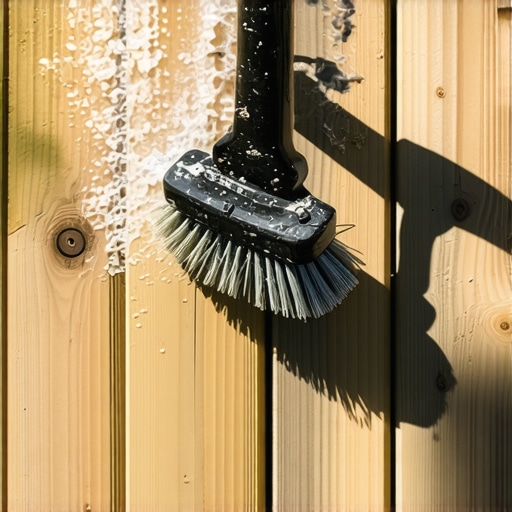
Scrubbing and Eliminating the Remaining Moss
After the solution has had time to work, use a stiff-bristled brush to scrub the moss vigorously. Focus on affected joints and textured areas where moss tends to cling. Think of this as scraping the moss off like peeling away stubborn paint; consistent pressure and upward strokes help dislodge it. For best results, work in small sections so the solution can remain effective on each part while you scrub.
For particularly stubborn patches, sprinkle baking soda directly over the moss, then scrub again. Baking soda acts as a mild abrasive, helping to lift the moss without scratching your deck. This method is akin to using baking soda paste on a greasy pan—effective and safe.
Rinse and Prevent Future Growth
Once you’ve scrubbed thoroughly, rinse the deck with your garden hose or pressure washer to wash away loosened moss, baking soda residue, and cleaning solution. Ensure the runoff flows away from plantings or sensitive landscaping. To prevent moss from returning, consider installing better drainage, trimming nearby overhanging branches to reduce shade, and periodically rinsing your deck during damp seasons.
This method not only restores your deck’s appearance but does so without introducing harmful chemicals. For a sleek, modern outdoor space, integrating these natural cleaning strategies ensures your composite decking remains safe, durable, and inviting.
When it comes to designing outdoor spaces, many homeowners and even some contractors focus heavily on aesthetics and initial cost, often overlooking subtle yet critical aspects that determine the long-term success of a deck project. A common misconception is that choosing high-quality materials like composite decking guarantees minimal maintenance and durability. While this is true to an extent, the real secret lies in understanding the nuances of proper installation and design details that can make or break your outdoor oasis.
For example, many assume that standard stair designs are sufficient for all settings. However, the nuances in stair stringer calculations, riser heights, and tread depths are vital for safety, accessibility, and visual harmony. An incorrectly calculated stair can be a tripping hazard or look awkward, detracting from the overall aesthetic. Advanced builders pay attention to these details, ensuring seamless transitions and a coherent flow—imagine how well-designed stairs can elevate your entire outdoor experience. For inspiring ideas on this, explore [top stairs designs for modern outdoor spaces](https://deckdesignbuild.com/elevate-your-home-top-stairs-designs-for-modern-outdoor-spaces).
Another overlooked aspect is the significance of proper framing and support structures beneath the visible surface. Many think that a good-looking deck is purely about surface selection, but the hidden framework is what guarantees longevity. Overlooking ground drainage, joist spacing, or ledger board placement can lead to early rot, sagging, or costly repairs down the line. An experienced [deck builder understands these intricacies](https://deckdesignbuild.com/creating-seamless-transitions-stairs-as-key-elements-in-outdoor-living), emphasizing how each component must work in harmony.
On the topic of composite decking, a frequent mistake is neglecting the subtle differences between brands or styles. Not all composite boards are created equal; some have better mineral cores, UV resistance, or thermal properties. Advanced homeowners consider trends like mineral core boards for poolside durability or innovative heat-bending techniques for custom curves, which require an understanding of material science and proper installation methods. For a comprehensive look, check out [composite decking trends for 2025](https://deckdesignbuild.com/composite-decking-trends-2025-the-ultimate-guide-for-outdoor-enthusiasts).
Furthermore, many people underestimate the importance of the transition between stairs and decking surfaces. An elegant, flush transition can be challenging to achieve, demanding precision in framing and framing-to-surface connections. This detail not only enhances safety but also creates a sophisticated look that elevates your entire outdoor space. Learn more about this critical element in [outdoor stair transitions](https://deckdesignbuild.com/creating-seamless-transitions-stairs-as-key-elements-in-outdoor-living).
Are you aware of how these hidden details might be affecting your current or future outdoor projects? Recognizing that each element, from framing to material choice, plays a vital role can save you time, money, and frustration. Remember: the difference between a good deck and a truly stunning outdoor living area often lies in these nuanced, less obvious decisions. Feel free to share your experiences or questions in the comments—let’s dig deeper into what makes outdoor spaces stand out.Maintaining a beautiful, durable outdoor space requires the right equipment. Over the years, I’ve refined my toolkit to include specific tools that make the job efficient, effective, and precise. First, a high-quality cordless drill with variable speed settings is essential for installing and tightening fasteners accurately without overdriving. I prefer one with a brushless motor—they last longer and operate more smoothly. Pair this with a set of stainless steel deck screws to prevent corrosion, especially in coastal environments, as recommended by [The International Code Council](https://shop.iccsafe.org/) for durability. For cleaning, I rely on a power washer with adjustable pressure control to remove dirt and moss gently without damaging composite surfaces; I set it to around 1500 psi for most applications. A stiff-bristled deck brush and a hand-held scraper are invaluable for detailed scrubbing of stubborn spots, particularly on textured boards. I also incorporate moisture meters like the Wagner pinless model to monitor wood moisture levels, ensuring proper staining and sealing, thus extending the lifespan of your deck. Organic cleaning solutions such as white vinegar solutions and baking soda are my go-to for routine maintenance, aligning with eco-friendly practices discussed in [EPA’s guidelines](https://www.epa.gov/environmental-effects). For the long-term, investing in a drone with a high-resolution camera helps me inspect hard-to-reach areas and identify potential problems early, saving costly repairs down the line. As composite decking trends are heading toward smart technology integration, I predict that future maintenance will involve app-controlled sensors to alert homeowners about moisture ingress or structural shifts. To stay ahead, I recommend trying out a moisture meter combined with your routine inspections—it’s a game-changer for preventive maintenance. Regularly updating your toolkit with these specialized tools ensures your outdoor living space remains stunning and safe for years to come. Want to see how professional deck builders approach maintenance? Check out our [benefits of working with a professional](https://deckdesignbuild.com/the-benefits-of-working-with-a-professional-deck-builder-in-your-outdoor-projects). Don’t hesitate—equip yourself with one of these tools today and start enjoying a flawlessly maintained deck year-round.
The Hardest Lesson I Learned About deck builder,outdoor living,stairs,composite decking
Early in my career, I believed that selecting premium composite decking was the key to requiring minimal maintenance. It wasn’t until years later, after countless repairs and tweaks, that I realized the real secret lay in meticulous installation details—like proper framing and support structures—that no one talks about in the initial sale. This revelation transformed my approach to outdoor projects, emphasizing that quality materials alone aren’t enough; design precision is paramount.
3 Mistakes That Creep Into Even the Best Deck Designs
- I used to neglect proper drainage behind the ledger board, which led to early rot—an oversight that cost me dearly in repairs. Now, I always include weep holes and flashing to prevent water infiltration.
- Underestimating the importance of consistent riser heights made my stairs look uneven and feel unsafe. Precise measurements and careful framing changed everything.
- I thought that all composite boards behave the same during installation, but understanding each brand’s unique thermal expansion properties prevented warping and buckling.
Sneaky Tricks I Swear By for Perfect Transitions
Seamless transitions between stairs and decks elevate the entire space. I now use engineering-grade shims and level each component meticulously before fastening. Additionally, I’ve started incorporating custom-bent metal trim to conceal joints—making the transition both safe and sleek. Want to learn how to create these smooth connections? Check out this guide.
Tools I Can’t Imagine Building Without
- A high-precision laser level ensures all components align perfectly, saving hours of realigning later.
- Moisture meters help me determine when wood or composite boards are ready for sealing—crucial for long-term durability.
- A dedicated power saw with a fine-tooth blade produces clean cuts, reducing splintering and waste.
Investing in these tools upgraded my craftsmanship and drastically reduced rework. For expert insights on project planning, visit this article.
Step Into the Future of Outdoor Living
Designing a stunning, durable deck is an art and science that continues to evolve. My advice? Never stop learning—pay attention to new materials like mineral core composite or innovative support methods. Embracing these advancements will give you a competitive edge and ensure your outdoor spaces stand the test of time.
Have you faced surprising challenges in your deck-building journey? Share your story below, and let’s learn from each other’s experiences!