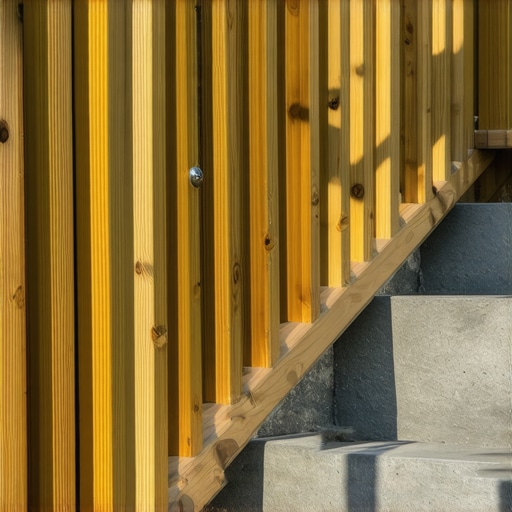
I still vividly remember the day I nearly took a tumble on my deck stairs because the handrail wobbled just enough to throw me off balance. It was a wake-up call—I realized that a shaky handrail isn’t just an annoyance, but a real safety hazard. That lightbulb moment made me dig into what truly makes a handrail reliable, especially in the unpredictable outdoor environment.
Why a Rock-Solid Handrail Can Save You From a Fall—and a Trip to the Emergency Room
The safety of your outdoor living space hinges heavily on sturdy, well-designed handrails. When guests or family members use the stairs, a loose or poorly secured handrail isn’t just unprofessional-looking; it can be deadly. Statistics show that falls on stairs are among the leading causes of non-fatal injuries among adults, emphasizing the importance of secure handrails (source: CDC). As someone who’s learned the hard way, the difference between a wobbling scream and a reassuring grip can be a matter of inches—and dollars.
It’s tempting to think that a quick screw or a simple fix will do the trick. But I learned early on that cutting corners leads to shaky railings that give way when you need support the most. And in outdoor settings, where materials face weather fluctuations—like rain, sun, and humidity—rigid attachment methods are vital. So, today I promise to walk you through the proven strategies for building handrails that stay firm, last for years, and keep everyone safe.
Is Your Current Handrail Holding Up or Just Hanging On?
One mistake I made early in my DIY project was assuming that standard fasteners would suffice. Turns out, not all fasteners are created equal, especially for outdoor use. I used nails early on, which rusted and loosened in a matter of months. This was a costly lesson—and one that could have been avoided with the right knowledge and proper materials. For more insights, I recommend checking out professional tips on [designing safe and stylish stairs](https://deckdesignbuild.com/designing-safe-and-stylish-stairs-for-outdoor-decks-in-2025), which detail the importance of high-quality fasteners and anchoring techniques.
Now, let’s dive into the key components that will turn your shaky handrail into a steadfast support—so you, your family, and your guests can enjoy your deck without second-guessing its safety.
Start with the Right Materials for Outdoor Durability
Choosing high-quality fasteners is critical. For outdoor handrails, I recommend using stainless steel screws or bolts, which resist rust and corrosion better than standard steel. When I replaced my wobbly handrail, I initially used basic nails but quickly realized they loosened due to weather exposure. Switching to stainless steel fasteners improved stability significantly, ensuring safety over the long haul.
Anchoring the Posts Properly
Securely anchoring the posts is essential. Use concrete anchors or epoxy for attaching posts to concrete surfaces. For wooden decks, install through-bolt connections from the top for extra strength. In my backyard, I drilled through the post bases into the deck framing, then used lag bolts with washers, which provided a rock-solid attachment. I also applied post sleeves with a sealant to prevent water intrusion, which extends the lifespan of the posts.
Ensure Framing Is Rigid and Well-Connected
Design the railing framework to minimize movement. Use metal brackets or hurricane ties to connect rails to posts, similar to how I reinforced my deck’s structural beams. This prevents wobbling and maintains alignment over time. When I built my new handrail, I secured each connection tightly, checking for any play, to avoid future looseness. Remember, tight connections are the backbone of a reliable handrail system.
Maintain Flexibility for Weather and Material Expansion
In outdoor settings, wood and composite materials expand and contract with temperature changes. To accommodate this, leave small gaps at joints or use adjustable fasteners. I learned this the hard way when my handrail started to loosen after a hot summer; adding washers and slotted holes allowed movement without compromising stability. This small adjustment saved me from frequent repairs and kept my deck safe year-round.
Regular Inspection and Reinforcement
Routine check-ups are necessary. Inspect for rust, loose fasteners, or wobbling. Tighten or replace components as needed. When I tested my handrail after a winter storm, I noticed a slight wobble in one post. A quick revision of the bolts restored firmness. Regular maintenance ensures ongoing safety, especially when materials face weathering or wear.
Additional Design Tips
Consider integrating features like continuous handrails or seamless transitions to enhance safety and aesthetics. If you aim for a more stylish and functional setup, consult resources like top stairs designs or outdoor living tips that focus on craftsmanship and durability. Incorporating these strategies generally results in a safer, more attractive handrail.
While it’s common to focus on visual appeal and basic safety standards when building outdoor stairs or choosing composite decking, many enthusiasts overlook subtle yet critical nuances that can make or break the longevity and safety of their projects. **Everyone believes that using the right fasteners or following general guidelines suffice, but in reality, the devil is in the details.** For example, a prevalent myth is that stainless steel fasteners are sufficient in all outdoor conditions. However, in coastal areas with high salt content, even marine-grade fasteners may succumb to corrosion if not properly installed or if inferior quality hardware is used. *Informed choices and meticulous execution can prevent costly repairs down the line*, and that’s why collaborating with an experienced deck builder can dramatically improve your project’s resilience. Visit [how-a-skilled-deck-builder-can-turn-your-garden-into-a-private-oasis](https://deckdesignbuild.com/how-a-skilled-deck-builder-can-turn-your-garden-into-a-private-oasis) to explore expert insights.
Do composite decks really need less maintenance, or are there hidden pitfalls?
Many assume that composite decking requires little to no upkeep, but this isn’t entirely accurate. The common misconception is that all composites are equally low-maintenance, which simply isn’t true. Some lower-quality boards can warp, stain, or even develop mold if not correctly installed or maintained, especially in shaded or humid environments. *Proper seasoning, correct spacing for drainage, and thoughtful detailing such as concealed fasteners*—as emphasized in [choosing-the-right-composite-decking-for-durable-low-maintenance-outdoor-areas](https://deckdesignbuild.com/choosing-the-right-composite-decking-for-durable-low-maintenance-outdoor-areas)—are essential to maximize lifespan. Neglecting these nuances can result in expensive repairs that negate the initial savings.
Advanced tricks for ensuring stairs stay safe and aligned over time
Many DIYers and even pros overlook the importance of precise support and adjustment features that accommodate material expansion or shifting ground. For instance, spacing gaps to allow for thermal expansion isn’t just a minor detail; it’s a critical factor in preventing warped steps or wobbly handrails. Using adjustable brackets or slip screws at key points can absorb minor shifts over years, especially in regions with significant temperature fluctuations. Regular inspections that include checking fastener tightness and adjusting for seasonal movement can save you from costly, time-consuming repairs later. Interested in more safety-enhancing ideas? See [creating-seamless-transitions-stairs-as-key-elements-in-outdoor-living](https://deckdesignbuild.com/creating-seamless-transitions-stairs-as-key-elements-in-outdoor-living).
Have you ever fallen into this trap? Let me know in the comments. Remember, understanding these nuances elevates your outdoor project from basic to brilliant, ensuring safety and durability for years to come.Maintaining a beautiful and durable outdoor deck requires more than just good materials; it also depends on using the right tools and techniques. Over the years, I’ve refined my toolbox to include precision instruments that make every task—whether installing fasteners or inspecting for wear—a breeze. Investing in quality tools not only speeds up the process but also ensures safety and longevity, critical factors when working with composite decking and outdoor stairs.
First and foremost, I rely heavily on a **laser level** for accurate alignment, especially when constructing stairs or installing handrails. Unlike traditional bubble levels, laser levels provide a constant, perfectly straight reference line over long distances, which is essential for keeping your steps level and your handrails straight. For example, during my last project, using a laser level prevented misalignments that would have required costly corrections later.
Another indispensable tool is a **high-quality cordless impact driver**. When tightening bolts or installing concealed fasteners—like those used in modern composite decking—precision torque matters. A good impact driver with adjustable torque settings allows me to avoid over-tightening, which can crack composite boards or strip fasteners. This control helps maintain the structural integrity of your project, especially in weather-exposed environments.
To address the nuances of climate-induced expansion and contraction, I utilize a **digital thermometer with a hygrometer**. Monitoring temperature and humidity helps me decide the ideal spacing when installing composite boards, reducing warping or buckling over time. Referencing the work of expert decking engineers, such as in the [Ultimate Guide to Composite Decking](https://deckdesignbuild.com/composite-decking-trends-2025-the-ultimate-guide-for-outdoor-enthusiasts), reinforces that precise measurements here are crucial.
For ongoing maintenance and inspection, I recommend a **battery-powered inspection mirror**. This compact tool allows me to peek into hard-to-see areas under the deck or behind stairs, catching issues early—like loose fasteners or hidden water intrusion—that could compromise safety or lifespan.
Looking ahead, I predict that advancements like AI-powered maintenance sensors will become standard, alerting homeowners to safety concerns before problems manifest visibly. However, until those become mainstream, having a well-stocked toolbox remains the best approach.
**How can you keep your outdoor stairs and deck working flawlessly over time?** One tip I suggest: regularly inspect and tighten fasteners with an impact driver, especially after seasonal changes. This simple routine helps prevent the wobbling or loosening that can otherwise lead to unsafe conditions.
Lastly, if you want to take your projects to the next level, experiment with installing concealed fasteners using the **specialized tool that speeds up the process significantly**. Check out the innovative fastener tool I swear by, which makes installing hidden fasteners twice as fast—and makes your deck look sleek and professional. Try this advanced tip on your next build to see immediate improvements, and remember, the right tools truly make all the difference in creating lasting outdoor spaces.
3 Surprising Truths That Transformed My Approach to Deck Safety
One of the most eye-opening lessons I encountered was realizing that even the sturdiest-looking handrails can hide weaknesses. A wobble or loose connection might seem minor, but it can escalate into a serious hazard over time. I learned the importance of meticulous attention to detail—using weather-resistant fasteners, proper anchoring, and routine inspections—to ensure that every part of my outdoor project stands the test of time and elements.
An outside-the-box insight was understanding that materials expand and contract—with temperature swings, humidity, and exposure to sun—requiring allowances and adjustable fittings. Ignoring this can lead to misalignments and wobbling stairs that compromise safety. Incorporating small design features like slotted holes or adjustable fasteners, as I discovered, made all the difference in maintaining stability no matter the season.
Another lesson was that preventive maintenance isn’t just recommended; it’s essential. Regularly tightening bolts, checking for corrosion, and updating sealants extend the lifespan of outdoor structures. Early detection of issues can prevent costly repairs and, more importantly, keep your loved ones safe. This proactive approach, combined with quality materials, elevates your outdoor space far beyond basic standards.
My Toolbox for Building Confidence in Outdoor Living
Over the years, I’ve curated a set of tools that fundamentally changed how I tackle outdoor projects. A laser level, for example, ensures perfect alignment of stairs and handrails—saving both time and frustration. An impact driver with adjustable torque allows me to seamlessly secure fasteners without damaging composite boards, which require a delicate touch. For ongoing maintenance, a battery-powered inspection mirror has been invaluable for catching hidden issues behind posts and beneath decks.
I also swear by a digital hygrometer and thermometer combo. Monitoring environmental conditions helps me plan the best times for work and anticipate material behavior—especially important when working with composites or wood that reacts to temperature changes. Being attentive to these subtle cues helps prevent problems before they happen.
If you’re serious about creating safe, durable outdoor spaces, these tools are investments that pay for themselves in peace of mind and project quality. Remember, the difference between a good deck and a showstopper lies in the details—and the right tools make it possible to execute those details flawlessly.
Keep Safety at the Heart of Your Outdoor Retreat
Building an outdoor space that lasts requires more than just gathering materials and following instructions; it demands a mindset committed to ongoing learning and vigilance. Regular inspections, mindful adjustments for seasonal shifts, and a dash of curiosity about best practices will serve you well. Whether you’re enhancing an existing deck or embarking on a new project, embracing these deeper lessons ensures your outdoor living area remains a safe haven for years to come.
What’s the one thing you’ve learned—about safety, materials, or maintenance—that changed how you view your outdoor projects? Drop your insights below and let’s inspire each other to build better, safer outdoor spaces!