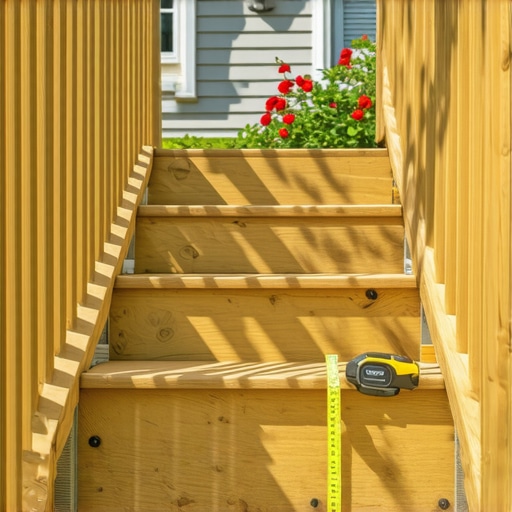
It was a warm Saturday afternoon when I finally stepped back to admire my freshly built deck. I was proud of my work—until I noticed the railing was just a tad too short. Not enough to be unsafe, but enough to make me wince every time I looked at it. That lightbulb moment hit hard: I realized I’d overlooked a critical detail that could compromise safety and violate local codes. If you’ve ever faced that nagging feeling that your deck railing isn’t quite right—perhaps too low, too high, or just out of compliance—you know exactly what I mean.
Why Your Deck Railing Height Matters More Than You Think
Measure and Mark Your Railing Height
Start by determining the correct height—usually 36 to 42 inches, depending on local codes. Use a carpenter’s level and a measuring tape to mark the height on each post location. I remember the first time I did this, I accidentally marked the wrong side, which led to a lot of rework. Ensuring accurate measurements early saves headaches later.
Cut and Install the Railing Posts
Cut your posts to the marked height, accounting for the thickness of the base footing and any caps. Secure them into the deck framing using lag bolts or post anchors, making sure they are plumb. Think of this like building the skeleton of a birdhouse—sturdy and straight as the foundation for everything else.
Attach Top and Bottom Rails
Lay out the top and bottom rails between the posts, ensuring they are level. Use clamps to hold them in place, then fasten with screws or brackets. Double-check the alignment after each attachment. In my experience, using a long spirit level across the rails helps spot any slight dips, which could be distracting visually and compromise safety.
Install Vertical Balusters or Panels
Cut balusters or panels to fit between the top and bottom rails, leaving a gap of no more than 4 inches for safety. Space them evenly—using a spacer block makes this process consistent. I once rushed this step, and the uneven spacing became immediately noticeable, so patience here pays off.
Secure and Reinforce for Stability
Reinforce connections with additional brackets if necessary, especially in wind-prone areas. Check all fasteners for tightness and add sealant around post bases to prevent water intrusion. An idea I adopted was applying a silicone sealant at the base of posts—this prevents water from seeping in, akin to rainproofing your outdoor furniture.
Apply Finishing Touches
Finish with caps or paint for added protection and aesthetic appeal. When I added caps to my deck, I noticed an immediate enhancement in the overall look. This last step isn’t just decorative; it protects the wood or composite, extending your railing’s lifespan.
While many homeowners believe that choosing composite decking is a straightforward decision—opting for the most popular brand or the lowest price—there are nuanced factors often overlooked by even seasoned DIY enthusiasts. One common misconception is assuming all composite materials perform identically over time. In reality, the composition and manufacturing process greatly influence durability, color stability, and resistance to environmental stressors. For example, capped composite boards might seem superior, but if not properly selected or installed, they can suffer from warping or fading, especially in harsh climates.
Is Your Choice of Composite Decking Really Optimal for Your Climate?
Many focus solely on aesthetics and initial cost, neglecting regional considerations such as UV exposure, moisture levels, and temperature variations. According to a recent study by the Building Science Corporation, selecting a composite with a high-quality cap layer and appropriate core material significantly enhances longevity and minimizes maintenance issues. This nuance means that consulting with a professional deck builder—like those at expert deck builders—can save you from costly mistakes down the line.
Moreover, misconceptions about outdoor living often lead homeowners to ignore the importance of proper drainage and airflow in their deck design. Overlooking these details can cause water pooling, mold growth, or premature material failure. For example, adjusting the fastening pattern to prevent water from seeping underneath boards—an often neglected step—can extend your deck’s lifespan considerably. To visualize this, an effective stair transition design can improve both functionality and aesthetics.
When it comes to stairs, many underestimate the criticality of stringer and riser construction. A common mistake is using inadequate framing that doesn’t account for load or climate-related expansion. Properly built stairs not only look better but also ensure safety and durability. For advanced builders, paying attention to the hidden aspects like stringer spacing and proper anchoring is essential—details that most overlook but can lead to dangerous wobble or collapse if ignored.
Finally, understanding industry trends and the technological advancements in composite materials can elevate your outdoor space beyond basic functionality. For instance, newer formulations incorporate cooling technology, making decks more walkable during peak sun hours—an innovation I recommend exploring at 2025 composite trends. These subtle enhancements can really differentiate a standard deck from a stunning outdoor oasis.
Have you ever fallen into this trap of overlooking the finer details? Let me know in the comments! Remember, a well-informed decision and attention to nuance can mean the difference between a deck that merely functions and one that truly transforms your outdoor living experience.
Keep It Working with Precision Tools and Expert Maintenance
Maintaining a durable and beautiful composite deck requires more than just regular cleaning; it demands employing the right tools and techniques to ensure longevity. One tool I rely on heavily is a cordless drill fitted with high-quality driver bits—specifically those with a torque setting to prevent over-tightening, which can damage fasteners or the decking material itself. I also recommend a deck-specific multi-tool with a oscillating head attachment; it’s invaluable for reaching tight corners and small nooks during cleaning or minor repairs, saving you time and effort.
For cleaning, I swear by a soft-bristle brush attached to my drill (with appropriate caution to avoid scratching the surface). This combination allows for thorough cleaning without the mess of traditional scrubbing. Additionally, a garden hose with a pressure nozzle—set to a low or medium setting—is perfect for rinsing away dirt and debris. Over time, I’ve learned that using a dedicated deck cleaner formulated for composite materials is vital to prevent discoloration or surface damage—never use harsh chemicals or bleach, which can degrade the finish.
As for ongoing maintenance, inspect your deck periodically for loose fasteners or signs of wear. I recommend a good set of stainless-steel screws and a magnetic bit holder to make repairs seamless. When securing components, always tighten just enough to hold without stripping the material, especially on capped composites that have a thin surface layer. For deeper issues or significant repairs, consulting a professional deck builder—like those at expert deck builders—can save you from costly mistakes.
How do I keep my deck looking new as years pass?
This involves applying a high-quality, UV-resistant sealant annually and checking for structural wear. I’ve adopted the habit of marking vulnerable areas with a water-based marker after each inspection, so I remember where to focus next. Proper drainage and airflow are also crucial; a misstep here can lead to mold or warping. Adjusting joist spacing or adding ventilation gaps can significantly improve air circulation under the deck—something I initially overlooked but now swear by for long-term health. For insights on designing safer, stylish stairs and seamless transitions, check out stair design tips.
Looking ahead, advancements in composite technology—like the incorporation of cooling tech and self-cleaning surfaces—promise to revolutionize outdoor living. Regular upkeep combined with these emerging innovations can turn your deck into a virtually maintenance-free outdoor sanctuary. So, I challenge you to try an advanced tip: use a precision driver with torque control for all fastening projects. This small change can dramatically improve your deck’s stability and appearance over time.
Outsmarted Myself With Shortcut Thinking
One of the earliest mistakes I made was rushing through measurements, believing that a tape and a quick eye would suffice. It taught me that precision isn’t just a virtue—it’s a necessity. Taking time to double-check every measurement, especially when building railings or stairs, saved me from costly rework and added peace of mind in safety.
Expect the Unexpected in Material Choices
Choosing composite decking might seem straightforward, but I learned that not all brands perform equally in different climates. I once installed a popular capped composite without considering UV resistance, and it faded faster than expected. Now, I always consult experts and focus on materials designed for my specific environment. Trustworthy resources like this guide have been invaluable in making informed decisions.
Details Make the Difference—Every Time
The difference between a good deck and a great one often lies in the small details. Proper drainage, ventilation, and fastening techniques prevented water pooling and mold in my project. It’s tempting to overlook these, but implementing thoughtful features—like the right joist spacing or sealing around posts—prolongs the deck’s life and enhances safety. I wish I had prioritized these finer points from the start.
Patience Is Your Best Tool
Rushing can lead to mistakes that aren’t apparent immediately. I found that taking breaks during construction and re-evaluating each step helped me catch errors early. This habit improved both the durability of my deck and my enjoyment of the process. Remember, building an outdoor haven isn’t just about completing the project—it’s about loving the journey as much as the finished result.