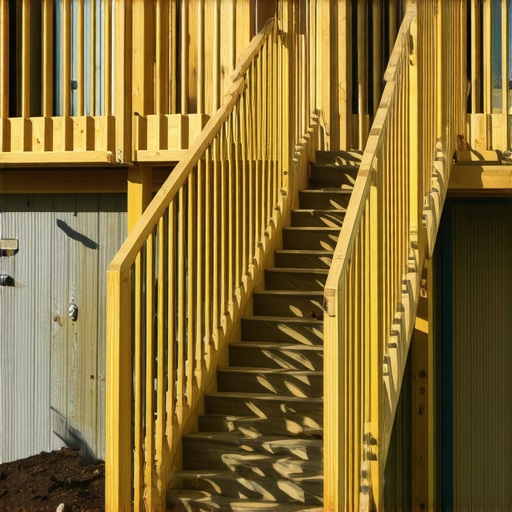
Walking out onto my freshly built deck, I remember that sinking feeling when I realized the new stair railing wobbled dangerously and didn’t meet code. It was one of those moments where I thought, “Did I do something wrong?” and immediately started questioning my skills. This was finally the outdoor upgrade I’d been dreaming of, yet one little oversight was threatening to turn that dream into a hassle.
Don’t Let an Unsafe Railing Ruin Your Outdoor Escape
Whether you’re a DIY enthusiast or working with a deck builder, understanding what makes a stair railing meet code isn’t just about avoiding fines—it’s about safety, peace of mind, and protecting your loved ones. A railing that doesn’t adhere to local building codes could fail during an inspection, leading to costly modifications or even safety hazards. I learned this the hard way early on, making mistakes like ignoring proper anchoring and spacing, which compromised my railing’s stability and compliance.
> Did I face this problem? Absolutely. I thought I’d built a sturdy railing, but during a routine inspection, it was clear the spacing and attachment points weren’t up to code, risking safety and my permit approval. This experience taught me that paying attention to small details saves big headaches later.
Before we dive into practical solutions, it’s worth noting that recent research emphasizes the importance of compliance for family safety. According to the Consumer Product Safety Commission, deck-related falls account for a significant percentage of injuries—many preventable by proper railing installation. Ensuring your deck’s railing meets code isn’t just a legal checkbox; it’s a commitment to your family’s safety.
Ready to turn your deck into a worry-free outdoor haven? Let’s explore what often goes wrong and how you can fix it to meet code standards confidently.
Start with Precise Measurements and Planning
Before any physical work, measure your stair opening carefully, ensuring the railing height and spacing meet local code requirements. Use a tape measure and a level to mark the exact points where the railing posts will anchor. I once rushed this step and ended up with posts too far apart, which caused wobbling; accurate planning prevented future headaches.
Choose the Right Materials for Stability
Select durable materials like stainless steel or galvanized brackets for mounting the posts. These resist corrosion and ensure long-term stability. I remember opting for cheap, painted brackets, which rusted in just a year, compromising safety. Investing in quality hardware pays off, especially when working with composite decking, which demands secure attachments for safety and compliance.
Install the Posts with Proper Anchors
Use appropriate anchors—such as through-bolts or lag screws—to attach posts securely to the framing beneath the decking. Drill pilot holes first to prevent splitting. During my project, I mistakenly over-tightened screws, stripping the wood; I improved my technique by tightening gradually and checking alignment frequently. Anchors must meet local code requirements, which often specify minimum embedment depths for safety.
Adjust Post Spacing for Uniformity
Ensure posts are evenly spaced, typically no more than 4 feet apart, to prevent wobbling. Use a carpenter’s square or a measuring tape for accuracy. I once mismeasured and ended up with uneven spacing, causing instability. Using a string line stretched tight between end posts helps maintain consistent spacing during installation.
Secure Rails Firmly to Posts
Attach the top and bottom rails to the posts using appropriate fasteners—hidden fasteners or face screws—depending on your design. For composite decks, hidden fasteners create a cleaner appearance; just ensure they penetrate adequately for strength. I remember favoring face screws for quick installation but noticing loosened connections after a season. Quality fasteners with sufficient length ensure the rails stay tight over time.
Test the Entire Assembly for Wobble and Strength
Once installed, apply force horizontally and vertically to test stability. Shake the railing gently to check for movement; if it wobbles, tighten or reinforce attachments. I learned this after building a railing that felt solid initially but soon developed wobble, prompting a re-tightening of fasteners and additional cross-bracing. Following building codes for load capacity ensures your railing withstands everyday use.
Consult Professional Resources for Fine-Tuning
For detailed design and code compliance, refer to resources like the designing safe stairs guide. Watching tutorials, such as those on working with a professional deck builder, can help refine your approach, especially for complex projects. Remember, the goal is a railing that’s both safe and compliant, providing peace of mind for years to come.While many enthusiasts focus on choosing the right composite decking or hiring a skilled deck builder, a lesser-known but critical aspect is often overlooked: the nuanced details that determine longevity and safety. One common misconception is assuming that all composite boards are equal—many believe that since they look similar, their durability and resistance to elements are identical. However, recent studies indicate that the core material composition and manufacturing process significantly influence performance, especially in high-traffic or coastal environments. For example, mineral-based composites tend to resist scratching and scuffing better than traditional PVC-based options, which can fade or warp faster under UV exposure. This nuance can make a difference in long-term maintenance costs and safety—something advanced builders and DIYers alike should consider. Furthermore, popular myths like “simple spacing meets code” are misleading; even modest deviations in stair stringer alignment or railing attachment points can cause wobbling over time, risking safety and inspection failures. An expert-level mistake is neglecting to accommodate expansion and contraction of materials—failure to do so can lead to buckling or cracking, especially when installing decking in climates with significant temperature fluctuations. Incorporating proper gaps and using corrosion-resistant fasteners are simple yet crucial steps, often skipped by amateurs but emphasized by seasoned professionals. Have you ever fallen into this trap? Let me know in the comments! For a deeper dive into how materials and construction nuances impact your outdoor project, I recommend exploring our comprehensive guides on [composite decking trends in 2025](https://deckdesignbuild.com/composite-decking-trends-2025-the-ultimate-guide-for-outdoor-enthusiasts) and [designing safe and stylish stairs](https://deckdesignbuild.com/designing-safe-and-stylish-stairs-for-outdoor-decks-in-2025). Understanding these intricate details transforms a basic deck into a durable, safe outdoor haven that truly meets expert standards.Maintaining your outdoor deck, especially when working with composite decking and custom stairs, requires precise tools and smart methods to ensure durability and safety over time. One of my top choices is a high-quality digital torque wrench; I use the TEKTON Digital Torque Adapter because it allows me to tighten fasteners to exact specifications, preventing over-tightening that can damage composite material. Proper fastener tension is crucial for long-lasting railings and stairs, and this tool simplifies the process significantly. Additionally, I rely on a laser level to ensure uniformity when installing railings and stairs—accuracy here directly affects safety and compliance. For joint inspection and early detection of potential issues, I employ a non-destructive ultrasonic thickness gauge; it helps me monitor any degradation in post anchors or framing components without dismantling the structure. A good example is the inspection techniques for maintaining deck integrity. I also recommend using a miter saw with a fine-tooth blade for precise cuts, which minimizes gaps and ensures snug fittings—vital for staircases and perimeter details. As materials and building codes continue to evolve, staying equipped with the right tools allows you to implement improvements confidently and reduce long-term repair costs. A future trend I foresee is the integration of smart sensors within deck substrates to monitor structural health, empowering homeowners to address issues proactively. I challenge you to try calibrating your fasteners with a digital torque wrench this weekend—it can dramatically extend your deck’s lifespan and safety. Remember, consistent maintenance, backed by the right equipment, is your best bet for keeping your outdoor space in top shape for years to come.
Lessons That Changed My Approach to Outdoor Living
One of the most eye-opening lessons I learned was the importance of anticipating climate-induced expansion and contraction. Ignoring these subtle shifts led to cracked railings and loose stairs, but once I adjusted my design to include proper gaps and flexible fasteners, everything held firm through seasons. It’s a tiny detail that makes a massive difference.
I also realized that understanding the nuances of material choices, like opting for mineral-based composites over traditional PVC, can save headaches down the line—these composites resist scratches and warping, especially in coastal environments. My mistake was to assume all materials are equal, but the right choice enhances safety and longevity.
Finally, a candid lesson was the value of thorough testing after installation. Wobbling or loose fittings often hide early issues that, if caught promptly, can be fixed before they become safety hazards. It’s not just about meeting code but ensuring peace of mind for years of enjoyment.