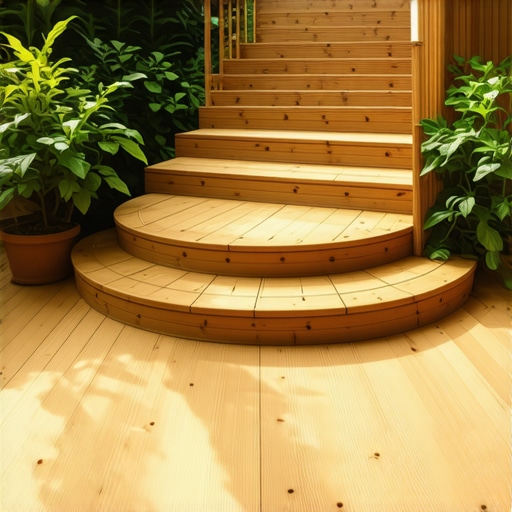
It happened on a warm Saturday afternoon. I was supervising the finish of my latest outdoor project, eager to enjoy a cold drink on my newly built deck, when I took a step onto the staircase. Instead of the smooth, welcoming sensation I imagined, I was met with a jarring, almost unnatural bounce. My stomach sank. Why did something that seemed so straightforward turn out to be so awkward underfoot? That lightbulb moment ignited my curiosity about what truly makes outdoor stairs feel natural and inviting.
Start with Precise Measurements to Ensure Comfort and Safety
During my first attempt at building outdoor stairs, I overlooked the importance of accurate measurements. I used a tape measure to determine the desired rise and run, ensuring each step was uniform. If your stairs are uneven, they will feel awkward underfoot and could pose safety hazards. Use a carpenter’s level and a framing square to double-check your measurements. Remember, consistent dimensions are key to a natural, comfortable ascent.
Select the Right Materials that Match Your Outdoor Aesthetic and Durability Needs
When choosing materials, I opted for composite decking because of its low maintenance and weather resistance. It’s like giving your stairs a suit of armor that still looks elegant. Consider the texture and color to match your deck and surroundings. For example, a textured surface prevents slips, especially in wet conditions. Explore options at deck design tips to see how material choices can elevate your outdoor space.
Design the Stair Stringers for Structural Integrity and Visual Flow
Properly designing your stringers involves calculating the correct angle and spacing. I used a common rule of thumb: the spacing between stringers should not exceed 16 inches on-center. Next, I cut the stringers on a sawhorse, using a jig for consistency. This process is akin to creating the backbone of your stairs—if it’s off, the entire structure suffers. For detailed guidance, see deck framing insights.
Cut and Assemble the Treads with Precision
Measuring and cutting the treads was a meticulous step. I checked the depth twice to ensure comfortable footing. Using a fine-tooth saw, I cut each composite board to length, avoiding melting edges by adjusting the blade speed. Join the treads to the stringers with corrosion-resistant fasteners, ensuring a tight fit. Think of this as assembling the puzzle—you need each piece to align perfectly for a seamless look. For tips on cutting composite materials, visit composite cutting tricks.
Secure the Handrails for Safety and Style
Adding handrails was the finishing touch. I installed posts securely into concrete anchors, then attached sturdy railings at appropriate heights. Using stainless steel fasteners prevented rust, maintaining aesthetics over time. This step is critical for safety, especially if children or elders use the stairs frequently. For more on stylish safety features, check stair safety and design.
Ensure Proper Lighting for Visual Appeal and Safety
Finally, I integrated lighting into the stair design—small LED step lights that illuminated the path at night. Installing them during construction prevented future wiring headaches. Proper lighting transforms your stairs into a feature of your outdoor living area, making it safer and more inviting. For advanced lighting ideas, see outdoor lighting secrets.
Many enthusiasts believe that selecting the most affordable composite decking or following basic measurements guarantees a flawless outdoor space, but the truth runs much deeper. **Contrary to popular opinion, not all composite materials are created equal**; some expanded options like capped composites offer significantly better durability and UV resistance, saving you money long-term. Moreover, a common mistake is assuming that standard measurements suffice—**professional deck builders meticulously calculate structural loads and environmental factors** to prevent issues like warping or uneven settling. As highlighted in expert insights, overlooking these nuances can result in costly repairs and safety hazards. Have you ever fallen into this trap? Let me know in the comments.
What Should Advanced Builders Be Aware Of About Stair Safety and Design?
While many focus on selecting sturdy handrails or proper lighting, experienced builders understand that **the interaction between stair tread depth, riser height, and slip-resistance** defines overall safety and comfort. For instance, integrating textured surfaces and non-slip coatings on composite stairs isn’t just aesthetic—research indicates it profoundly reduces fall risks, especially in wet conditions (source). One often overlooked detail is the importance of precise stringer calculations; an incorrect angle can cause uneven steps, which not only feel awkward underfoot but pose real safety dangers. To master these intricacies, exploring detailed guides can help you avoid common pitfalls and elevate your outdoor projects.Maintaining a durable and stunning outdoor deck requires not only quality materials and craftsmanship but also the right tools and a consistent upkeep routine. As an experienced builder, I rely on specific equipment that ensures precision and efficiency. For instance, a **laser level** is indispensable when checking the alignment of joists and railing posts, eliminating guesswork and ensuring a flat surface — a minor detail that significantly enhances safety and aesthetics. I personally use the **Bosch GLL 3-330 CG Professional Cross-Line Laser** due to its accuracy and bright laser lines, which work well even on sunny days in outdoor environments. Regular inspections with this tool help catch issues early, such as uneven joist spacing or shifting post bases, preventing costly repairs down the line.
How do I keep my deck in prime condition over time?
Consistent cleaning is vital. I recommend using a **professional-grade deck cleaner** like *Simple Green Deckbright* combined with a **low-pressure power washer** set at no more than 600 psi. This combination effectively removes grime without risking damage to composite surfaces. Additionally, applying a high-quality, UV-resistant sealant annually — such as **Thompson’s WaterSeal** — will protect against sun damage and moisture ingress, preserving the deck’s appearance and structural integrity. Advanced builders often incorporate **moisture meters** during inspections to assess the underlying wood or composite’s condition, especially in climates with high humidity. These tools help determine if deeper repairs are needed before any aesthetic issues manifest.< > For ongoing maintenance, I suggest integrating **smart monitoring systems** that can track environmental conditions and alert you to potential problems like excessive moisture or temperature fluctuations. As technology evolves, I predict more automated solutions will become standard, offering real-time insights and simplifying long-term upkeep.
Choosing the right tools and establishing a disciplined maintenance schedule can dramatically extend the lifespan of your outdoor structures. For example, inspecting fasteners and railings with a torque wrench (like the **Wiha 26189**), ensures all components remain tight and secure, preventing safety hazards. Remember, understanding the nuances — such as the expansion characteristics of composite decking during temperature swings — empowers you to preempt issues before they become costly. I urge you to try using a **laser level combined with regular moisture assessments**; these small investments translate into years of worry-free outdoor living. To explore further insights, check out our dedicated guides on transforming outdoor spaces and stay ahead in your deck maintenance game.
Lessons from the Trenches That Changed My Approach
One of the biggest surprises I encountered was realizing that overlooking the long-term effects of environmental exposure could spell disaster for my outdoor stairs. Jumping into upgrades without considering UV resistance or weatherproofing often led to costly repairs down the line. It taught me the importance of planning beyond the initial build, embracing materials and techniques that stand the test of time. Another lightbulb moment was understanding how small details, like proper fastener choice and spacer placement, dramatically impact safety and aesthetics, reinforcing that precision matters more than I previously thought. These lessons underscored that mastery in outdoor living is built on continuous learning and careful attention to detail.
The Tools That Elevated My Deck Projects
Throughout my journey, certain tools became game-changers. A high-quality laser level, for instance, ensured my posts and handrails were perfectly aligned, preventing issues before they could manifest. I swear by moisture meters—these tiny devices help me catch potential wood rot or warping early, saving both money and headaches. For cutting composite materials, a fine-tooth saw and variable speed saws protect the surface integrity, ensuring clean, seamless edges. Additionally, reliable fasteners like stainless steel screws have kept my stairs secure and rust-free over years of harsh weather. Investing in these tools transformed my approach, making each project more precise and durable.
Keep Building, Keep Improving—Your Outdoor Dream Awaits
Embracing the learning curve in outdoor decking and stair construction can seem daunting, but each step brings you closer to a space that feels uniquely yours. Remember, your efforts to select the best materials, employ expert techniques, and tweak small details will pay dividends in longevity and visual appeal. Take pride in crafting an outdoor environment where safety, beauty, and functionality harmonize, and don’t be afraid to experiment and learn from every project. Your outdoor living space isn’t just a deck or stairs—it’s a canvas for your creativity and a sanctuary for relaxation. Dive into new ideas, refine your skills, and watch your backyard transform into a personal oasis. Curious about how to incorporate innovative lighting or seamless transitions? Explore our design tips to elevate your outdoor experience. Have you ever faced unexpected challenges during your deck build? Share your story below and let’s learn together.