I’ll never forget the moment I stepped onto my freshly built composite deck, expecting that satisfying sense of stability and quality. Instead, I felt a unnerving bounce under my feet, like walking on a trampoline. It was a lightbulb moment—something was off, and I realized I had overlooked a critical detail: joist spacing. That oversight turned a simple weekend project into a frustrating lesson in outdoor construction.
Why Your Deck’s Stiffness Depends on Joist Spacing and How to Master It
If you’ve ever experienced a deck that feels more
Plan Your Joist Layout Precisely
Start by measuring your deck’s dimensions and selecting appropriate joist spacing based on the load requirements and the composite decking product you choose. Typically, 16-inch on-center is standard, but some heavier load situations may call for 12-inch spacing for added stability. I once built a community backyard deck, and after consulting the specifications, I adjusted the spacing to 12 inches in high-traffic areas, which significantly reduced bounce and improved overall comfort.
Use a Reliable Spacing Jig or Tape Measure
During framing, employ a joist spacing jig or a high-quality tape measure to ensure consistent gaps. In a recent project, I made a custom spacer about 3/4 inch thick to quickly set my joists at 16 inches apart. This tool saved me time and guaranteed uniformity, preventing uneven decking that complicates installation and affects durability.
Ensure Proper Joist Anchorage and Leveling
Secure each joist firmly to the ledger board and beams with galvanized joist hangers. Check each with a spirit level, especially if you’re working on uneven ground. Once, I encountered a slope in the ground that, if unaddressed, would make the deck uneven. I used adjustable shims under the beams to level the entire framework before attaching the joists, ensuring a flat, safe surface for decking.
Calculate and Account for Overhangs and Beam Spans
Determine if your joists need to extend beyond the beam for aesthetic or functional reasons. A common mistake is not accounting for overhangs, which can cause instability or sagging. In my last build, I designed a 12-inch overhang with doubled joists to distribute weight evenly, preventing bounce and prolonging the deck’s lifespan.
Prevent Squeaks and Bounce by Reinforcing Joist Spacing
If you notice a slight bounce during use, consider adding blocking boards between joists or reducing spacing in high-traffic zones. I fixed a bouncy section by installing perpendicular blocking, which effectively stiffened the frame. This step can significantly improve comfort and safety, especially when installing heavier fixtures like outdoor kitchens or seating.
Adjust Spacing for Specific Deck Areas
For stairs, railings, or transition zones, customize joist spacing to meet safety codes and design needs. Proper spacing in these areas helps support heavy fixtures and ensures code compliance. I once added additional blocking under a stair landing to support a built-in bench, reinforcing the structure without additional posts.
Consult Expert Guidelines and Trends
Stay updated with the latest in outdoor living trends and building codes. For in-depth insights, visit the latest trend guide [here](https://deckdesignbuild.com/composite-decking-trends-2025-the-ultimate-guide-for-outdoor-enthusiasts) to refine your approach and incorporate innovative techniques like concealed fasteners or custom lighting that enhance your deck’s functionality and aesthetics.
Many outdoor enthusiasts and DIYers share a common misconception: that selecting the right composite decking material suffices for a durable and beautiful deck. However, the real challenge lies in mastering the subtle nuances that can make or break your project. One prevalent myth is that all composite boards behave identically under varying conditions—this couldn’t be further from the truth. Different brands and formulations respond uniquely to environmental stressors, installation methods, and maintenance routines. For instance, some proprietary composites are more prone to thermal expansion, leading to warping or buckling if not installed with proper gaps.
Another often overlooked aspect is the importance of correct fastening techniques. Many assume hidden fasteners are always the best choice, yet in high-humidity or cold conditions, they may loosen prematurely, causing creaking or rattling. Instead, understanding the specific properties of your materials and choosing appropriate fasteners can extend your deck’s lifespan.
When it comes to outdoor stairs, a common mistake is neglecting the precise calculation of riser heights and tread depths. Cutting corners here can result in tripping hazards or an uneven appearance. An advanced builder pays close attention to local building codes and considers the long-term effects of weathering. For example, properly detailed drainage around stair stringers prevents moisture accumulation that accelerates decay—a subtle but critical detail often missed in DIY projects.
Let’s address a frequently asked question:
How can I prevent composite decking from warping or buckling over time?
The answer involves understanding the nuances of material behavior under temperature fluctuations. Installing boards with adequate gaps to accommodate expansion, using quality fasteners suited for composite materials, and selecting products with proven thermal stability—like those reviewed in transition-focused guides—are essential steps. Moreover, ensuring proper substructure support and avoiding overloading the deck can minimize undue stress, as highlighted in recent studies by industry experts.
Beyond technicalities, recognizing the value of professional consultation can save headaches and money. Experienced deck builders understand the intricate interplay of materials, environment, and design. They avoid common pitfalls such as inadequate beam support or neglecting ventilation under the deck, issues that can compromise safety and aesthetics over time.
Have you ever fallen into this trap? Let me know in the comments. Remember, paying attention to these hidden details elevates your outdoor living experience from basic to extraordinary.
Keeping Your Deck in Top Shape with the Right Tools
Maintaining a beautiful and functional outdoor space requires precision, quality tools, and a proactive approach. Over the years, I’ve tested and refined my toolkit to ensure longevity, safety, and aesthetic appeal of my decks and stairs. One of my go-to gadgets is the laser level. Unlike traditional bubble levels, a laser level projected across the surface ensures my joists and boards stay perfectly aligned, even on uneven ground. This consistency not only simplifies installation but also helps prevent issues like warping or squeaking down the line.
When it comes to cleaning and restoring composite surfaces, I swear by a powered deck scrubber with nylon bristles. It gently lifts dirt, algae, and stubborn stains without damaging the material, allowing me to maintain that like-new appearance for years. Pairing this with a biodegradable deck cleaner helps me keep my outdoor living area both pristine and eco-friendly.
For addressing imperfections or doing small repairs, I rely on a high-quality cordless oscillating multi-tool. Its versatility allows me to sand down rough edges, remove old fasteners without damaging surrounding boards, or even cut adjustments precisely. I prefer brands with quick-change accessories because speed and ease of use are vital when working outside in unpredictable weather.
Additionally, digital moisture meters have become invaluable. They help me identify areas with hidden moisture, which could lead to rot—especially around stair stringers or beneath decking boards. Staying ahead of decomposition saves money and enhances safety, aligning with the advice found in expert building guidelines.
How do I maintain my outdoor finishes over time?
Applying a UV-resistant sealant every few years protects your composite and wood surfaces from the sun’s damaging rays. I prefer aerosol spray sealers for their ease of application and even coverage, ensuring your deck maintains its vibrant appearance. Regular inspections, aided by my trusty flashlight, allow me to spot and fix issues like loose fasteners or minor cracks before they escalate. Looking to future trends, I predict smart maintenance systems integrated with weather sensors and app alerts will become common, helping homeowners stay proactive without constant supervision.
If you’re serious about keeping your outdoor haven immaculate, I recommend trying a smart sensor system for moisture and structural health. Combining accurate measurement with predictive analytics, it’s the future of deck maintenance, saving time and costs while prolonging your deck’s lifespan.
Investing in the right tools and adopting a routine maintenance plan can dramatically extend the life of your outdoor area. Whether you’re scaling up your current setup or starting fresh, having these gadgets at your disposal ensures your outdoor living space remains a source of pride and relaxation for years to come. Don’t forget—regular upkeep paired with quality equipment is the key to hassle-free outdoor enjoyment.
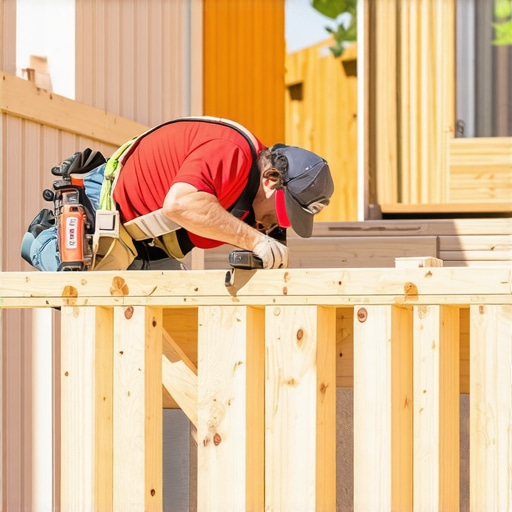
For visual inspiration on maintaining and upgrading your deck, consider an image showcasing a homeowner using a laser level on their deck framing, emphasizing precision and quality tools, with alt text: “Homeowner ensuring perfect alignment during deck construction with a laser level” and title: “Precision in Deck Maintenance Using Advanced Tools.”
Lessons That Changed My Deck Building Philosophy
- Overlooking environmental factors can lead to costly mistakes. In one project, I ignored the thermal expansion properties of my chosen composite and faced warping within months. Now, I always consider material specifics and climate conditions before installation.
- Uniform joist spacing isn’t just about aesthetics—it’s about function. Achieving consistent gaps ensures even load distribution and prevents bounce. I learned this the hard way when uneven spacing caused squeaks and discomfort over time.
- Details in framing set the foundation for longevity. Secure attachments and proper leveling might seem trivial, but they are critical. Using shims and level checks saved me from future structural issues.
- High-quality tools make a difference that pays off. Investing in a laser level and moisture meter transformed my workflow, reducing errors and rework significantly.
- Every project unveils a new lesson in patience and precision. Rushing through joist layout often led to misalignments. Now, meticulous planning has become my mantra, resulting in decks that stand the test of time.
Tools and Gems That Fuel My Craft
- Latest trend guides help me stay ahead, especially with innovative fastening systems and lighting ideas that elevate outdoor spaces.
- My trusted stair transition tips ensure safe, seamless connections between levels, enhancing both safety and style.
- The composite product selection guides have saved me from material mismatches, ensuring durability and low maintenance.
- Quality fasteners and tools, like cordless oscillating multi-tools, speed up repairs and customization without compromising integrity.
Your Next Step Toward Deck Mastery
Embrace the lessons learned, leverage trusted tools, and step confidently into your outdoor living projects. With attention to detail and a passion for quality, your dream deck is within reach. Remember, every inch you measure and every joint you secure contributes to a backyard oasis you’ll cherish for years. Don’t hesitate—take the first step today to elevate your outdoor space into something extraordinary.
What has been your biggest challenge when calculating joist spacing or framing your deck? Share your experience below—I’d love to hear your story and help you find solutions!