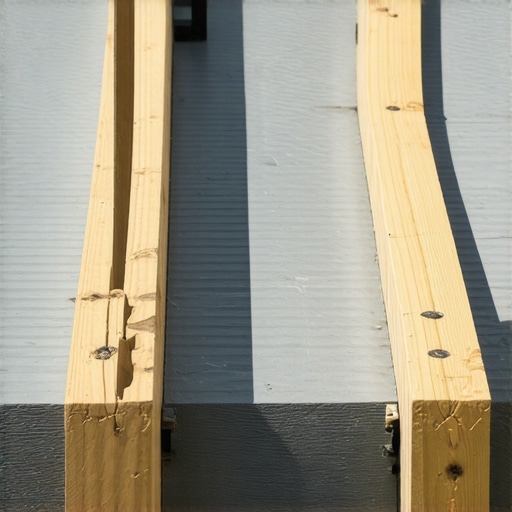
I will never forget the sinking feeling in my gut when a client called me three months after I had finished their dream backyard retreat. They were not calling to invite me for a BBQ; they were calling because their brand-new composite boards were lipped at every single joint. Walking across that floor felt like navigating a series of tiny, plastic speed bumps. I had followed the basic framing rules, or so I thought. But composite decking is a completely different beast than pressure-treated pine, and that one rookie mistake cost me a week of unpaid labor to fix. Since then, I have learned that the benefits of working with a professional deck builder often come down to these tiny structural details that the average DIYer—and even some pros—overlook. Today, I am going to show you exactly why that extra joist is the only thing standing between you and a perfectly flat floor.
The Hidden Difference Between Wood and Composite Framing
Wood is forgiving; it grows, it shrinks, but it generally stays where you pin it. Composite, however, behaves more like a living, breathing entity. If you have ever wondered why your composite boards are expanding more than expected, it is because these materials are designed to move significantly with temperature changes. When you try to sister two boards together on a single 1.5-inch joist, you are asking for trouble. You end up putting your screws way too close to the edge of the board, which leads to mushrooming, cracking, or worse—the board simply popping loose. I once tried to cheat this by angling my screws, and let me tell you, it looked terrible and lasted about a month before the first board shifted.
Is it really worth the extra lumber and labor?
The short answer is a resounding yes. You might think you are saving fifty bucks on wood, but you are actually gambling with the lifespan of your entire outdoor living area. Have you ever walked across a deck and felt those annoying little ridges where two boards meet? That is exactly what we are trying to avoid. By doubling the joist, you give each board end its own dedicated 1.5-inch landing pad. This allows you to maintain the spacing secret for installing composite decking in winter or summer without worrying about the fasteners failing.
Why a Single Joist Just Cannot Handle the Pressure
The physics of a butt joint are pretty simple. You need enough structural meat to hold a fastener securely. When you use a single joist, each board only gets 0.75 inches of space. Once you factor in the required gap for drainage and expansion, you are barely gripping the wood. According to the International Code Council (ICC), structural integrity in decking relies heavily on proper fastener placement to prevent lateral movement. If your screw is too close to the edge, the composite material loses its ability to resist the natural forces of thermal expansion. This is also why choosing the right screw length is only half the battle; the foundation underneath is what actually does the heavy lifting. Setting the stage with double joists ensures that even in the heat of July, your seams stay flush and your bare feet stay happy.
How to Double Up Without Crowding Your Frame
To get this right, you cannot just slap two pieces of lumber together and call it a day. Think of your joists like a railway track; if the rails are not perfectly parallel and stable, the train—your decking—is going to derail. When I first started experimenting with why I always use double joists under composite seams, I realized that the goal is not just more wood, but more surface area for the fasteners. You want to install a second joist right next to the one where your boards meet, but leave a small 1/4-inch to 1/2-inch gap between them. This gap is vital because it allows water and debris to fall through rather than getting trapped in a wooden sandwich that eventually rots. I once saw a five-year-old frame where the builder had sistered the joists tight together without any protection; the middle was a literal sponge of decay. To avoid this, always learn how to keep your deck joists from rotting under the boards by applying a high-quality joist tape over both boards. This creates a waterproof cap that ensures your structural ‘meat’ stays dry and solid for decades.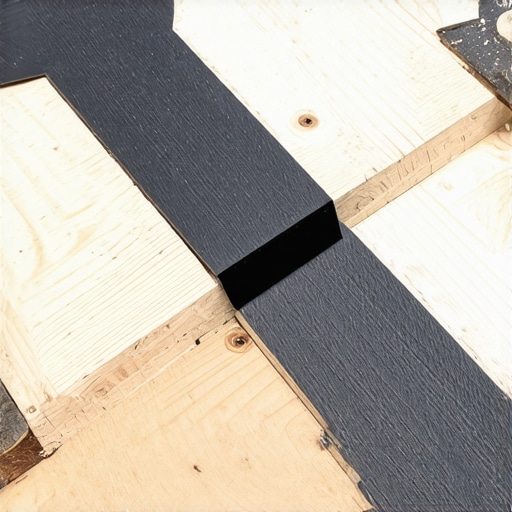
Stop the Sway with Solid Mid-Span Blocking
A double joist at the seam is only as strong as the lateral support around it. If your joists can twist or ‘roll,’ your perfectly aligned seam will eventually become an uneven trip hazard. This is where blocking comes in. You need to install solid pieces of frame material perpendicular to your joists every 4 to 6 feet. This turns a series of individual boards into a rigid grid. It is the same logic used when you realize why your deck stairs need a middle stringer for stability; you are distributing the weight across the entire structure rather than forcing one or two points to bear the load. On a project in a windy coastal area, I doubled my blocking and the difference was night and day. The deck went from feeling like a trampoline to feeling like a concrete slab. If you ignore this, you will eventually find the structural reason your deck feels bouncy when you walk is almost always a lack of mid-span rigidity.
Seal Your Ends for a Pro Finish
Once your double joists are in place and taped, the way you lay the boards matters just as much as the frame itself. Because you now have a full 3 inches of wood (or more) under the joint, you can move your screws back from the very edge of the composite material. This prevents the ends from ‘mushrooming’ or splitting. However, even with a perfect frame, the raw core of the composite board is now exposed at the seam. You must take the time to learn the best way to seal the cut ends of composite boards using a manufacturer-approved end-coat sealer. I remember a job where I skipped this on a dark grey deck; within two seasons, the ends had swollen just enough to catch the light, making my perfectly level seams look like they were curling. It only takes thirty seconds per board, but it is the difference between a ‘good’ deck and a ‘masterpiece’ deck.But even a ‘masterpiece’ deck can become a nightmare if you believe the most common myth in the industry: that composite materials are indestructible. A common industry lie that drives me crazy is the idea that these products are truly ‘set and forget.’ Homeowners often get lured into the truth about maintenance-free decking claims and assume they will never have to lift a finger again. In my experience, if you do not regularly clean the gaps between your boards, you are essentially building a horizontal compost bin. Debris traps moisture against your frame, and even though the composite boards will not rot, the wooden joists underneath certainly will. This is exactly how to keep your deck joists from rotting under the boards—by realizing that maintenance is about the structural system, not just the aesthetic surface.
The ‘Zero Maintenance’ Lie That Costs You Thousands
The biggest trap I see DIYers—and even some high-volume contractors—fall into is the ‘Tight-Gap Temptation.’ People want that seamless, indoor-floor look, so they butt the boards together as tightly as possible. However, if you do not use the spacing secret for installing composite decking in winter, your deck will literally buckle when the sun hits it in July. Composite expands significantly more than wood; I have seen 20-foot spans grow by nearly half an inch in direct sunlight. If that movement has nowhere to go, it will shear your fasteners or warp the boards permanently. When considering innovative outdoor living ideas with composite decking in 2025, remember that physics always trumps fashion. 
Why Your Stairs Are Usually the Weakest Link
Stairs are statistically the most dangerous part of any deck, yet they are often the most poorly constructed. Many people still think a few extra nails and a 4×4 post are enough. However, why we stopped using 4×4 posts for deck stairs comes down to the lack of lateral stability. According to the North American Deck and Railing Association (NADRA), nearly half of all deck failures occur at the stairs or the ledger board connection. When you use composite treads, which are heavier and more flexible than wood, you cannot rely on old-school framing. If you skip proper reinforcement, you end up with the mistake that makes your deck stairs trip hazards as they sag and pull away from the main frame.
Can One Single Bracket Really Save Your Deck From Collapsing?
When I am designing safe and stylish stairs for outdoor decks in 2025, I do not just look at the colors; I look at the connection points. Most builders just screw stringers into the rim joist and hope for the best. But the bracket that makes your deck stairs feel rock solid—a specialized tension tie—is what actually prevents the stairs from detaching over time. This is also why your deck stairs are the first thing to rot; water gets trapped in those non-flashed connections and eats the wood from the inside out. Have you ever fallen into this trap or noticed your deck feels a little too ‘springy’? Let me know in the comments below.
The Gear That Separates Amateurs From Pros
If you are still trying to pull boards into alignment with a pry bar and a prayer, you are working way too hard. My favorite tool on any job site is a deck-board bender—specifically something like the Bowwrench. When you are learning how to align deck boards perfectly across a 40-foot-wide span, you quickly realize that even the best composite boards can have a slight crown. This tool allows me to lock the board into a perfectly straight line with one hand while I drive the hidden fasteners with the other. It is not just about speed; it is about consistency. If your gaps are off by even an eighth of an inch at the start, that error will telescope into a massive headache by the time you reach the last board. I also refuse to use old-school fasteners for the heavy lifting. Understanding the reason we use structural screws instead of old-fashioned lag bolts is a game changer for your cordless drill’s battery life and your own joints. Structural screws don’t require pre-drilling and offer superior shear strength, making the frame much tighter than anything built in the nineties.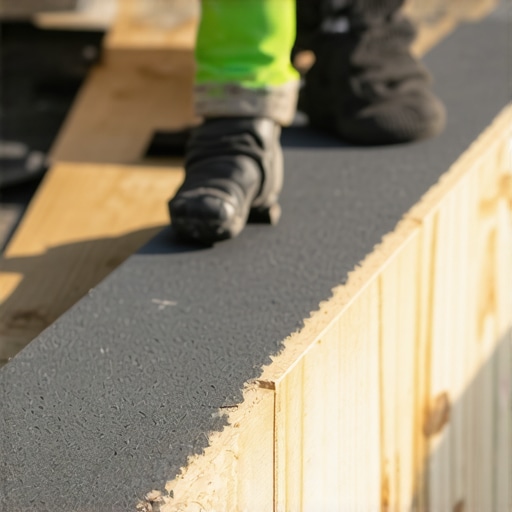
How do I maintain my composite deck over time?
The biggest mistake is thinking that ‘low maintenance’ means ‘no maintenance.’ To keep your deck pristine, you need to be a fanatic about cleaning the gaps. I have seen beautiful projects ruined because organic debris was allowed to sit and rot in the crevices. Using the best way to clean pine needles out of deck gaps—which usually involves a simple shop vac or a specialized thin-blade tool—prevents moisture from being wicked into the joists. According to the Forest Products Laboratory, moisture entrapment is the leading cause of early failure in residential wood structures, and even a composite surface cannot save a frame that is constantly damp. Once a year, give the surface a gentle scrub with a mild detergent. Whatever you do, remember why you should never power wash your composite deck; the high pressure can actually etch the plastic surface and leave permanent scars that trap even more dirt.
What the Future of Outdoor Living Looks Like
As we look toward composite decking trends in 2025, we are seeing a massive shift toward fully integrated smart systems. We are moving beyond just ‘building a deck’ to creating intelligent environments. I predict that within the next few years, moisture sensors embedded in the framing will become standard for high-end builds, alerting homeowners to potential rot before it becomes visible. We are already seeing this in how we are choosing the right composite decking for durable low-maintenance outdoor areas with improved heat-dissipation technology. The boards stay cooler, last longer, and look more like real wood than ever before. If you want to stay ahead of the curve, stop thinking about your deck as a wooden platform and start thinking of it as a structural appliance for your home. My best advice? Go grab a stiff-bristle brush and clear those joist gaps today—it is the simplest way to add five years to your frame’s life.
Hard-Earned Wisdom from the Joist Trenches
After years of fixing decks that failed too early, I have realized that composite decking is not just a product; it is a system that requires a shift in mindset. Here are the core lessons I have learned: Composite material is a thermal engine. I used to think I could force the boards to stay put, but they will expand and contract regardless of your will. Proper gapping and double joists are the only way to coexist with that movement. Also, the frame is your legacy. Anyone can make a surface look pretty for a week, but a true expert deck builder focuses on the parts no one will ever see to ensure the structure lasts thirty years. Finally, never underestimate the power of moisture management; skipping joist tape is the quickest way to turn a dream project into a rotting nightmare.
The Kit I Never Leave the Shop Without
When you are tackling a high-end project, you need specialized tools that act as a second set of hands. I always keep a Bowwrench nearby for how to align deck boards perfectly across a 40-foot-wide span, because trying to muscle heavy composite into place by hand is a losing battle. For those planning a complex layout with multiple levels, why a digital designer is the best move cannot be overstated; it saves you from making thousand-dollar mistakes in the framing phase. I also insist on using modern fasteners, as why I use structural screws instead of lag bolts for ledgers has proven to be the single biggest improvement in deck safety and speed over the last decade. #IMAGE_PLACE_HOLDER_E#
Start Building Your Perfect Retreat Today
Building a deck is about more than just adding square footage to your home; it is about creating a sanctuary for your family to enjoy for years to come. Whether you are following composite decking trends 2025 or building a timeless, simple space, remember that the effort you put into the foundation today pays dividends for decades. Don’t be afraid to take your time and prioritize safety over speed. If you ever feel overwhelmed by the technical requirements, the benefits of working with a professional deck builder are always worth exploring to ensure your vision comes to life exactly as you imagined. Have you ever discovered a hidden structural issue while working on your own outdoor space? Let me know in the comments below!