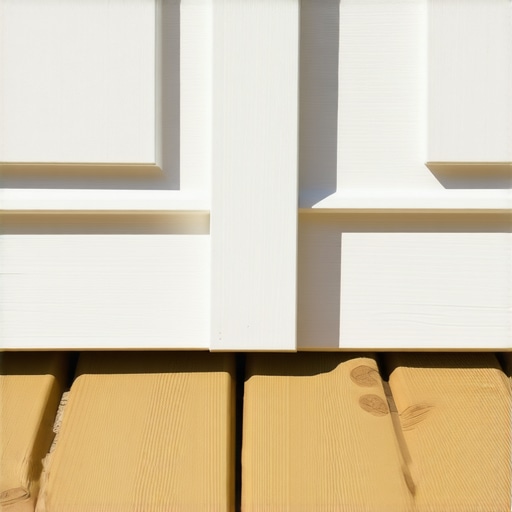
I stood on my brand-new deck with a cold drink, admiring the charcoal-grey boards I’d spent three weekends installing, when I heard a sickening crink. It wasn’t a loud noise, but it was enough to make me look down. My vinyl siding, which had been perfectly flat that morning, was bowing out like a sail in a gale. I had cut my boards flush against the house for that ‘professional’ look, only to realize I’d essentially built a slow-motion battering ram. The sun was hitting those boards, they were growing in length, and my house was the only thing in their way. Today, I’m going to save you from that heart-sink moment and show you exactly how to manage expansion so your outdoor living space stays beautiful and your siding stays intact.
Your Deck is a Living Breathing Battering Ram
If you think your deck is a static object, you’re in for a surprise. Unlike wood, which mostly expands and contracts across its width, composite decking is a thermal expansion champion that grows primarily in length. When you’re choosing the right composite decking for durable low-maintenance outdoor areas, you have to account for the plastic content in those boards. On a 100-degree day, a 20-foot board can grow by as much as half an inch. If that board is butt-jointed tight against your vinyl siding, it will physically lift the siding off the J-channel or crush the profile entirely. I learned this the hard way during my first big build; I thought a tight fit was a sign of craftsmanship. In reality, why your composite boards are expanding more than expected is simply physics. According to the ASTM D6662 standards, polyolefin-based plastic lumber has a high coefficient of thermal expansion, meaning it moves a lot more than the cedar or pressure-treated wood we grew up with. You aren’t just building a floor; you’re building a system that needs room to breathe.
Is a Huge Gap Actually Going to Look Ugly?
This is the number one fear I hear from homeowners. They worry that leaving the recommended gap will result in a dark, ugly void where crumbs and spiderwebs congregate. I felt the same way until I realized that a 1/4-inch gap is invisible from a standing position, but a buckled piece of siding is visible from the street. When you how to pick a deck color that complements your siding, you want the transition to be seamless, not a structural conflict. The trick isn’t just leaving a hole; it’s about clever gapping and using the right flashing. Have you ever noticed your siding looking a bit ‘wavy’ near your deck stairs or ledger? Let me know in the comments if you’ve seen this happen on your own home. If you’re currently in the middle of a build, remember that the spacing secret for installing composite decking in winter is completely different than in the summer. You have to leave even more room when it’s cold because those boards are at their smallest. My biggest mistake early on was ignoring the thermometer; I treated every day like it was 70 degrees, and my siding paid the price.
Always Start with a Quarter-Inch Buffer
The first rule of thumb is that composite boards are like sponges for heat; they soak it up and stretch out. To prevent your deck from becoming a demolition tool, you must leave a minimum 1/4-inch gap between the ends of the boards and your house siding. Think of this gap as a pressure relief valve for your home’s exterior. I remember a project where I was working on the best composite decking for high-traffic entryways and decided to skip this gap for a ‘cleaner’ look. By the following August, the boards had expanded so much they had actually popped the vinyl siding out of its tracks. If you’ve already made this mistake, you’ll need to learn how to fix a deck that has started to pull away from the siding before the structural tension causes permanent damage to your ledger board. This gap might look big during installation, but once the sun hits those boards, that space will vanish faster than you’d expect.
Master the Midpoint Lock Technique
You can’t just let a 20-foot board float freely, or it will expand toward the weakest point—usually your house. The trick is to ‘pin’ the board in the center. By driving two face screws into the joist at the exact midpoint of the board’s length, you force the expansion to happen equally toward both ends. This cuts the movement at the siding in half. For the rest of the board, I highly recommend using hidden fasteners. Understanding why we use hidden clips for the field but screws for the perimeter is vital; those clips allow the board to slide back and forth like a piston in an engine, while the center screws act as the anchor. Without this anchor, a board can ‘walk’ over time, eventually butting right up against your siding even if you left a gap initially.
Protect Your Cut Ends and the Picture Frame
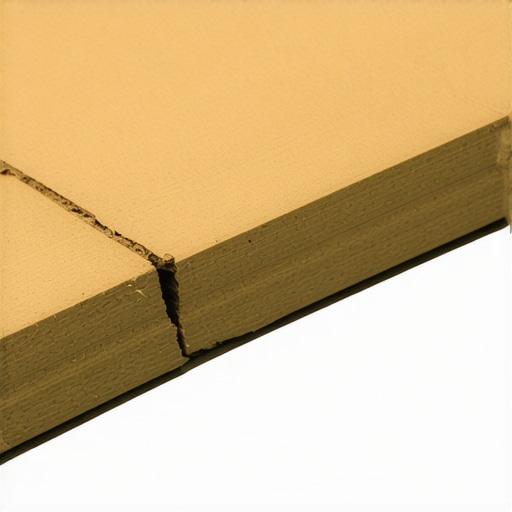
Whenever you cut a composite board to fit against your house or a stair stringer, you’re exposing the raw core of the material. This core is often more porous than the ‘capped’ outer shell and can absorb moisture, leading to swelling that exacerbates thermal expansion. You should always use the best way to seal the cut ends of composite boards by applying a manufacturer-approved end-coat sealer. To make these gaps look intentional rather than accidental, I always suggest a picture-frame border. There is a deep structural and aesthetic reason why picture framing your deck is more than just a style choice; it allows you to run a perimeter board parallel to the house, which means you’re dealing with the board’s width expansion (which is minimal) rather than its length expansion (which is extreme) against your siding.
Account for the Installation Temperature
The biggest variable in your spacing equation is the thermometer. If you are installing boards on a 40-degree morning, those boards are at their absolute shortest. If you butt them tight then, they will grow significantly by summer. I once spent a grueling ten hours on a remodel because I forgot this basic rule. I installed a beautiful set of stairs in the dead of winter and didn’t leave enough room. When spring hit, the treads expanded and literally bowed the risers out. This is why the spacing secret for installing composite decking in winter is to double your gaps. Conversely, if you’re building in 90-degree heat, you can set your gaps tighter because the boards are already ‘swollen’ to their near-maximum length.
Keep External Heat Sources in Check
Even a perfectly gapped deck can run into trouble if you introduce concentrated heat. Reflection from high-efficiency windows or the placement of your cooking equipment can spike the temperature of composite boards far beyond ambient levels. You need to be extremely careful about where to place your grill so you dont melt your vinyl siding or warp your deck boards. A grill placed too close to the house creates a micro-climate that forces localized expansion, which can buckle the very boards you just carefully gapped. Treat your deck like a living system—it moves, it reacts, and if you give it the room it needs, it will stay flat for decades.
Most DIYers—and even some pros—believe that if you just use enough fasteners, you can ‘brute force’ a composite board into staying put. This is the biggest myth in the industry. Why I stopped using nails for deck board installation is because they have zero shear strength when a board starts to move. If you pin a board too aggressively, it won’t stop expanding; it will simply shear the heads off your screws or, worse, split the internal core of the material. According to technical data from the North American Deck and Railing Association (NADRA), the force exerted by thermal expansion in high-density polyethylene (HDPE) composites is strong enough to bend structural steel connectors if the movement is not properly channeled through a planned gap. You aren’t fighting the board; you’re fighting a hydraulic-level force of nature.
How Do You Calculate Real-World Board Movement?
To get this right, you need to look at the ‘Coefficient of Linear Thermal Expansion’ (CLTE) listed on your product’s spec sheet. Most high-end boards have a CLTE that results in about 1/32 of an inch of movement for every 10 degrees of temperature change per 10 feet of board. If you’re choosing the right composite decking for durable low-maintenance outdoor areas, you have to do the math for your specific local climate swing. If your region goes from 0°F in winter to 100°F in summer, that 20-foot board is moving over half an inch total. If you didn’t account for this, you’re not just risking your siding—you’re risking the structural integrity of your joists as they take the brunt of that lateral pressure.
Why Your Stairs Might Be Crushing Your Siding
The most overlooked ‘oops’ factor happens where your stairs meet the main deck. Many people build their stairs as a completely rigid unit and then bolt them to a deck that is free-floating. Because stairs are often tucked into a corner against the house, they act as a fixed ‘stop’ that prevents the deck from expanding away from the siding. This forces all that energy back toward the wall. When looking for innovative stairs solutions for safe outdoor deck access, you must ensure the stair treads have the same expansion gaps as the main field. I’ve seen beautifully installed steps turn into a mangled mess because the builder forgot that why I stopped using wood for deck stair stringers is partially about how they interact with composite’s movement. #IMAGE_PLACE_HOLDER_C#
Stop Your Stairs from Becoming a Seasonal Trip Hazard
When those boards expand and have nowhere to go, they don’t just push horizontally; they can ‘hump’ or buckle up in the middle of the span. This is the mistake that makes your deck stairs trip hazards. A tread that was perfectly flat in April might have a significant crown by August, which is more than enough to catch a toe and cause a fall. The benefits of working with a professional deck builder in your outdoor projects really shine here, as they know how to ‘float’ certain connections to allow for this movement without sacrificing safety. Have you ever fallen into this trap where your ‘perfect’ gaps disappeared by the first heatwave? Let me know in the comments. Using the reason we use structural screws instead of old-fashioned lag bolts is part of the solution, as they offer the flex and shear strength needed to survive these massive seasonal shifts without snapping.
Grab the Right Tools for a Straighter Finish
I’ve spent years figuring out that you can’t build a professional-grade deck with just a hammer and a level. If you want those gaps to stay uniform across a 40-foot span, you need a board-bending tool like the BoWrench. I personally never start a project without one because composite boards, especially the economy-tier ones, often arrive with a slight ‘crown’ or bend. Instead of fighting the board with your knees, this tool locks onto the joist and allows you to lever the board into a perfectly straight line before you drive your fasteners. When you are choosing the right composite decking for durable low-maintenance outdoor areas, remember that the material’s flexibility is both a blessing and a curse; you need the right mechanical advantage to keep it disciplined.
How do I maintain composite decking over time?
The most common mistake I see homeowners make is assuming ‘low maintenance’ means ‘no maintenance.’ While you don’t have to sand and stain, you do need to keep the surface clear of organic debris. If you let wet leaves sit in those 1/4-inch gaps we talked about, you’re creating a perfect breeding ground for mold that can eventually stain the ‘cap’ of the board. I always tell my clients that why you should never power wash your composite deck is because the high pressure can actually etch the plastic surface, making it more susceptible to future staining. Instead, a simple garden hose and a soft-bristled brush are your best friends. If you had a summer BBQ mishap, knowing how to clean grease stains off composite without ruining the finish is essential—usually, a bit of Dawn dish soap and warm water will do the trick if you catch it early.
Why the Next Era of Decking is All About Integration
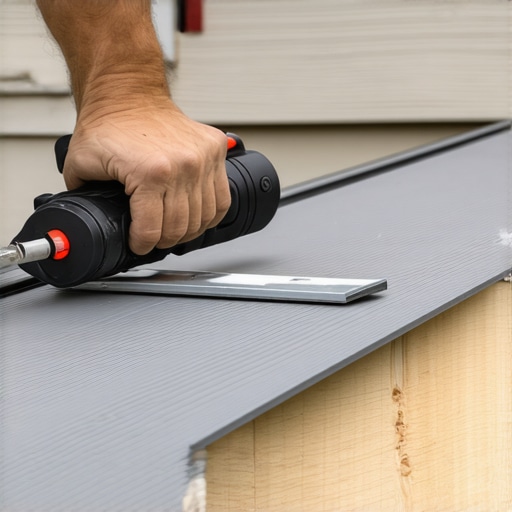
As we look toward the future, the trend is moving away from the deck being a simple platform and toward it being a fully integrated living suite. According to the Fiberon Technical Bulletin #10, the evolution of ‘capped’ technology has reached a point where color fading is almost non-existent, which is why we are seeing more homeowners opt for complex, multi-tonal designs. I predict that composite decking trends 2025 will heavily feature built-in smart lighting and hidden drainage systems that allow for dry storage underneath. To pull this off, the benefits of working with a professional deck builder in your outdoor projects become clear; the complexity of wiring and structural load-bearing for things like outdoor kitchens requires more than just a weekend DIY mindset.
Try the Midpoint Lock on Your Next Build
If you take away nothing else from my years of trial and error, let it be this: don’t fight the expansion—control it. On your next project, try the midpoint lock technique I mentioned earlier. By anchoring the center of your boards and allowing the ends to breathe, you will completely eliminate that ‘siding crush’ that ruins so many beautiful homes. It’s a small detail that takes five extra minutes but saves you a decade of headaches. If you’re feeling overwhelmed by the technicalities, don’t hesitate to reach out for a consultation; contact us today and let’s make sure your outdoor oasis is built to last through every season.
What I Learned the Hard Way About Thermal Movement
After a decade of being a deck builder, I’ve realized that the small details determine if a deck looks good for one year or twenty. First, remember that color matters more than just aesthetics; I’ve found that why I avoid dark grey decking in sunny backyards is directly tied to expansion—the darker the board, the more it moves. Second, never compromise on the skeleton. Even the most expensive choosing the right composite decking for durable low-maintenance outdoor areas won’t save you if the frame rots, which is why the flashing secret that prevents ledger board rot is the most important step in the whole build. Finally, safety isn’t just about railings; why your deck ledger needs a tension tie to stay secure is a lesson you don’t want to learn after the fact.
The Gear That Keeps My Decks Solid and Square
You can’t achieve precision with outdated methods. I always recommend using why I always use joist tape on every single deck frame to double the life of your wood. When it comes to hardware, why I use structural screws instead of carriage bolts is simple: they are faster, stronger, and don’t require pre-drilling. If you’re tackling a multi-level project, why a digital designer is the best move for planning a complex backyard deck is because it catches spacing errors before you ever cut a single board.
#IMAGE_PLACEHOLDER_E#
Build a Space That Lasts for Decades
Your home is your sanctuary, and your deck should be an extension of that peace, not a source of maintenance stress. When you transform your outdoor living with custom composite decking ideas, you are investing in years of memories. Don’t let the physics of expansion intimidate you; once you master the gap, the rest is just creative fun. If you want to ensure your vision is executed perfectly, contact us to chat about your next project. Have you ever noticed your deck boards pushing against your house during a summer heatwave? Let me know your experience in the comments below!