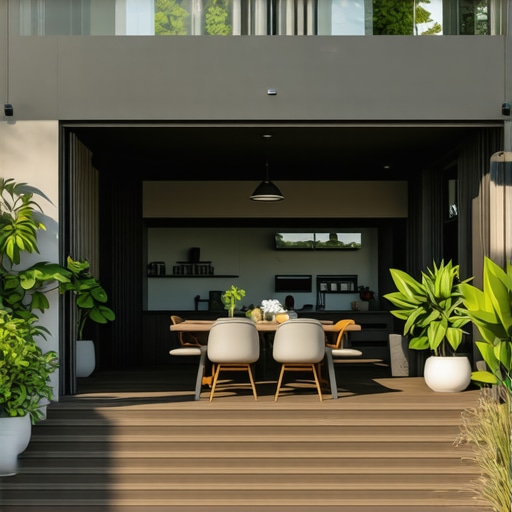
I remember standing in my kitchen in the pouring rain, staring out at my newly built deck with a sinking feeling. Despite pouring my heart into designing a beautiful outdoor space, I realized the transition from my kitchen to the deck was awkward, almost jarring. That initial step outside felt like stepping into a different world—clunky, disconnected, and far from the inviting outdoor oasis I envisioned. It was a lightbulb moment that many outdoor enthusiasts face: creating a seamless flow between indoor and outdoor living isn’t just about adding a deck; it’s about making the transition feel natural and inviting.
The Hidden Challenge in Outdoor Living Spaces
Let’s be honest—designing a deck that feels like a natural extension of your home is easier said than done. A haphazardly connected space can detract from the overall aesthetic, reduce functionality, and even pose safety risks. One of the most overlooked aspects is the transition area—the step between your house and the deck. Poorly designed stairs or abrupt height changes can create trip hazards and diminish the visual appeal. Plus, integrating your kitchen with your outdoor deck enhances usability, especially during family gatherings or summer cookouts.
After many missteps—including ignoring the importance of proper framing and overlooking slip-resistant solutions—I learned that a well-planned transition isn’t just about looks; it’s a critical component of an enjoyable outdoor living space. According to the professional deck builder, proper design and craftsmanship ensure longevity, safety, and seamless integration. So, I dedicated myself to learning how to connect these spaces flawlessly, transforming my backyard into a true extension of my home.
Will this really improve my outdoor experience? It’s a common concern
Early on, I made the mistake of assuming that a simple set of stairs would suffice. But I quickly realized that ignoring details like riser heights, tread depth, and railings could cause frustration and safety issues. I also underestimated how much a professional touch could elevate the entire project. Remember, the goal is to create an outdoor space that feels inviting, safe, and coherent with your home’s style.
Stay with me—I’ll guide you through proven strategies to craft an outdoor transition that not only looks great but also functions smoothly. Whether you’re planning a new deck or improving an existing one, understanding these key elements will help you avoid costly mistakes and achieve that perfect flow. Ready to begin? Let’s dive into the essentials that can turn your outdoor area into a blissful extension of your indoor living space.
,
Design the Perfect Transition Channel
Start by visualizing your indoor-outdoor flow as a continuous thread. Use a level string line across your doorway to establish a consistent height, ensuring the transition isn’t jarring. When I built mine, I used a laser level to get precise measurements—initially a bit messy with multiple adjustments—until everything aligned perfectly, creating a smooth eye-line from kitchen to deck.
Choose the Right Step and Riser Heights
Consistency is key. Riser heights should match the step leading outside, usually between 7-8 inches. I found that using a combination square to mark risers on a prototype board saved me time. Avoid surprises by double-checking measurements before cutting the final boards. Remember, uneven risers can cause tripping—nothing kills outdoor comfort faster than a wobbling step.
Implement Safe and Stylish Stairs
Opt for Strong Support and Slip Resistance
Safety first: reinforce stairs with double joists underneath for stability, especially on wider spans. I used capped polymer composite stair treads—these stay cool under the sun and are slip-resistant, which I highlight in this guide. Installing non-slip tread strips or outdoor rugs can prevent slips, especially when wet.
Perfect the Railing and Balustrade
Railings should be continuous and match your home’s style, but also meet safety codes for height and baluster spacing. I used a stainless steel cable system, which offers a sleek look and ample visibility, as discussed in this article. Secure railing posts deeply into footings and reinforce with brackets to handle wind loads and weight.
Fine-tune the Aesthetic and Function
Lighting plays a crucial role—install low-voltage LED step lights along the risers for safety and ambiance, avoiding glare as shown in this tip. Use uniform decking boards with a matching color palette to create visual harmony. During my project, I experimented with different composite shades—ending up choosing a muted gray because it concealed footprints and dirt better.
Integrate with Outdoor Kitchen and Seating
Connecting your deck seamlessly also involves planning for appliances, seating, and storage. Incorporate built-in planters or benches that double as safety barriers—an idea that transformed my backyard’s flow. For tips, see this guide. Ensure electrical wiring is concealed and protected against the elements, maintaining a clean look and safety compliance.
By meticulously aligning every element—from riser heights to railing supports—you create an outdoor space that feels naturally connected and inviting. Remember, the secret lies in the details: precise measurements, sturdy materials, and thoughtful design choices all contribute to a flawless transition from indoor comfort to outdoor enjoyment.
While many believe that selecting composite decking simply boils down to choosing the most popular brand or color, the reality is far more nuanced. One common misconception is that all composite boards are equally resistant to temperature fluctuations and UV damage. However, **not all composites are created equal**; advanced formulations, such as those with capped technology, outperform older generations in durability and maintenance. As highlighted in this guide, understanding the composition details can significantly extend your deck’s lifespan.
Another misleading belief is that decking and stair construction is a straightforward task best left to DIY. In reality, **subtle design flaws**, like improper joist spacing or inaccurate riser heights, can lead to squeaky, bouncy, or even unsafe structures over time. For instance, many overlook the importance of framing details under stairs—skimping here can cause sagging and safety issues, especially in extreme weather conditions. This is why working with a professional deck builder not only accelerates the project but also ensures that nuances like framing support and drainage are meticulously addressed.
Why Do Some Composite Decks Fail Prematurely Despite Initial Praise?
Advanced consumers often ask how to predict long-term performance. The key lies in understanding **the hidden variables**—such as hidden fasteners, improper end-grain sealing, and inconsistent installation practices—that can compromise durability. Research from experts like the outdoor living specialists reveals that these subtle flaws accelerate wear and lead to costly repairs.
Avoiding these pitfalls requires a deep dive into the details many overlook. For example, ensuring fasteners are corrosion-resistant and spaced correctly prevents loosening and gapping. Additionally, choosing the right edge treatments and sealants can stave off moisture penetration, especially important for structures exposed to varying climates. Recognizing that these advanced aspects matter can save you hundreds in future repairs.
In conclusion, the devil really is in the details. From selecting the high-quality composite with proven UV resistance to precise framing and drainage design—these elements are the secret weapons for a long-lasting, beautiful outdoor space. Have you ever fallen into this trap of oversimplification? Let me know in the comments, and share your experiences or questions about mastering outdoor living design.
To keep your outdoor living space looking stunning and functioning safely over the years, investing in the right tools and maintenance routines is essential. Regular care not only prolongs the lifespan of composite decking and stairs but also ensures safety and aesthetic appeal. One of my go-to tools is a high-quality cordless power washer, which I use to remove dirt and algae without damaging the surface—especially crucial for composite materials that can trap grime. Using a soft-bristle brush attachment helps to lift stubborn stains without scratching the finish.
For detailed inspections of your deck’s structure, I recommend a digital stud finder with a deep scanning mode, such as the Zircon MultiScanner, to locate joists and support beams beneath the surface. This is invaluable when planning repairs or reinforcement, ensuring you target the right areas without unnecessary guesswork. Additionally, a good quality level and a carpenter’s square are non-negotiable for checking evenness—critical for preventing uneven surfaces that can trap moisture or cause tripping hazards.
When it comes to long-term results, I always emphasize the importance of sealing end grains with a specialized outdoor wood sealant, especially for stair stringers and support posts. Applying a high-quality, UV-resistant sealant annually helps prevent moisture ingress, which is a leading cause of deterioration. Be sure to select products compatible with composite and capped materials to avoid surface degradation. For instance, this informative article highlights the advantages of using sealed, rot-resistant materials.
Adjusting your maintenance schedule based on climate and usage frequency can make a significant difference. In humid areas, biannual inspections and cleaning are recommended, while in drier climates, annual checks often suffice. Never wait until visible damage occurs—proactive upkeep prevents costly repairs and keeps your outdoor living areas inviting. Regularly lubricate moving parts, such as stair railings and hardware, with corrosion-resistant lubricant like WD-40 to ensure smooth operation and reduce wear.
As technology advances, so do the tools available. Smart sensors embedded in deck lighting systems can alert you to moisture buildup or structural movement, offering early warnings before serious issues develop. In future, I predict integration of AI-driven maintenance apps that can analyze photos of your deck for signs of wear, suggesting targeted repairs and scheduling maintenance automatically.
How do I maintain my composite decking and stairs over time?
The key lies in consistent cleaning, protecting end grains, and routine inspections. Using a quality power washer with a soft-bristle attachment, sealing vulnerable areas, and promptly addressing minor issues create a fortress for your outdoor investments. Experiment with advanced techniques like installing low-voltage LED step lights—see this guide—to merge safety with style for a space that feels as inviting as it looks safe.
Try incorporating aannual sealant application combined with gentle power washing to keep your composite and stairs in shape. Remember, investing a little time now saves big money later, ensuring your outdoor oasis remains a source of joy for years to come. Need professional help? Working with a professional deck builder can be a game-changer for long-term maintenance and safety.
Looking back on my journey to perfect outdoor spaces, I realize that the most valuable lessons came from unexpected challenges—like that rain-drenched day when I saw how critical a flawless transition from indoors to outdoors truly is. This experience paved the way for deeper insights into designing outdoor living areas that feel organic and safe. Remember, the secret isn’t just in building a deck; it’s in how effortlessly it connects with your home’s best features and your lifestyle.
Lessons That Changed My Outdoor Approach
- Poor transitions can undo your design: I learned that even the most stunning deck can fall flat if the step from your door isn’t perfectly aligned—factors like riser height and materials matter more than I anticipated.
- Details matter more than aesthetics alone: Overlooking slip-resistant features or railing stability can compromise safety, reminding me that quality craftsmanship is a must for peace of mind.
- Professional help pays off: Engaging experienced deck builders can prevent costly mistakes and elevate your space, a truth I discovered after multiple do-it-yourself missteps.
- Seamless flow boosts outdoor enjoyment: By focusing on integrated lighting, matching materials, and thoughtful planning, I transformed my backyard into an inviting extension of my living space.
- Maintenance is intuitive: Routine care, like gentle power washing and sealing end grains, keeps your composite decking looking pristine, saving time and money in the long run.
Tools & Resources That Made All the Difference
- Laser level and digital measuring tools: Precision matters; these tools helped me achieve perfectly even risers and support beams, ensuring safety and a professional look.
- High-quality composite materials: Choosing capped composite decks, as recommended in this guide, significantly extended durability and maintained low maintenance.
- Infrared lighting options: Low-voltage LED lights, like those I installed along the stairs, create safety and ambiance, demonstrating that subtle lighting accomplishes a lot.
- Reliable contractor directories: Consulting professionals through trusted channels, as explained in this resource, helped me find skilled builders who understood my vision.
Your Next Move Toward Outdoor Success
Designing and building your perfect outdoor space is a rewarding challenge that transforms your home and lifestyle. Remember, paying attention to the details—like stair support, transition flow, and safety features—can turn a simple deck into an outdoor haven. Be brave: start outlining your ideas, gather the right tools, and don’t hesitate to seek expert guidance. Your outdoor oasis awaits, ready to enhance your everyday life.
What is the most critical detail you’ve overlooked when enhancing outdoor living spaces? Share your experiences below—I’d love to hear your story!