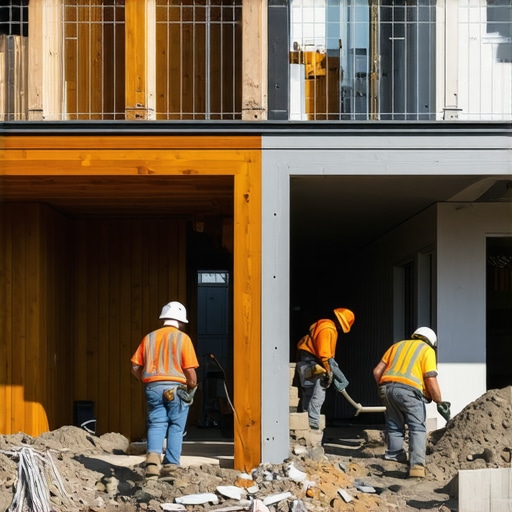
It all started on a warm Saturday morning. I was knee-deep in a pile of composite decking boards, frustrated beyond belief, because my dream outdoor space was turning into a nightmare. The boards were warped, squeaky, and totally mismatched with the sturdy, solid concrete porch I envisioned. That moment of frustration became my lightbulb—there had to be a better way to transition from my existing composite deck to a durable, concrete porch that would stand the test of time.
Why the Transition Matters More Than You Think
Choosing to upgrade or switch from composite decking to a concrete porch isn’t just about changing materials; it’s about creating a seamless, safe, and stylish outdoor area that enhances your entire home. A poorly executed transition can lead to issues like water pooling, foundation damage, or even safety hazards. Trust me, I learned this the hard way—early on, I made the mistake of ignoring proper planning, which resulted in cracking and uneven surfaces that cost me more time and money in the long run. If you’re contemplating this change, understand that a thoughtful, well-executed transition can elevate your outdoor living space and increase your home’s value. For inspiration and expert tips, check out how a **skilled deck builder can turn your garden into a private oasis** to see what’s possible with professional help and careful planning. Making informed decisions now will save you headaches later, and I aim to guide you through that process.
Is a Concrete Transition Really Worth the Hype?
I know skepticism is natural. After all, switching from composite to concrete sounds straightforward but is often anything but—especially if you’re doing it yourself. Early in my project, I overlooked the importance of proper drainage and leveling, leading to unevenness that cracked over time. That mistake taught me that understanding the nuances of foundation prep and material compatibility is crucial. As highlighted in the [ultimate guide to composite decking trends in 2025](https://deckdesignbuild.com/composite-decking-trends-2025-the-ultimate-guide-for-outdoor-enthusiasts), selecting the right materials and techniques can make or break your project. So, if you’ve faced the anxiety of whether your transition will hold up or be visually appealing, rest assured—there are proven methods to ensure a solid, attractive outcome. Today, I’ll share the key steps that made my transition smooth, durable, and worth every penny. Ready to dive into the specifics? Let’s get started on transforming your outdoor space with confidence.
Prepare Your Site with Precision
Begin by clearing the area around your existing deck, removing all loose materials and debris. Mark the boundaries of your new concrete porch, ensuring it aligns seamlessly with the existing structure. Use stakes and string to outline the layout accurately—think of it as drawing the blueprint for your new outdoor space, which prevents costly mistakes later.
Assess and Reinforce Foundation
Inspect the ground beneath your deck for stability; add gravel or crushed stone to improve drainage and prevent shifting. Excavate to the required depth—generally 4 to 6 inches—and compact the base layer thoroughly. For heavy loads or uneven terrain, consider installing concrete footings or piers to bolster support, similar to giving your new porch a sturdy, unshakeable foundation.
Build Formwork for Concrete
Construct form panels using sturdy plywood or metal strips to contain the concrete. Secure these forms with stakes, ensuring they are level and square—like framing the edges of a masterpiece. Use a level frequently to verify accuracy, especially at the corners, preventing uneven surfaces that could crack over time.
Implement Proper Drainage and Reinforcement
Lay a vapor barrier or plastic sheeting over the prepared base to prevent moisture transfer. Insert reinforcement bars or wire mesh within the formwork—think of this as embedding steel bones into your concrete for added strength. Position the reinforcement to be roughly one-third from the bottom of the slab, which helps resist cracking and enhances durability.
Pour and Finish Concrete
Mix the concrete as per manufacturer instructions or order ready-mix concrete for consistency. Pour it into the formwork steadily, working from one end to the other to avoid cold joints. Use a screed board to level the surface by dragging it across the form edges, similar to smoothing a canvas. Immediately after, use a bull float to further smooth the surface, filling in low spots and bringing any aggregate to the top.
Smooth and Texture the Surface
Once the concrete loses its sheen—about 1-2 hours—apply a concrete finishing broom or texture roller to create slip-resistant surfaces, especially crucial for outdoor stairs or ramps. For a polished look, consider troweling the surface for a smooth finish, but remember that a textured surface often offers better grip in outdoor conditions.
Integrate Steps and Transitions
Construct stairs following the safety and stylistic guidelines outlined in designing safe and stylish stairs. Use reinforced concrete or prefabricated steps to connect your new porch smoothly with existing levels, ensuring safe footing and visual harmony. For more ideas on integrating outdoor stairs, explore creating seamless transitions.
Cure and Seal for Longevity
Cover the freshly poured concrete with plastic sheeting or curing blankets to retain moisture, preventing cracks. Allow the concrete to cure for at least seven days—this process is vital, much like letting a fine piece of work rest to reach its full strength. Once cured, apply a high-quality sealant to protect against weathering and staining, extending your porch’s lifespan and maintaining its appearance.
Final Touches and Integration
After curing, remove the formwork carefully. Add a decorative concrete work finish or stamping for aesthetic appeal if desired. Adjust surrounding landscaping, grade the soil for proper drainage, and ensure the transition between your new concrete porch and existing surfaces is flush and secure. These steps mirror the fine-tuning a masterpiece needs for lasting beauty and function.
While many believe selecting high-quality composite decking material is enough for a durable outdoor space, the true devil lies in the details that most overlook. One common myth is that all composite boards perform equally well in every environment; however, factors like UV resistance, board composition, and installation methods significantly impact longevity. For example, many assume that standardized fasteners suffice everywhere, but in high-heave or cold climates, this can lead to warping or cracking—an issue highlighted in recent studies on composite degradation over time.
An advanced mistake I often see is the failure to account for expansion and contraction in outdoor stairs and transitions. Unlike traditional wood, composite and PVC materials expand with heat, and neglecting this nuance results in squeaky, buckling stairs. This is why understanding material-specific movement compatibility is vital; it ensures a safe, long-lasting outdoor structure. See this detailed guide on [creating seamless transitions](https://deckdesignbuild.com/creating-seamless-transitions-stairs-as-key-elements-in-outdoor-living) to appreciate how expert techniques tackle these challenges.
Have you ever fallen into this trap? Let me know in the comments.
What about the myths surrounding outdoor lighting and its impact on deck longevity?
Many assume that standard lighting solutions are enough, but improper installation of lighting fixtures, especially electricity-based, can accelerate deterioration by promoting moisture ingress and corrosion. Using low-quality connectors or neglecting waterproofing can create hidden damage that manifests only after years. This is why consulting experts and following best practices become crucial, as detailed in [installing durable outdoor stair lighting](https://deckdesignbuild.com/how-to-choose-deck-lighting-that-wont-blind-your-neighbors). Making informed decisions at this stage maintains your deck’s visual appeal without risking structural integrity.
Additionally, when it comes to choosing composite decking, the misconception that lower-cost brands are comparable to premium options can be tempting. Yet, inferior composites often lack UV blockers, leading to faster fading or discoloration. As per industry reports, investing in higher-grade materials offers better value over time, reducing maintenance and replacement costs. Learn more about [selecting the right composite for durability](https://deckdesignbuild.com/choosing-the-right-composite-decking-for-durable-low-maintenance-outdoor-areas).
In my experience, paying attention to these nuances prevents costly repairs and preserves the beauty and safety of your outdoor living space for years to come. Become aware of these often-ignored details, and you’ll enjoy a deck that truly stands the test of time.Maintaining a beautiful and durable outdoor space requires more than just good materials; it demands the right tools and ongoing care. Over the years, I’ve discovered that investing in quality equipment and adopting precise methods can significantly extend the lifespan of your composite decking, stairs, and outdoor living features. For example, a high-grade orbital sander with adjustable speed allows for efficient surface prep and refinishing without damaging the deck material. I personally prefer the **Bosch ROS20VSC** because its variable control feature provides the finesse needed for delicate tasks like light sanding of composite surfaces or touch-up finishing on stair treads.
How do I keep my outdoor structures functioning for years?
Regular inspection is key. I recommend using a telescoping mirror and a moisture meter—tools that help detect hidden issues like early water intrusion or wood rot before they become costly problems. For deep cleaning, a pressure washer with a adjustable pressure setting and a wide spray nozzle helps remove dirt and grime without eroding the surface. I shy away from high-pressure settings over 1500 PSI on composite decks, as it risks surface damage. Instead, I set my washer to around 1300 PSI, keeping the nozzle at least 12 inches from the surface, ensuring effective cleaning while preserving integrity. Next, apply a high-quality sealant, such as **Ready Seal**, annually to prevent weathering and maintain color authenticity. These tools and methods form the backbone of my maintenance routine, allowing my outdoor living areas to shine year after year.
Emerging trends point toward smart maintenance solutions. Expect to see automation systems that monitor moisture levels, UV exposure, and structural integrity via sensors embedded in decking and stairs. This data-driven approach will enable owners to perform targeted repairs before issues escalate, saving time and money in the long run. To get started with smarter maintenance, consider installing moisture sensors in critical spots. They’re affordable and can be integrated into your existing maintenance schedule, giving you peace of mind and extending the lifespan of your outdoor features.Can you keep your deck’s beauty and safety intact over time?
If you’re wondering how to maintain your investment, I suggest adopting a scheduled routine: perform visual inspections every three months, clean surfaces bi-annually, and reapply sealant once a year. Also, don’t underestimate the power of proper tools—an experienced eye, a good brush, and a quality pressure washer can transform your maintenance approach. For stairs, ensure the fasteners are tight and check for any signs of warping or squeaking, which often indicate underlying issues. In fact, regular tightening of hidden fasteners prevents squeaking on composite stairs, as explained in [this article from experts](https://deckdesignbuild.com/the-3-step-fix-for-squeaky-composite-stairs). Make this small effort part of your routine, and you’ll enjoy safe, stunning outdoor spaces for years to come. Why not try out a DIY deep clean this weekend using a pressure washer set at 1300 PSI and see the difference it makes? Your deck will thank you.When I first embarked on upgrading my outdoor space, I overlooked the critical importance of precise transitions between materials. The lightbulb moment came when I realized that a flawless junction between my composite deck and concrete porch could spell the difference between enduring beauty and costly repairs. One lesson I learned the hard way: meticulous planning and understanding material behavior are non-negotiable. It’s tempting to cut corners with quick fixes, but embracing detailed preparation—like assessing foundation stability and incorporating proper drainage—pays dividends in durability. Another insight was how small design choices, such as the placement of expansion joints or choosing textured finishes, contribute significantly to longevity and safety. This journey reinforced that the devil is truly in the details; investing time upfront ensures your outdoor oasis remains stunning over the years. Trust me, embracing these insider tactics transforms a routine project into a lasting masterpiece that elevates your home’s curb appeal and functionality.